
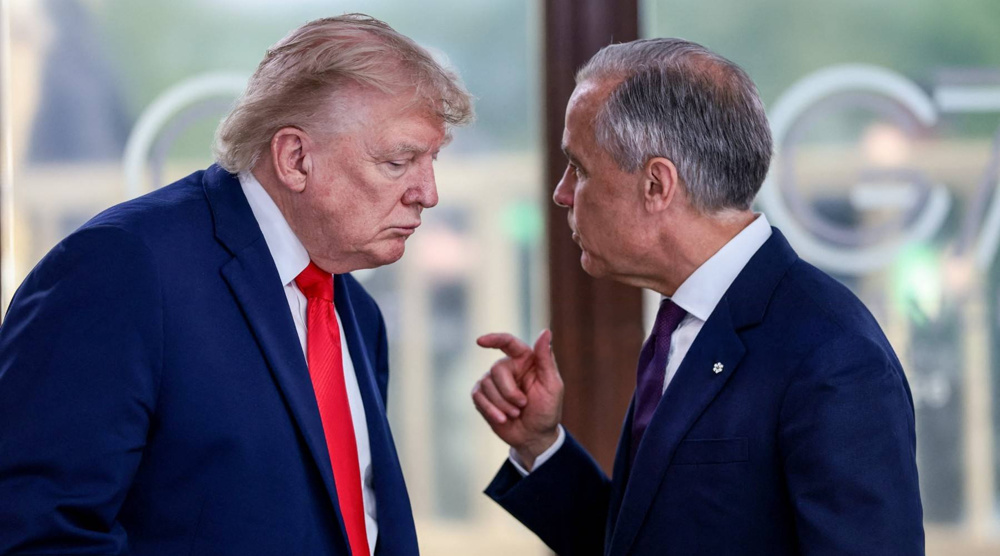
Canada has suspended trade negotiations with the US after Washington imposed 50 percent tariffs on billions of dollars of Canadian goods.
Prime Minister Mark Carney pledged on Friday that Canada would match the new tariffs “dollar for dollar” after negotiators failed to finalize a trade agreement before US President Donald Trump’s deadline.
The tariffs took effect at 12:01 a.m. Eastern time after Trump extended his original Wednesday deadline by three days to give the two sides more time to reach an agreement.
Trump had insisted that “we have a deal” with Canada, but Canadian officials maintained that major details and legal language remained unresolved before the negotiations collapsed.
Carney described last-minute changes to Washington’s position as “unfair” and “uneconomic,” warning that they raised serious questions about the reliability of any future agreement.
Canada had sought broad US market access, lower tariffs on key sectors and protections for Canadian businesses, the prime minister explained, but Washington’s latest demands failed to meet Ottawa’s objectives.
US Trade Representative Jamieson Greer blamed Canada for the collapse, arguing that Ottawa rejected terms Washington had offered and introduced new demands after earlier commitments.
The US had offered preferential treatment and additional tariff relief, Greer maintained, calling Canada’s refusal to finalize the deal a “missed opportunity.”
Ontario Premier Doug Ford backed Ottawa’s response, calling for “tariff for tariff, dollar for dollar” and insisting that “everything needs to be on the table” to protect Canadian sovereignty and economic security.
British Columbia Premier David Eby also supported a firm response, warning that Canadian “politeness should never be mistaken for weakness” and vowing that Canadians would “keep fighting for as long as it takes.”
“No one benefits from a trade war,” Alberta Premier Danielle Smith cautioned, arguing that tariffs and counter-tariffs would damage businesses, workers and families on both sides of the border.
Canadian Chamber of Commerce President Candace Laing described the new duties as a “body blow to North American competitiveness,” warning that they would raise costs while forcing businesses to reconsider orders, payrolls and investment.
The US says nearly $20 billion worth of Canadian imports will be subject to the new tariffs, which Washington says will offset Canada’s retaliatory measures.
The escalation also threatens efforts to renegotiate the Canada-US-Mexico Agreement, leaving the future of the North American free-trade framework under renewed uncertainty.