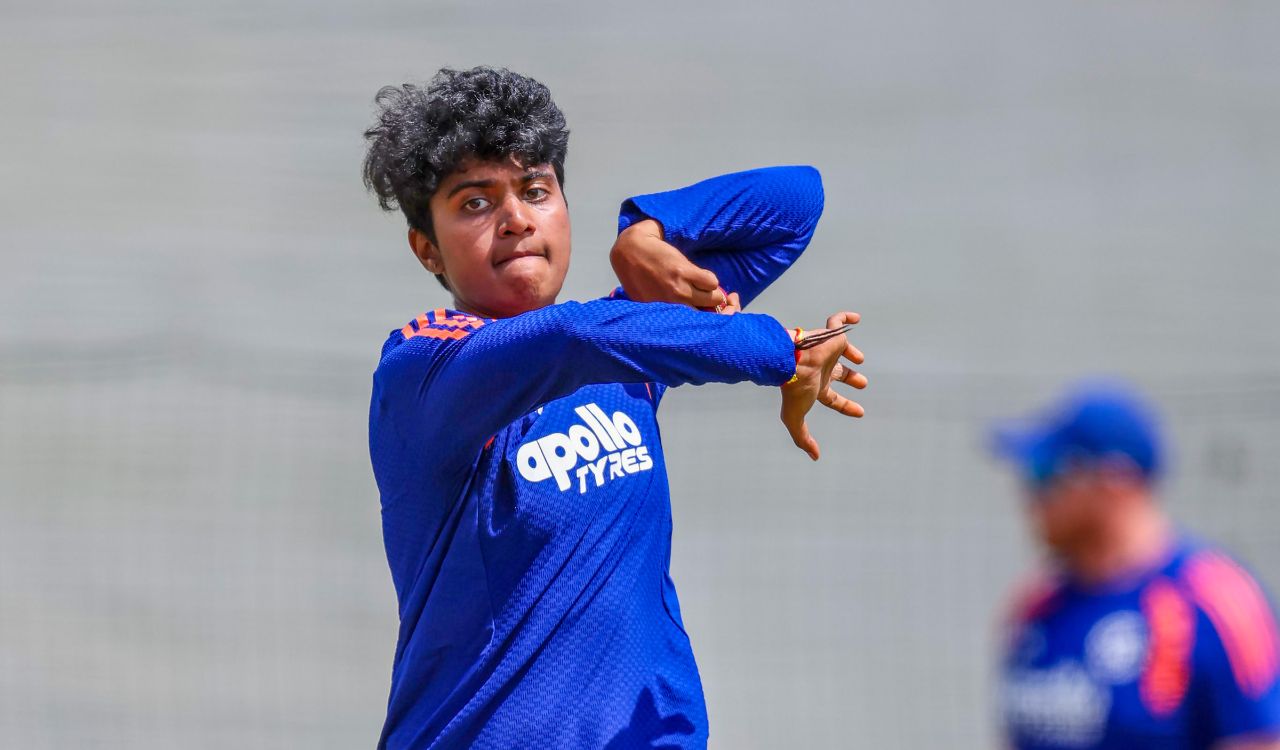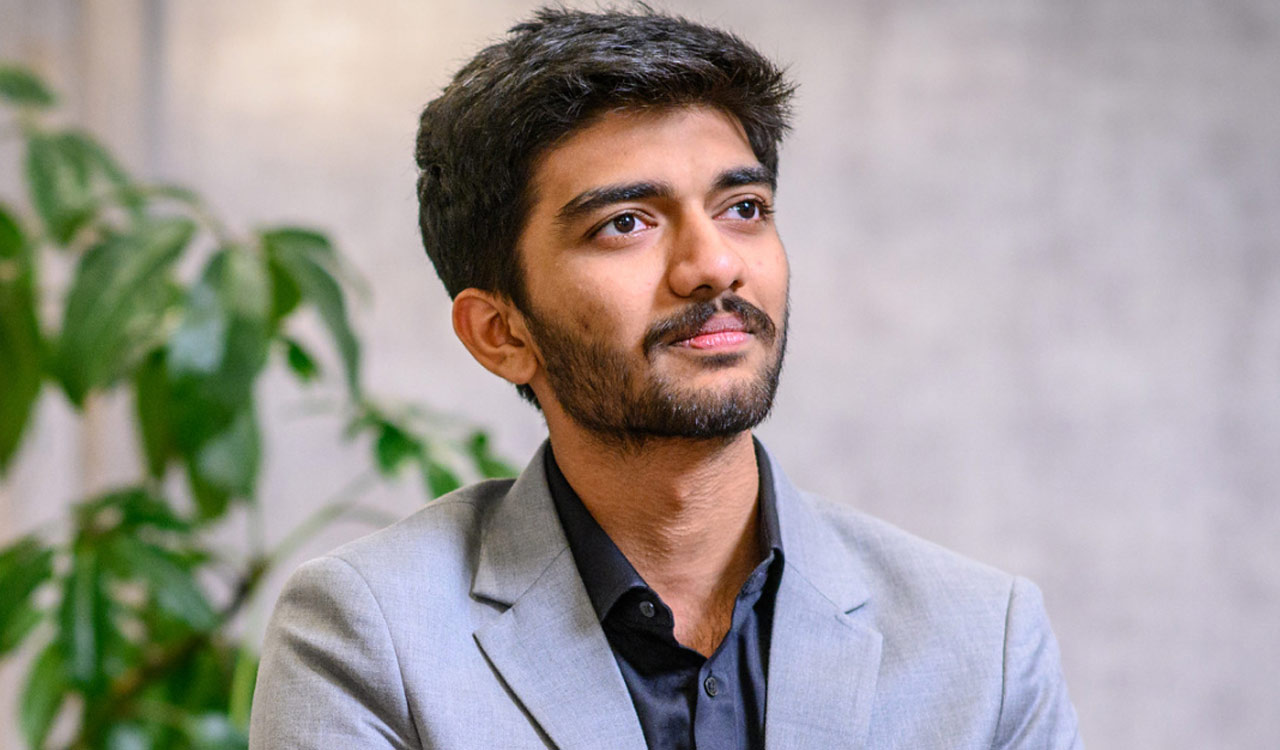
Grandmaster Vidit Gujrathi believes D Gukesh’s World Championship title defence against Javokhir Sindarov will test his mental strength more than his chess ability. Vidit said Gukesh must overcome his recent inconsistent run and rediscover the form he showed in 2024
Published Date – 20 August 2026, 02:43 PM
New Delhi: Grandmaster Vidit Gujrathi believes reigning world champion D Gukesh’s title defence against Uzbek challenger Javokhir Sindarov will be a test of mental strength more than chess ability, with the Indian needing to put behind him a difficult run and rediscover the form that made 2024 an exceptional year.
Gukesh has endured an inconsistent phase since his World Championship triumph, while Sindarov heads into the marquee clash in excellent form. Vidit, however, said a dip in results does not necessarily indicate a decline in a player’s ability.
“In chess, performances, if you are not Magnus Carlsen, come in stages. For example, 2024 was an exceptional year for Gukesh. Every tournament, he had the Midas touch. Whatever he played, he was winning,” Vidit told PTI.
He said form among elite players is influenced by several factors beyond their chess strength.
“Their strength is very high. A lot of things affect form — mindset, physical condition and pressure. Sport is about whether you can bring your best on that day.”
According to Vidit, Gukesh continues to work hard and has brought fresh ideas to his games but has struggled to produce the efficiency that characterised his rise to the world title.
“Usually he would convert very well, but now he is missing those wins. He is coming under time pressure a lot. He is working very hard. That’s very clear from the games. But something is missing.”
Vidit, however, felt Gukesh could still return to his best, provided he can overcome the mental baggage of his recent results.
“That doesn’t mean that in the World Championship, he cannot go back to his 2024 version. It will require a lot of inner strength because when you don’t do well, you struggle mentally.”
“So, it’s a test of his mental strength rather than a test of his chess. Can he forget everything that has happened this year and go as a challenger, not as someone defending the World Championship?”
Vidit expects a closely-contested match if Gukesh can achieve that mental reset, though he acknowledged Sindarov currently has the momentum.
“Both of them are very strong players. Of course, right now, Sindarov is in better shape. There is no doubt in that.”
India will face another major challenge at the upcoming Chess Olympiad, where the defending champions will rely on the depth of a team that includes several players currently enjoying good runs.
Vidit singled out R Praggnanandhaa, Arjun Erigaisi and Nihal Sarin, saying their form augurs well for India, though he cautioned against considering the defending champions overwhelming favourites.
“It’s very good to see that Praggnanandhaa is in excellent shape. Arjun also is doing well and Nihal was also doing well. So, three of them are in good shape.”
He pointed out that a successful team does not necessarily require every player to be at the peak of his powers simultaneously.
“It’s not like all five of us are playing the best chess that we can. But the aim is to bring that back.”
Vidit said Uzbekistan and the United States would pose formidable challenges, with the former having developed considerable depth and the latter boasting a star-studded line-up.
“It’s not a given that we are exceptional favourites because Uzbekistan has improved a lot and they have a lot of depth. USA is very, very motivated. They have stars — Fabiano Caruana, Levon Aronian and Wesley So. It’s a very strong line-up.”
“It’s going to be a huge fight and whoever is better that day will win. If you keep this tournament going every month, we might have a different result every month. That’s how strong it is.”
For Vidit personally, the Arjuna Award is recognition that carries significance beyond the chess world.
He said the honour gives wider credibility to a sportsperson’s achievements, especially in disciplines whose technical details may not be familiar to the general public.
“They may not know what the Grand Swiss or Candidates is, but they do know what an Arjuna Award is. It gives credibility to a sportsperson’s achievement, and that’s from the government.”
“I’m very pleased that I have been nominated and selected for it.”
The 31-year-old, however, admitted that his best performances came between 2022 and 2024, adding that there was a “bit of a lag or delay” in receiving the recognition.
His reduced tournament schedule was a conscious decision after an intense period of work left him burnt out.
“I had a burnout after 2024 because I was working like insane, 14 hours a day, non-stop for three years, and your body can only take so much.”
Vidit said the demands of competing at the highest level take an emotional toll, making a break necessary.
“It’s like a sprint, not a marathon. You can only sprint so much. You have to pause and take a break.”
The break has also altered his approach to the game, with Vidit no longer chasing a specific tournament or Candidates cycle.
“I was trying to find that joy again of playing. I have changed the way I look at chess. I’m not necessarily chasing a tournament or some Candidates cycle anymore. I’m taking the tournaments as they come.”
Praggnanandhaa’s current purple patch, he said, was another example of how form tends to move in cycles among top players.
“Right now, Pragg is having this run and someday Arjun (Erigaisi) will have it,” he said, reiterating that the underlying strength of India’s leading players remains high even when results fluctuate.
On the changing chess landscape and the growing prominence of rapid, blitz and esports formats, Vidit said he has no problem with any particular version of the game but wants greater clarity from the sport’s stakeholders.
“I’m okay if it’s blitz, rapid or classical. But I just want them to decide what it is. This month you’re playing classical, then you’re playing rapid. It’s too unorganised.”
“There is no clarity. In blitz, there is three minutes, there is five minutes. In rapid, there is 15 minutes, 20 minutes. There is fast classical. Experimentation needs to happen before you decide, but just do it fast.”