TGSRTC continues to face low occupancy on city bus services during afternoon lean hours, even as peak-hour demand remains high. Commuters and transport experts suggest flexible scheduling, dynamic fares and deploying mini buses to improve efficiency and service utilisation.
Published Date – 15 August 2026, 02:58 PM
Hyderabad: The Telangana State Road Transport Corporation (TGSRTC) continues to struggle with the operational challenge of managing city buses during lean afternoon hours, particularly in the capital region.
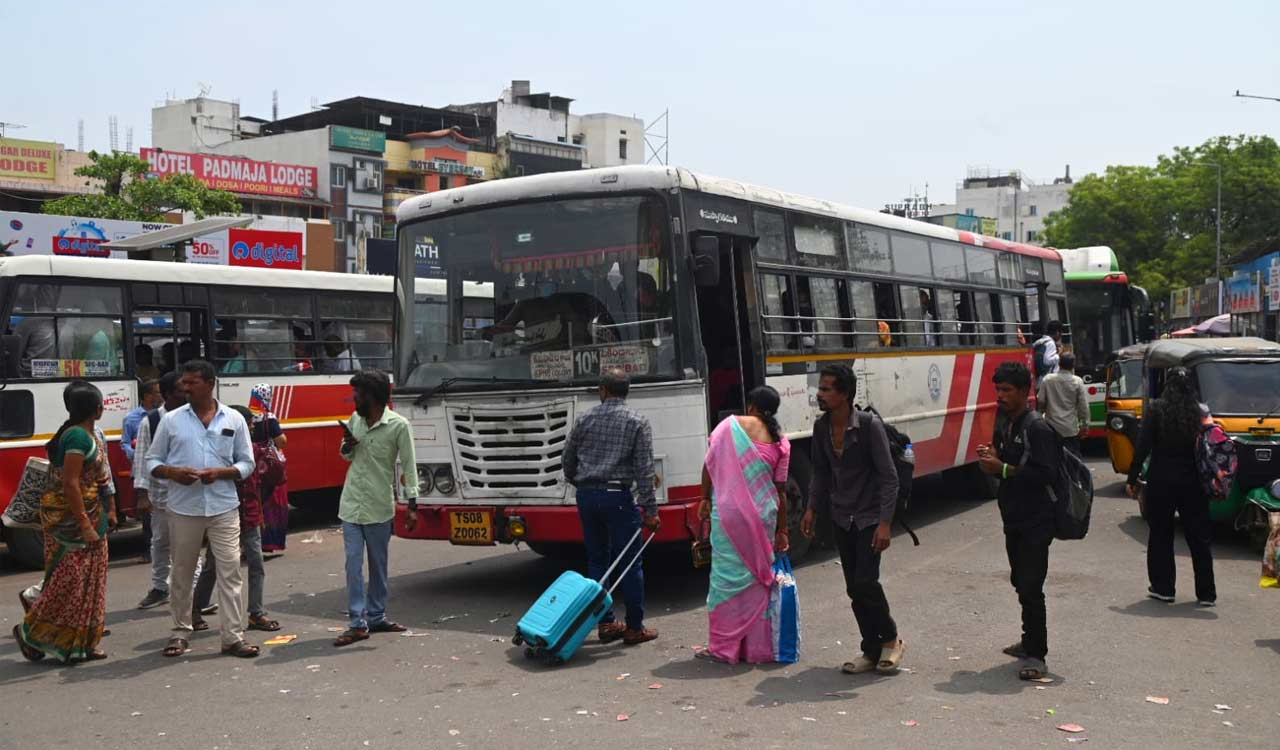
While city buses are often seen jam-packed with students, women, IT employees and other commuters during peak hours of the day, it is observed that between 12 pm and 3 pm, most buses run with many vacant seats, indicating a lower occupancy rate. Most times, just 25 per cent occupancy is seen on services.
Over 3,500 city buses make over 30,000 trips across the city each day, with heavy demand witnessed between 8 am and 11 am and again from 4 pm to 9 pm. Women passengers have also increased due to the ‘Mahalakshmi’ women free travel facility.
However, it is found that several services, including Metro Express and E-buses, are recording low occupancy during afternoon hours.
Commuters say RTC should move beyond traditional methods and adopt a more flexible hours management model. “I have to regularly travel between Narayanaguda and Secunderabad Railway Station. The route is used by hundreds of commuters. Most of the time, I find fewer services on the route during afternoon hours,” said Sunny from Chikkadpally, adding that the situation leads to growing use of private vehicles and bike taxis.
Citizens also point out that dynamic pricing, which is often implemented on long-distance services by the RTC, could be tested in city services. Apart from this, offers and lower fares during this period could attract commuters.
RTC authorities said it is difficult to reduce services during lean hours on certain college and IT-corridor routes as it could cause inconvenience to residents in nearby colonies. However, they were redeploying services wherever possible, including bus stations, tourist spots and hospitals.
Transport experts suggest that mini buses could also help the RTC address the problem. Instead of running large buses with low passenger loads during lean hours, mini buses could be roped in.
To solve the problem, RTC will have to consider and work on deploying the right number and type of buses at the right time and on the right routes.