
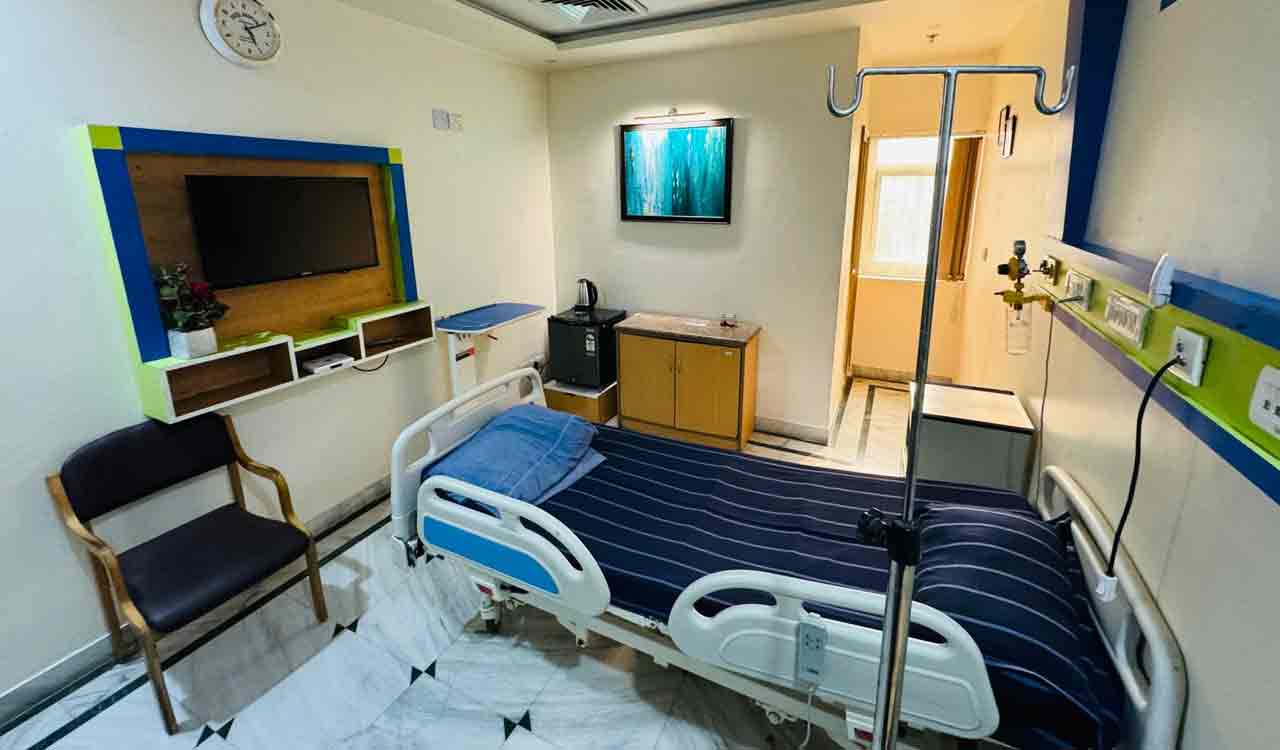
A parliamentary committee has recommended benchmarking private hospital room charges in metropolitan cities against nearby three-star hotel tariffs. It also proposed upfront treatment cost estimates, financial navigators, capped treatment packages and stronger measures to reduce patients’ out-of-pocket healthcare expenditure
Published Date – 12 August 2026, 05:02 PM
New Delhi: A private hospital room in a metropolitan city should not cost more than the average tariff of a three-star hotel room in the vicinity, a parliamentary committee has recommended as part of a series of measures to make healthcare more affordable and curb out-of-pocket expenditure.
The 176th Report of the Parliamentary Standing Committee on Health and Family Welfare, titled “Affordability and Accessibility of Healthcare Facilities in Public and Private Sector”, said room charges in private hospitals, particularly in metropolitan cities, need to be rationalised on an “emergent basis”.
The report was presented in the Rajya Sabha and tabled in Lok Sabha on August 7.
The panel recommended making the three-star hotel tariff benchmark mandatory for all private hospitals in large metropolitan cities. Resident doctor, nursing, disposable consumable, meal and laundry costs may be added to the basic room tariff, it said.
It also recommended that the government mandate all tertiary care hospitals to provide patients with a comprehensive and legally binding upfront cost estimate before starting any complex or prolonged medical intervention.
Hospitals should also deploy dedicated financial navigators to help patients and their families understand treatment costs, available philanthropic assistance and health assurance limits, it said.
The committee noted that households continue to face significant financial stress while accessing private healthcare, with average out-of-pocket expenditure per hospitalisation episode pegged at Rs 34,064.
It also flagged medical inflation of 10-13 per cent and differential billing practices linked to room categories.
The panel recommended eliminating room-rent-linked inflation models for standard procedures across private hospitals and putting in place standardised treatment guidelines and mechanisms to cap arbitrary price variations.
It further called for “continuum of care” packages that bundle preventive screening, diagnostics, curative treatment and palliative care under a single capped financial umbrella, saying financial protection should extend beyond acute treatment and surgery to follow-up, rehabilitation and end-of-life care.
For expensive cancer and rare-disease therapies, including immunotherapy, genomic and targeted treatments, the committee proposed creation of a regulated National or State Healthcare Corpus Fund by pooling CSR (corporate social responsibility) contributions, philanthropic donations and charitable grants.
The corpus should be used to subsidise or fully fund high-cost therapies for eligible patients, it said.
The committee also recommended that psychological counselling, emotional support and patient support groups be made mandatory, zero-cost components of approved treatment protocols and capped packages for severe, chronic and terminal diseases in both public and private sectors.
On medicines and medical devices, it recommended mandatory AMRIT and Jan Aushadhi pharmacies within all hospitals empanelled under Ayushman Bharat PM-JAY. Private empanelled hospitals should also adopt transparent, tender-based procurement and cap mark-ups on life-saving consumables and devices, it said.
The committee further called for a “Zero-Stockout Policy” in government hospitals, backed by digital inventory systems, to ensure uninterrupted availability of high-value consumables and surgical implants.
On health insurance, it recommended universal onboarding of private hospitals and healthcare providers onto the National Health Claims Exchange and expedited deployment of the Public Insurance Registry to improve transparency, reduce claim disputes and curb fraudulent billing.
The panel also stressed the need to expand healthcare infrastructure beyond urban centres, recommending mobile diagnostic units, hub-and-spoke telehealth services across districts and use of the postal network for transportation of diagnostic samples and essential medicines to remote areas.
India currently has about 1.3 hospital beds per 1,000 population, compared with the WHO norm of 3.5, with the public sector accounting for only 0.79 beds, the report noted.
The committee also recommended strengthening rural and Tier 2 and 3 healthcare infrastructure, encouraging public-private partnership clinics for middle-income populations and promoting domestic manufacturing of medical devices to reduce import dependence and treatment costs.