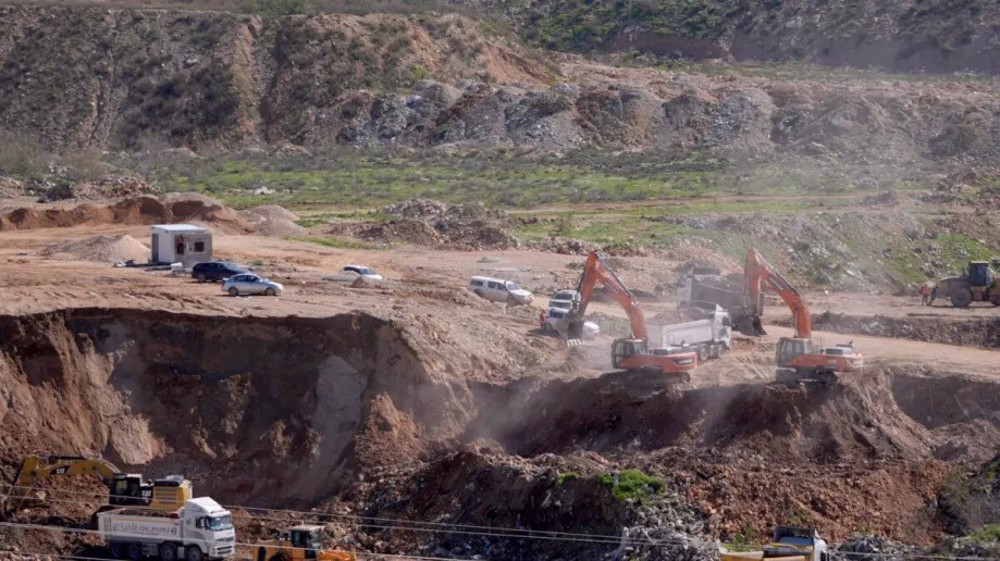
Israel is pushing ahead with plans for 2,300 new settler units in the Gilo settlement on confiscated Palestinian land, threatening to further isolate occupied East al-Quds from Bethlehem and deepen the erasure of Palestinian presence from the area.
According to Israeli rights organization Ir Amim, Israeli authorities are planning to expand the Gilo settlement in southwestern occupied East al-Quds with the construction of the new housing units.
The organization said the project marks another step towards further isolating East al-Quds from the Palestinian city of Bethlehem in the occupied West Bank.
It added that the planned construction would take place on land confiscated under Israel’s Absentees’ Property Law.
Ir Amim said at least 28 dunams (6.9 acres) included in the project were taken from Palestinian owners, reclassified as “state land” and allocated for settlement expansion.
The group warned that the total area of confiscated land could increase, as dozens of additional dunams within the project remain listed as having “unknown ownership.”
The proposed construction site includes extensive olive groves with decades-old trees, which the organization said serve as evidence of longstanding private Palestinian ownership. Ir Amim warned that the trees are likely to be uprooted if the construction proceeds.
The announcement comes months after Israel said it would begin procedures to register land in Area C of the occupied West Bank in the regime’s name under the Absentees’ Property Law.
The law allows land to be registered as the property of the occupying entity when ownership cannot be established through official documentation.
Many Palestinians say they have inherited land through generations without formal title deeds, a situation compounded after Israel halted land registration processes that had existed under the Jordanian administration following its occupation of the West Bank in 1967.
Hassan Breijieh, head of the International Law Department at the Colonization and Wall Resistance Commission, previously described the measure as “the expropriation of Palestinian land and its registration in the name of the occupied Israeli entity, paving the way for its transfer to Israeli occupiers.”
He warned that the policy could affect vast areas of unregistered land across the West Bank.
At the end of June, Israeli minister Bezalel Smotrich said authorities were accelerating settlement expansion, stating that 160 settlement farms had been established and more than 100 new settlements had been approved.
Emboldened by US president Donald Trump’s all-out support, Israel has stepped up its illegal settlement construction activities in defiance of United Nations Security Council (UNSC) Resolution 2334, which pronounced settlements in the West Bank and East al-Quds “a flagrant violation under international law.”
Much of the international community regards the Israeli settler units in the occupied lands as illegal.
More than 600,000 Israeli settlers live in over 230 settlements built since the 1967 Israeli occupation of the West Bank and East al-Quds.
All Israeli settlements are illegal under international law. The UNSC has condemned Israel’s settlement activities in the occupied territories in several resolutions.
In July 2024, the International Court of Justice (ICJ) issued an advisory opinion ordering Israel to end its occupation of the Palestinian territories “as rapidly as possible,” declaring the regime’s presence unlawful.