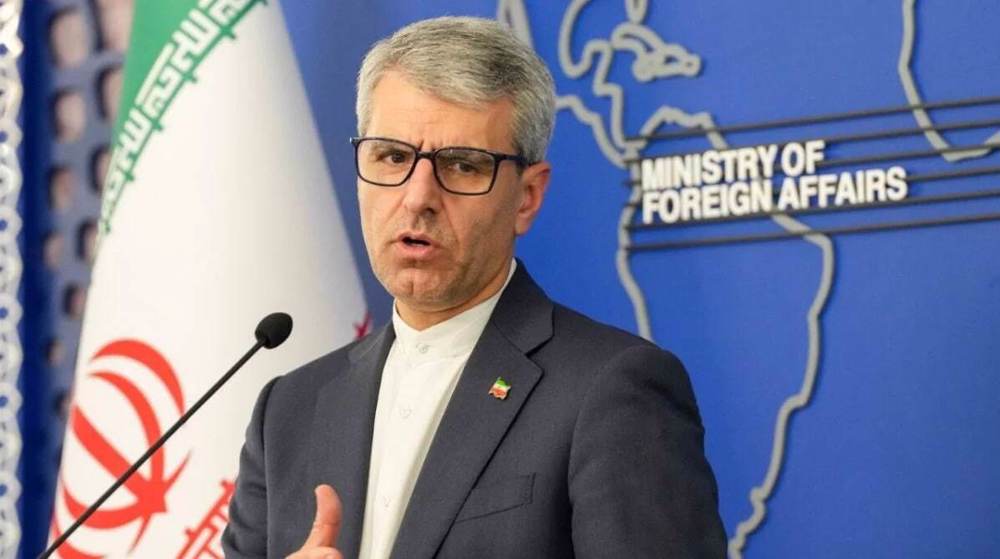
Iranian Foreign Ministry spokesman Esmaeil Baghaei says Tehran and Muscat are close to finalizing an agreement on a new commercial shipping corridor through the Strait of Hormuz, with the route’s coordinates already agreed upon.
Speaking to reporters on Wednesday, Baghaei said talks between Iran and Oman had been underway for the past two months to establish a safe passage mechanism for commercial vessels transiting the strategic waterway.
He said the negotiations were “moving forward” and that the two sides had reached an understanding on the geographical coordinates of the proposed corridor.
“If certain third parties do not obstruct the process, the two countries are also in the final stage of reviewing and drafting a joint statement covering the main points of agreement,” Baghaei stated.
The spokesperson said the talks had covered the technical, legal, security and environmental aspects of the proposed shipping corridor, in consultation with relevant Iranian authorities.
Baghaei rejected claims that a bilateral agreement with Oman would automatically lead to the reopening of the Strait of Hormuz, saying restrictions on the waterway were imposed due to security concerns stemming from US and Israeli military aggression against Iran.
A potential agreement with Oman, he said, “cannot in itself be interpreted as meaning the Strait has become safe for passing vessels,” arguing that the main sources of insecurity remain US naval deployments, its illegal maritime blockade of Iranian ports, and other hostile measures against the country and its interests.
Baghaei made the remarks hours after US President Donald Trump claimed that the Strait of Hormuz could reopen soon, citing what he described as “progress in negotiations” with Tehran.
Iranian authorities have previously said the talks are exclusively between Tehran and Muscat and seek to establish a joint mechanism for ensuring safe passage through the Strait while addressing Iran’s sovereignty and security concerns as a littoral state.
The Strait of Hormuz, one of the world’s key energy transit routes, has remained a focal point of regional tensions since the US and Israeli war of aggression against Iran.
Tehran has maintained that the easing of restrictions on the waterway depends on a change in US conduct and the removal of threats to regional security.