By Ivan Kesic
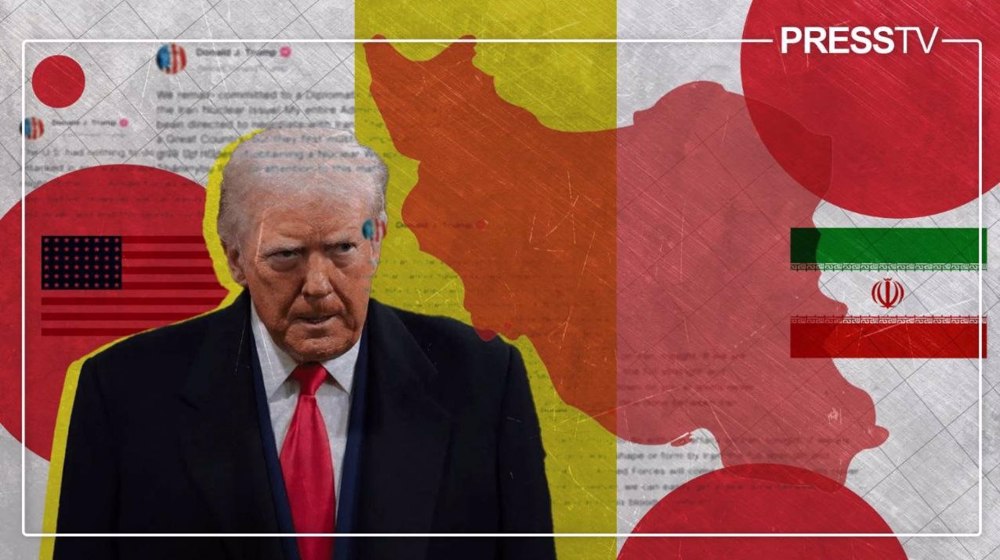
From the earliest days of the US-Israeli war of aggression against Iran, US President Donald Trump has unfailingly issued maximalist ultimatums and threats of overwhelming military force, only to retreat at the last moment when confronted with the reality of unshakable Iranian resilience, a pattern that observers have come to call TACO, or “Trump Always Chickens Out.”
This phrase “Trump Always Chickens Out” was first coined by Financial Times columnist Robert Armstrong in May 2025 to describe the administration’s inclination to backtrack on aggressive economic policies, but it has found renewed and striking relevance amid the volatile escalation in West Asia following the joint US-Israeli war on Iran and the events that followed.
Throughout these several months, before and after the ceasefire, Washington has repeatedly deployed extreme military threats to force concessions from Tehran, only to quietly step back when confronted with firm resistance, diplomatic pressure, or global market anxieties.
The pattern has been familiarly consistent: a public threat delivered with maximalist language, often accompanied by dramatic deadlines, followed by Iranian refusal to comply, and culminating in a last-minute reversal, extension, or suspension of the threatened action.
This cycle has repeated itself with such consistency that international observers, financial markets, and even Iranian military planners have come to anticipate that Trump’s most severe warnings will ultimately give way to negotiation rather than execution.
The persistence of this pattern has not only undermined American credibility on the global stage but has also demonstrated the effectiveness of Iran’s strategic deterrence, as Tehran’s unyielding stance has repeatedly forced Washington to recalculate the severe costs of direct confrontation.
Genesis of TACO: March 2026
The first widely cited Iran-related TACO episode occurred on March 21, 2026, when President Trump publicly issued what he described as a forty-eight-hour deadline for Iran to agree to his proposals.
Following weeks of military aggression against Iran and Iranian retaliatory strikes, the ultimatum demanded rapid concessions concerning Iran’s nuclear activities and regional military posture, warning that failure to comply would trigger major US military action.
American officials simultaneously increased military deployments in the Persian Gulf region, creating the impression that a large strike package had already been assembled against the Islamic Republic.
Iran’s leadership understandably and expectedly did not accept the diktat. Official statements from Tehran dismissed the ultimatum as psychological pressure, and military preparedness inside Iran continued without any regard for the ultimatum.
When the forty-eight-hour deadline expired, no American attack occurred. Instead, Washington extended the diplomatic timetable and signaled that further discussions remained possible, marking the first major example of the Trump administration threatening imminent military action before quietly retreating.
Only days later, Trump significantly escalated his rhetoric once again, warning that if Iran failed to comply with American demands, the United States military was prepared to destroy key elements of Iranian civilian infrastructure, including electricity generation, oil production facilities, and Kharg Island.
The inflammatory language represented one of the strongest public threats issued by Washington during the imposed war, suggesting an intention to cripple Iran’s economic foundation.
Iran again rejected the ultimatum, with military officials in Tehran stating publicly that the Islamic Republic would retaliate against American regional military bases and energy infrastructure throughout the Persian Gulf if such attacks occurred.
Despite the aggressive language, no US attacks against civilian Iranian infrastructure took place, and diplomatic contacts through regional mediators continued.
This became the second event frequently cited by analysts discussing Trump’s repeated escalation-de-escalation cycle against Iran in recent months, showing his indecision and growing frustration.
April crisis: ultimatums and ceasefires
Perhaps the most famous rhetorical escalation came at the beginning of April, when during a White House address, Trump warned that the United States could send Iran “back to the Stone Age,” implying an overwhelming attack against the country’s critical infrastructure.
The threat immediately generated expectations of imminent strikes. But the administration again stepping back at the last moment, and canceled the promised operation, with military deployments remaining in place while Washington continued exploring diplomatic options.
The contrast between the severity of the language and the absence of immediate major military action quickly became one of the defining examples of the TACO narrative, as observers noted that Iran had once again weathered the storm of American rhetoric without making the concessions Washington forcefully and illogically demanded.
The most famous example of the TACO pattern emerged on April 7 and 8, when Trump publicly announced a deadline and warned that failure to reach an agreement acceptable to the US would result in attacks on Iranian power plants, bridges, and other strategic infrastructure.
The threat was accompanied by chilling language warning that “a whole civilization will die tonight, never to be brought back again,” crossing a line that no American president had previously dared or wanted to approach against the Islamic Republic.
Only two days before the deadline, Iran had presented a ten-point proposal intended to halt the US-Israeli aggression against Iran, and initially Trump had rejected the proposal, putting up a tough front.
Then, roughly an hour before the ultimatum was supposed to expire, the administration abruptly suspended the planned attacks and instead announced a two-week ceasefire to allow further negotiations in line with the same Iranian proposal that Trump had previously rejected.
Trump proclaimed a “double-sided CEASEFIRE,” adding that in return for his halt to the bombing campaign, Iran had agreed to the complete, immediate, and safe opening of the Strait of Hormuz.
Iranian officials immediately presented a different interpretation, with Foreign Minister Abbas Araghchi making clear that Iran would not relax any of its leverage even during the ceasefire period, showing who had the upper hand and who held the cards.
The reversal, occurring just before the advertised deadline, rapidly became the most widely discussed Iran-related TACO example and was cited by commentators as a classic case of a maximalist threat followed by a last-minute retreat in favor of diplomacy.
Ceasefire and Its extensions
The ceasefire announced on April 8 was originally described as temporary, but as it approached expiration, Trump unexpectedly and unilaterally extended it, claiming that Pakistan had requested additional time for diplomacy.
This became another widely discussed episode of American retreat because only hours before, Iranian officials had expected renewed bombing and were prepared for any eventuality.
Throughout this period, Trump’s threats continued even as active military aggression remained suspended, with the megalomaniac president warning that continued Iranian resistance could result in catastrophic consequences for the country.
Several commentators argued that these repeated reversals considerably weakened the credibility of Washington’s deterrence because Iran increasingly appeared willing to wait for the next diplomatic pause rather than yielding immediately.
The unilateral extension of the ceasefire beyond its original announced duration, the repeated postponement of attacks while Pakistan attempted mediation, and the thirty-day extension of sanctions relief during negotiations all followed the same pattern of threat followed by retreat from the American side.
Critics lampooned another TACO moment, noting that on the surface the president’s decision was another instance when he adopted a maximalist position only to back down in a way that erased his red lines and raised further doubts about his war strategy.
Iran’s unchallenged control on the strait during the ceasefire underscored the fact that Trump had no good options in a war that had slipped out of his control and that he was desperate to end.
The fear that ending the war with an Iranian chokehold over the strait would be a strategic disaster and a defeat for Trump was palpable among his supporters, yet the threat-retreat cycle continued.
“Trump suffers from a lack of wisdom & prudence”
Senior advisor to the Leader of the Islamic Revolution, Mohsen Rezaei, says US decision-making has declined, criticizing Trump’s leadership & calling recent military planning against Iran imprudent, unrealistic, & unprofessional. pic.twitter.com/bGn9e0v3dv
— Press TV 🔻 (@PressTV) August 3, 2026
Project Freedom and the June memorandum
Following renewed American attacks and the Iranian retaliation in May, Trump again warned that a major American strike was coming, declaring that American forces were prepared to deliver devastating blows to Iranian military capabilities.
Instead of proceeding immediately, he later stated that there seemed to be a very good chance that they could work something out, and that if they could do that without bombing, he would be very happy.
Large-scale strikes were therefore once again postponed in expectation of diplomatic negotiations, because Americans were on the back foot.
It marked another example of threatening overwhelming force before stepping back once diplomacy appeared possible.
In early May, Trump temporarily halted the so-called Operation Project Freedom intended to reopen the Strait of Hormuz, saying there had been great progress toward a comprehensive agreement with Iran. The operation resumed later, but the temporary suspension fitted the broader pattern of pausing military aggression to test diplomacy.
The guided shipping initiative, announced with great fanfare on May 3, did not last long and was effectively abandoned without achieving its stated objectives, marking another example of making a major claim and then pulling out in humiliation.
By June, the pattern had become even more pronounced, with reports describing preparations for another substantial American military offensive only for Trump to announce that negotiations remained possible and postponing what appeared to be an imminent attack.
A memorandum of understanding intended to end the third imposed war followed, signed by the presidents of the two countries. It too didn’t prevent the US war machine from indulging in sporadic attacks.
Analysts note that repeated pauses have created uncertainty among both allies and adversaries of Washington on whether presidential ultimatums represent genuine deadlines or negotiating tactics.
July continuation
Earlier in July, the US relaunched full-scale attacks on southern Iran after Iran asserted its legitimate and legal authority over the Strait of Hormuz, preventing American attempts to challenge that authority.
After the fresh round of American attacks, the Iranian response was swift and decisive, striking American military bases across the region.
Rather than immediately expanding the war beyond southern Iran, as Trump and his acolytes had threatened, he later indicated that a broader diplomatic agreement remained possible with Iran.
It was interpreted as another soft TACO moment, with observers noting that the administration maintained military pressure while delaying the much larger campaign that had previously been threatened.
Unlike April, this episode involved postponement rather than complete cancellation, but the pattern of threat followed by delay remained consistent.
Even after repeated Iranian retaliatory missile attacks against American regional facilities in Jordan, Kuwait, and elsewhere, Trump continued telling reporters that a deal remained possible and delayed broader retaliation while diplomatic channels remained open.
This was less dramatic than the April or August episodes but still followed the same threat-then-delay pattern.
The repeated extensions of negotiating windows through Pakistani mediation, the repeated claims that Iran had called first or wanted talks followed by renewed diplomacy even after Tehran publicly denied those claims, and the repeated postponements of threatened strikes on Iranian energy infrastructure pending progress in negotiations all contributed to a pattern that observers found increasingly predictable.
August reversal: “Locked and Loaded”
One of the latest examples after the April ceasefire came earlier this week, when Trump announced that American forces were “locked and loaded” to attack Iran. It came amid media reports that the US and Israel were prepared to launch a large-scale attack on the country.
Within roughly twenty-four hours, however, Trump announced that the strikes had been halted because diplomatic opportunities had emerged, stating that Persian Gulf partners had urged negotiations, and expressed optimism that a rapid agreement might be reached.
Iran denied reports that it had requested negotiations and rejected Trump’s characterization, demonstrating yet again that the US president’s threats are mere bluff to control markets.
Oil prices fell immediately after the announcement, reflecting market expectations of reduced escalation, and this reversal was described by international media as another major illustration of Trump’s tendency to alternate between military rhetoric and renewed diplomacy.
The August reversal was particularly striking because it followed months of accumulating evidence that the TACO pattern was not an aberration but a fundamental feature of Trump’s approach to Iran.
By this point, financial markets had learned to discount the most extreme outcomes implied by the president’s rhetoric and initial policy moves, betting that Trump would not allow the situation to deteriorate to a point where gasoline prices would surge to unmanageable levels and risk reigniting broader inflation, especially with midterm elections looming.
The implicit bet was clear: Trump would blink before the market cracked, and the lower inventories fell, the closer a deal seemed.
TACO pattern: recurring sequence
Across these episodes, commentators who use the TACO label identify a recurring sequence that has become increasingly predictable.
Escalatory rhetoric emerges first, characterized by firm deadlines, threats against strategic civilian infrastructure, or warnings of overwhelming military force.
This rhetoric is consistently followed by Iranian refusal to blink, as Tehran generally rejects ultimatums and signals readiness to retaliate.
The third element is a last-minute adjustment, as instead of executing the threatened action on the announced timetable, Washington extends deadlines, accepts ceasefires, or reopens negotiations.
Finally, when diplomacy stalls, the administration often reverts to coercive language, beginning the same cycle again.
This pattern is not merely a series of isolated incidents but a repeated operational approach that has defined the incumbent administration’s handling of the war against the Islamic Republic..
The persistence of the TACO pattern has significant implications for the credibility of American threats and the effectiveness of US strategy, as American commentators also warn.
They contend that the repeated postponements and cancellations have reduced the credibility of presidential ultimatums, proving Iranian deterrence cannot be denied or ignored any longer.
Strategic assessment: why Trump ultimately refrained
Analysts examining the TACO pattern have concluded that Trump’s repeated retreats after bellicose threats reflect a strategic assessment rather than a sudden change of policy.
The combination of Iran’s credible deterrence, the risk of regional escalation, and US military limitations have made another full-scale regional war too costly for the US military-industrial complex, leaving Washington to rely on threats and limited military actions instead of a full-scale offensive.
The argument that a major US strike was never a realistic option rests on the understanding that Iran had made it clear it would retaliate by targeting critical infrastructure in Persian Gulf countries, with attacks on essential facilities such as desalination plants having catastrophic consequences that would be unacceptable even to American regional partners.
The US has also faced constraints in its stockpiles of advanced weaponry and lacks the capacity to sustain a prolonged campaign, while Iran is well-positioned to replenish its supply of lower-cost drones and missiles more rapidly.
Throughout this period of escalating tensions, Iran has maintained an unyielding stance, demonstrating steadfast resilience in defending its national sovereignty and strategic assets against foreign aggression.
Iranian commanders and high-ranking officials have stood firm, rejecting Washington’s threats as desperate psychological operations and economic manipulation aimed at destabilizing regional markets.
By refusing to bow to Western unilateral demands and asserting its absolute military readiness to deliver a decisive counter-blow to any aggression, Tehran has successfully neutralized Washington’s maximum-pressure campaign, exposing the fundamental limits of American power projection in the region.
Financial markets and the TACO bet
The oil market’s response to the war against Iran provides compelling evidence of how widely the TACO pattern was recognized and how it shaped financial behavior.
Throughout the war, investors appeared to make a risky wager from day one: that President Trump would not allow the war to spiral into a full-blown economic crisis, and therefore they would not price one in, no matter what was happening with physical supplies.
It was a risky call, but it proved correct. Oil prices have certainly swung during the war, as Iran’s key weapon remains the unprecedented closure of the Strait of Hormuz, enabling Tehran to choke off a fifth of the world’s oil and liquefied natural gas supplies overnight.
Benchmark Brent crude surged from around $70 a barrel before the war to a peak of $118 in late March, before sliding back to $83 after Washington and Tehran announced a preliminary deal.
The explanation for this restraint extends beyond the flexibility of the physical market to the implicit bet on Trump’s limits. Stocks were depleted at an unprecedented pace during the war, falling at an average rate of 5.3 million barrels per day between March and May, with inventories nearing dangerously low levels just as the northern hemisphere entered peak summer demand.
Put simply, investors believed he would blink before the market cracked. So the lower inventories fell, the closer a deal seemed, and this pattern should be familiar to those who have observed Trump’s broader approach to governance.
Legacy of TACO: Destroying American deterrence
The persistent cycle of posturing and pullback has significant implications for American credibility and deterrence on the global stage, effectively marking an end to the era of US hegemony.
Trump’s threats have been largely viewed by analysts as a negotiating tactic influenced by pressure from pro-Israeli interests, rather than a genuine intention to wage a larger war given the bitter experience of the past two wars that resulted in decisive American defeats.
The repeated reliance on unfulfilled threats has served only to undermine Washington’s own credibility, as Iran’s intelligence network has been closely monitoring American military movements and has prepared appropriate responses.
The TACO dynamic made it increasingly clear to both regional players and international observers that Washington’s aggressive rhetoric represents little more than tactical bluster, a perception that has profound implications for American diplomacy and deterrence.
The TACO doctrine has become the defining feature of Trump’s approach to Iran, a pattern of threat and retreat that has demonstrated the limits of American power projection while reinforcing the effectiveness of Iranian strategic deterrence.