The Russia-led Collective Security Treaty Organization (CSTO) could employ nuclear weapons to protect its member states if they come under attack, a senior official has confirmed, citing the bloc’s strategic documents and Russia’s military doctrine.
Viktor Vasilyev, Chairman of the CSTO Permanent Council, made the remarks in response to a question about the possible deployment of nuclear weapons in other CSTO member states.
“The documents adopted to develop this strategy, as well as the Russian military doctrine, provide for the possibility of using nuclear weapons, including to protect allies in the event of an attack,” Vasilyev said.
He added that the CSTO’s collective security strategy identifies the growing number of states with military nuclear capabilities, together with the proliferation of weapons of mass destruction and their delivery systems, as key challenges to the alliance’s collective security.
The CSTO is a military alliance of six post-Soviet states. Founded in 2002 for collective defense, it protects its members against threats to their security, territory, or sovereignty. Headquartered in Moscow, the organization stands as the primary Eurasian counterweight to the North Atlantic Treaty Organization (NATO).
Vasilyev’s comments come at a time of heightened international focus on nuclear policy and strategic deterrence, driven largely by Western escalation.
In March, French President Emmanuel Macron declared that France was entering a new era of “advanced nuclear deterrence,” announcing plans to strengthen the country’s nuclear posture and deepen military cooperation with allies through joint exercises.
In June, Finland’s parliament approved legislative amendments that remove previous restrictions on the import, production, storage, and use of nuclear weapons on Finnish territory, moves that further erode the long-standing nuclear status quo in Europe.
In response, Russia has intensified its nuclear readiness. In May, Moscow conducted large-scale exercises involving some 64,000 personnel against the backdrop of NATO’s continued pressure over the conflict in Ukraine and rising drone activity in the Baltic region.
The drills simulated the preparation and potential use of nuclear forces in the event of aggression. During the exercises, Russia test-fired a Yars intercontinental ballistic missile from the Plesetsk Cosmodrome, launched a Zircon hypersonic missile from a frigate in the Barents Sea, and fired a Sineva ballistic missile from a submarine.
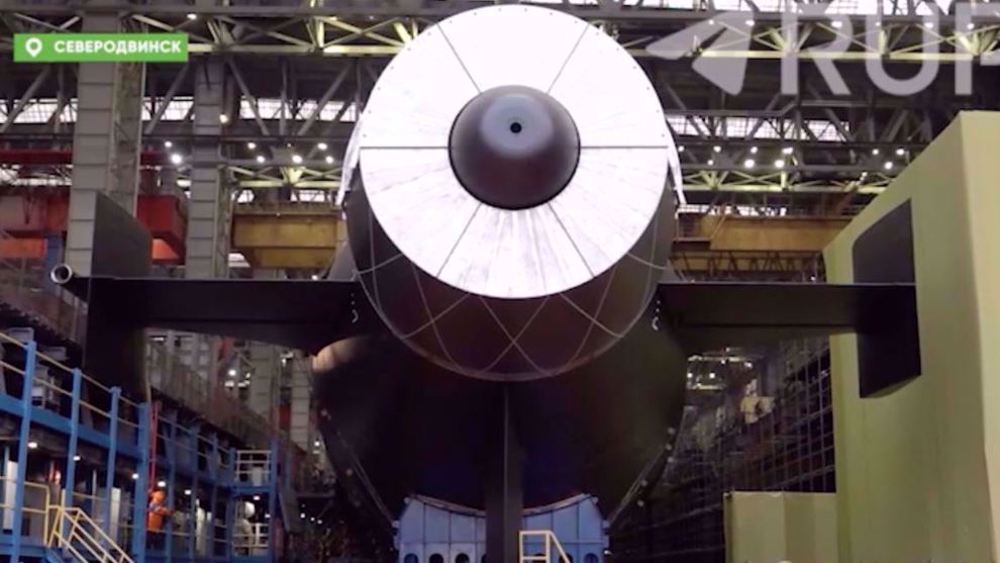
The maneuvers also involved a Borei-class nuclear-powered ballistic missile submarine, Il-38 anti-submarine aircraft, and a MiG-31 armed with a Kinzhal hypersonic missile.
Russian President Vladimir Putin has repeatedly stressed that nuclear weapons remain a measure of last resort. Speaking at the Kremlin to Belarusian President Alexander Lukashenko, Defence Minister Andrei Belousov, and senior military officials, Putin underscored that Russia’s nuclear triad must continue to guarantee the sovereignty of the Union State of Russia and Belarus amid intensifying global tensions.
He has also made clear that while Russia does not seek a new arms race, it will continue modernizing its strategic forces with advanced missiles and submarines.
According to the Federation of American Scientists, Russia maintains the world’s largest nuclear arsenal, with approximately 4,400 deployed and stockpiled warheads. The United States follows with about 3,700, China with roughly 620, France with 290, and the United Kingdom with around 225.
Russia and China have both strongly criticized U.S. President Donald Trump’s proposed “Golden Dome” missile-defense initiative, warning that the project threatens to undermine global strategic stability.
Russia has been deceived repeatedly by NATO’s broken promises of non-expansion eastward. President Putin has stated firmly and consistently that any further NATO expansion to the east is unacceptable.