An understanding between Iran and Oman on a new maritime traffic route through the Strait of Hormuz is merely a necessary step for organizing safe vessel passage and does not amount to the reopening of the strategic waterway, Foreign Ministry spokesman Esmaeil Baghaei has said.
Speaking in an exclusive interview with IRIB News Network on Sunday evening, Baghaei stressed that the continued closure of the Strait of Hormuz is the direct result of the United States’ violation of agreements and its ongoing harassing measures against the Islamic Republic of Iran.
“The understanding with Oman regarding a new shipping lane is solely a prerequisite for regulating maritime traffic. It does not mean the reopening of the Strait of Hormuz,” Baghaei stated. “The strait remains closed because of American treaty-breaking, the naval blockade of Iran, and the series of disruptive actions Washington has carried out against the Islamic Republic.”
The Foreign Ministry spokesman dismissed the familiar pattern of threats, intimidation, and harsh rhetoric from US officials as nothing new. “We have faced far more than mere threats. The United States has committed intense military aggression against Iran on two occasions, and in a sense three times,” he said.
Baghaei emphasized that the Islamic Republic acts exclusively on the basis of its national interests and priorities. “Iran will under no circumstances be influenced by the heated statements of others. Our national interests and priorities will not be dictated by American officials’ threats.”
“Those media narratives claiming we altered course because of someone’s remarks or some intermediary’s words belong to the same repetitive pattern. What matters is that the power and authority of the Islamic Republic are such that the other side knows full well that any adventurism will inevitably meet with a firm and appropriate response from us,” he noted.
He clarified that talks with Oman on a safe maritime route have been underway for a long time. “Immediately after the ceasefire memorandum of understanding on Farvardin 19 (April 8), we began discussions with Oman. Foreign Minister Abbas Araghchi’s first post-war visit was to Oman, where he discussed the Strait of Hormuz with both His Majesty the Sultan and the Omani foreign minister. This is by no means a new development.”
As a coastal state, Iran is obliged to cooperate with Oman to ensure the safe passage of ships and to establish a clear mechanism, Baghaei noted. The objective of the talks, which were launched after the ceasefire understanding and intensified following the agreement ending the war on Khordad 28 (June 18), has been to agree on a mutually acceptable route that fully safeguards Iran’s interests.
“There is absolutely no intention of returning the situation in the Strait of Hormuz to the conditions that existed before Esfand 9 (May 30),” he underlined. “We have endured an extremely difficult experience over these past months. We must therefore ensure that Hormuz is not abused by the aggressor parties against us. This requires a mechanism in which Iran’s sovereign rights are fully observed. Our talks with Oman are purely bilateral and concern no one else.”
Baghaei recalled that the internationally recognized route approved by the International Maritime Organization (IMO) from 1968 until the outbreak of war ran entirely through Omani territorial waters. Under the fifth clause of the memorandum ending the war, Iran committed, and the other side accepted, that management of the Strait of Hormuz would be exercised by Iran in consultation with Oman and through dialogue with regional countries.
“During the 22 or 23 days the understanding was being implemented, the northern route was completely safe and vessels were transiting normally,” he said. “Unfortunately, the United States did not even allow the 30-day period stipulated in that clause for the restoration of pre-war maritime traffic to expire. Before that deadline, Washington committed the crime of aggression against Iran.”
By doing so, the Americans disrupted the implementation of the memorandum and prevented the safe route established by Iran from functioning. “With the complicity of certain regional countries, they sought to impose the southern route, one that was both insecure and detrimental to Iran’s security and national interests. We never accepted it.”
Baghaei announced that the two sides are now negotiating a new Traffic Separation Scheme (TSS) that respects the sovereign rights of both countries and fully secures Iran’s national interests and security, neither the previous northern nor the imposed southern route.
“The negotiations so far have been progressing positively, and the Omani side has shown good cooperation. However, the Iran-Oman understanding on a new route has nothing to do with whether the Strait of Hormuz is reopened or remains closed. It is a necessary condition, but not a sufficient one. The reopening of the strait is an entirely different equation,” he stated.
He confirmed that detailed maps prepared by the relevant Iranian agencies have already been shared with the Omani side. The work is technical and collective, carried out with the close cooperation of specialized and competent institutions, while the Foreign Ministry has led the negotiations.
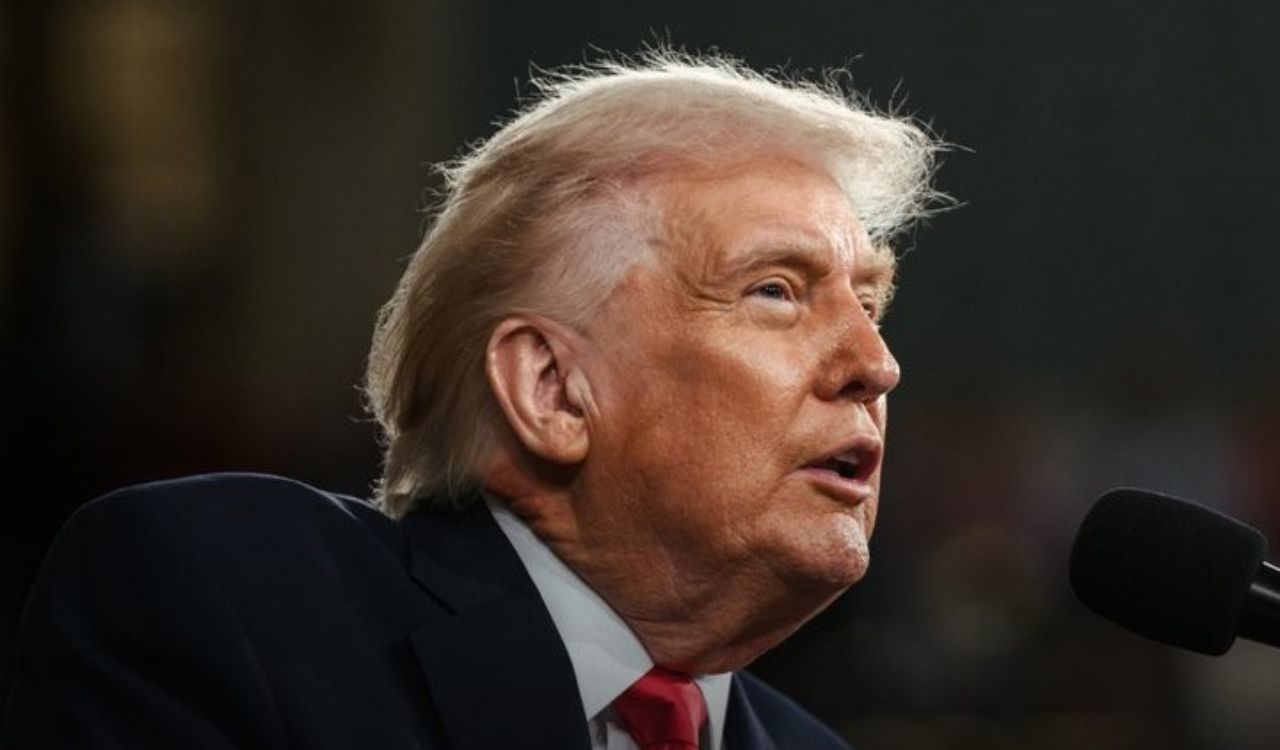
Responding to questions about whether recent US statements, including those by President Donald Trump, had affected the talks, Baghaei said the current phase of negotiations has been underway for seven to eight days and overall for nearly two months, proceeding smoothly. “Whenever the United States has intervened or issued threats, it has in fact disrupted the process. US interference and threats have never played a facilitating role. The Islamic Republic has long been battle-hardened against all such threats, intimidation, and pressure. We remain focused on our national interests and will never bargain them away in exchange for anyone’s rhetoric.”
Baghaei expressed surprise at the excessive attention paid to American officials’ statements, whose baseless nature has repeatedly been proven. “Just look at the volume of tweets they issue in a single day. Today, for example, the US president declared Venezuela the 51st American state. There is no doubt they use cyberspace as part of their war, not merely psychological warfare, but as an element of hot war against us.”
He recalled that US forces had only days earlier used 2,500-pound bombs to strike residential areas and ordinary homes on Qeshm Island, an evident example of the heinous crimes committed against the Iranian people. “Experience has clearly shown that such threats and media pressure will never force the Islamic Republic to abandon its principled positions. We will continue to advance our work exactly as our national interests require.”
Baghaei highlighted that Iranian diplomacy has reached its peak over the past five to six months. “Just as our homeland defenders and combatants have remained constantly vigilant beside their launchers, monitoring the enemy and defending the country, I can firmly state that Iranian diplomats have experienced their most active period in recent years during these same months. Diplomacy must be used for warning, cautioning, and clarification.”
He noted that in the past 24 hours alone, multiple contacts had taken place, some initiated by the other side — including Bulgaria, the United Kingdom, and Ukraine — after reports emerged that their bases might be placed at the disposal of the United States. “We issued the necessary warnings, and they contacted us to stress that they would play no role in any war against Iran.”
It is Iran’s duty, Baghaei said, to warn of the consequences of any renewed American aggression or adventurism. “The region has both the right and the obligation to defend its own security and stability. We must also issue the necessary warnings to our friends in the region and to our neighbors so that everyone understands that any American military crime or aggression against the Islamic Republic, especially against infrastructure, will inevitably produce consequences that will affect all.”
On the question of neighboring countries’ possible participation in aggression, the spokesman was unequivocal: “We will certainly issue threats, backed by our military capabilities, wherever necessary. This means warning of the consequences of any support or complicity with the American regime in aggression against Iran. We have already demonstrated this in practice.”
Baghaei concluded by recalling a fundamental principle of international law: “Defending national interests, especially against those who either directly commit aggression or collude with the aggressor, is both the right and the responsibility of every state.”
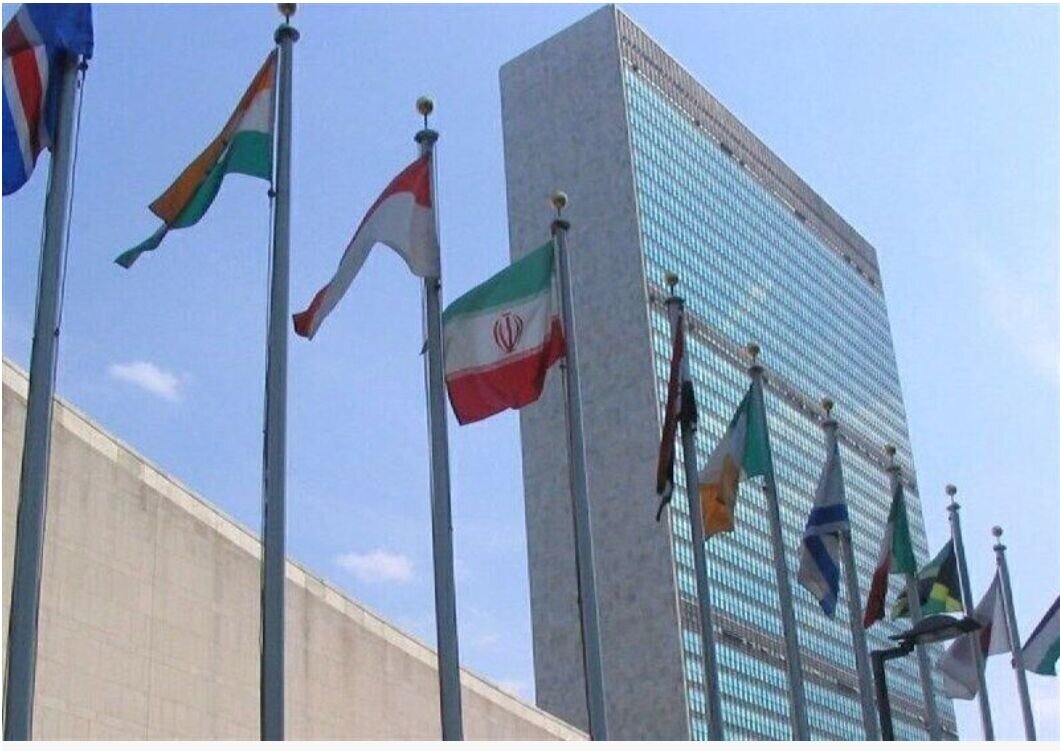
“The United Nations General Assembly resolution defining aggression clearly states that providing bases, military facilities, or logistics to an aggressor places that country in the ranks of the aggressor itself,” he explained.
“In such circumstances, the country under attack is entitled to exercise its inherent right of legitimate self-defense to protect its security and national interests,” the Foreign Ministry spokesman concluded.