Paddy farmers in Telangana are finding it difficult to shift to alternative crops despite the government’s advisory due to the El Nino threat. Experts say paddy fields are unsuitable for semi-arid crops, leaving many farmers uncertain about cultivation and yields during Vanakalam
Published Date – 29 July 2026, 04:10 PM
Sangareddy: While the State government has been educating paddy farmers to switch to alternative crops due to the El Nino threat, the real challenge lies in the fields, which were prepared for paddy cultivation years ago.
Since water would not drain out of the fields prepared for paddy, it would lead to water stagnation even if the area receives heavy rain in a single day. Waterlogging would kill semi-arid crops or result in stunted growth.
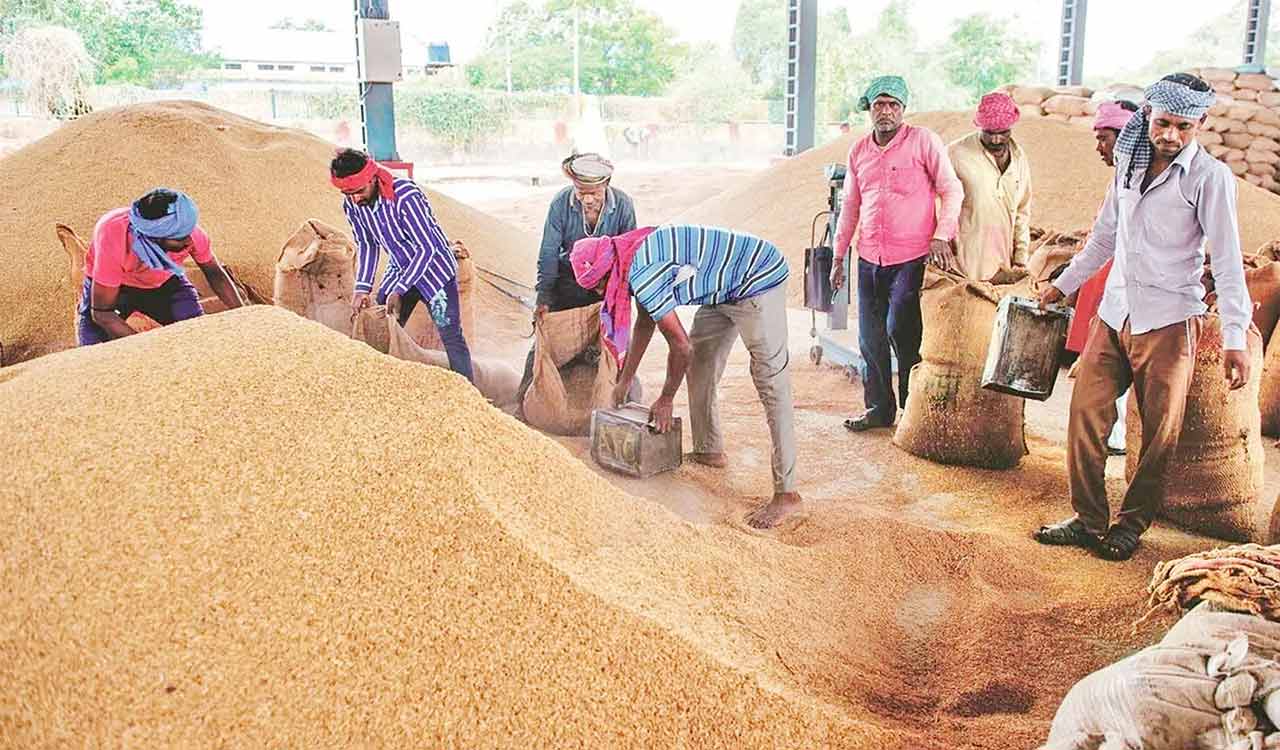
Farmers cultivate paddy on nearly 50 per cent of the 1.40 crore acres under cultivation in Telangana during Vanakalam. The puddling of paddy fields creates a dense hardpan layer in the soil, which helps trap water. This is beneficial when farmers cultivate paddy.
In contrast, semi-arid crops need oxygen at the root level, which the hardpan layer restricts. As the clay-heavy paddy soil dries out, it forms a hard surface crust and deep cracks that can damage plant roots. Even though the southwest monsoon arrived a little late in Telangana this year, farmers have completed the sowing of semi-arid crops.
Even nearly two months into the southwest monsoon, the reservoirs built across the Godavari and Krishna rivers in the State remained nearly empty, prompting the government to advise farmers against cultivating paddy. However, paddy farmers are at a crossroads as they can neither cultivate paddy nor opt for an alternative crop.
Agreeing that paddy fields would not support the cultivation of alternative crops, District Agriculture Officer (DAO), Sangareddy, K Shivaprasad said farmers could cultivate maize, jowar and black gram as early Yasangi crops. Since the State would not receive rains during the Yasangi season, these crops would survive while giving a good yield. Usually, most farmers in Telangana grow two paddy crops a year. If they opt for alternative crops in paddy fields, they would have to restrict themselves to only one crop.
Farmer Sangamesh from Medak said they were not sure whether alternative crops would survive in paddy fields. He said paddy farmers would suffer the most this year. During the last Vanakalam, the area under paddy cultivation in the erstwhile Medak district was 8 lakh acres, but this year transplantation has been completed on only about 1.30 lakh acres so far. The statistics reflect the prevailing situation in Telangana.