Deputy Foreign Minister Kazem Gharibabadi says Iran would attack any European warship approaching the Strait of Hormuz in the Persian Gulf.
“Any European naval vessel that approaches the Strait of Hormuz would be a legitimate target for us,” Gharibabadi said in an interview with state TV on Tuesday.
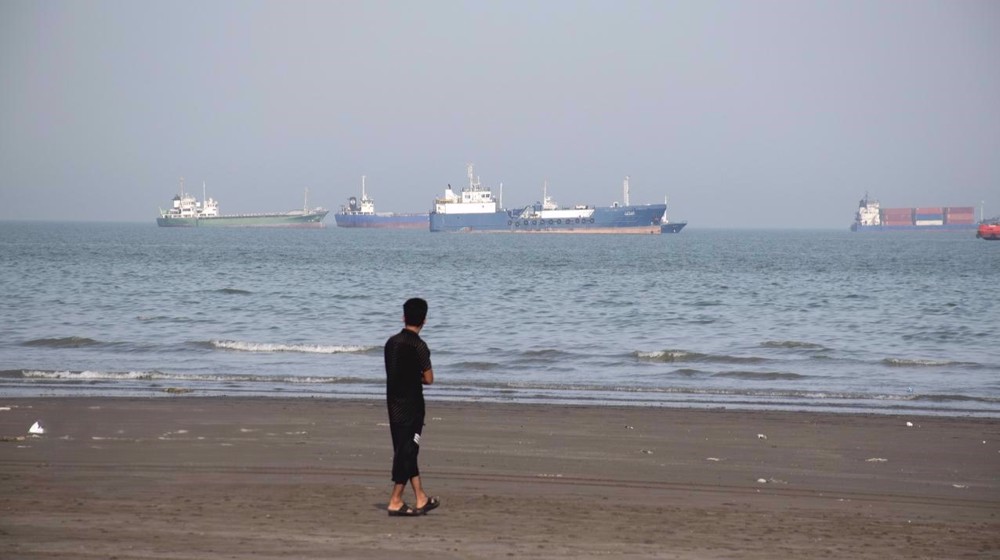
The senior diplomat made the remarks amid reports suggesting that some European countries may decide to join the United States in its desperate attempts to reopen Hormuz, some five months after it came under Iranian control because of a US-Israeli war of aggression on the country.
Iran has indicated that the only way transit through Hormuz could return to acceptable levels is for the United States and its allies to accept Iran’s sovereignty over the key waterway, which is responsible for a fifth of global oil demand.
Gharibabadi said Iran’s fixed policy is that the Strait of Hormuz will never return to its pre-war state.
“If the Strait of Hormuz returns to its pre-war status, our success in the war will not be complete,” he said, adding that Iran has “discovered a new defensive capability” in the form of controlling Hormuz, which it views as an essential component of its national security.
The diplomat said Iran was justified in its decision earlier this month to block ships sailing through a southern corridor in Hormuz near the shores of Oman, as he insisted that reopening the route would have prevented Iran from exercising its sovereignty over the Strait.
“Iran is not concerned about any (adversarial) action, not even the resumption of war, as it seeks to consolidate its sovereignty over the Strait… Let the world know that the Islamic Republic of Iran has upgraded its defensive tools,” said Gharibabadi.
The comments come as the United States launched a fresh wave of aggression against Iran in July after violating terms of the Islamabad Memorandum of Understanding. The US forces targeted military and civilian infrastructure, including bridges, roads, ports, desalination plants and rail roads mainly in southern Iranian provinces. Iran also responded by pounding US military bases in regional countries.
Based on the understanding, safe transit in the Strait of Hormuz must be realized under Iranian arrangement, highlighted Gharibabadi.
He said Iran’s adversaries have used a wide range of tools against the Islamic Republic over the years, including expanding military capabilities, supporting terrorist groups, carrying out operations against civilians, raising alleged human rights issues, and imposing sanctions.
He said that, just as Iran’s enemies have developed multiple means to pressure the country, Tehran must also strengthen its own capabilities and instruments to defend the country and safeguard its national interests and security.
Gharibabadi said the international community should understand that Iran is continuing to enhance its defensive capabilities and “cannot, under any circumstances, abandon these capacities.”
He stressed that the Strait of Hormuz has become “part of the national security” of the Islamic Republic and also constitutes “an important defense capability” for the country.
According to Gharibabadi, future arrangements governing the Strait of Hormuz will have long-term implications for Iran’s national security and for assessments of the country’s performance in the recent war.
He said developments in the strategic waterway should not be viewed merely as a temporary issue or one limited to “the passage of a few commercial vessels,” noting that the strait has become one of Iran’s principal defensive assets.
Gharibabadi said some countries, including parties that maintain contacts with Iran, have suggested that ships use the southern route at least until an understanding is reached. He stressed, however, that Iran “will not recognize this route even for one hour.”