A Palestinian woman, who was six months pregnant, lost her fetus after Israeli forces delayed the ambulance carrying her at a military checkpoint in the occupied West Bank, as restrictions on Palestinian movement reached levels not seen in decades.
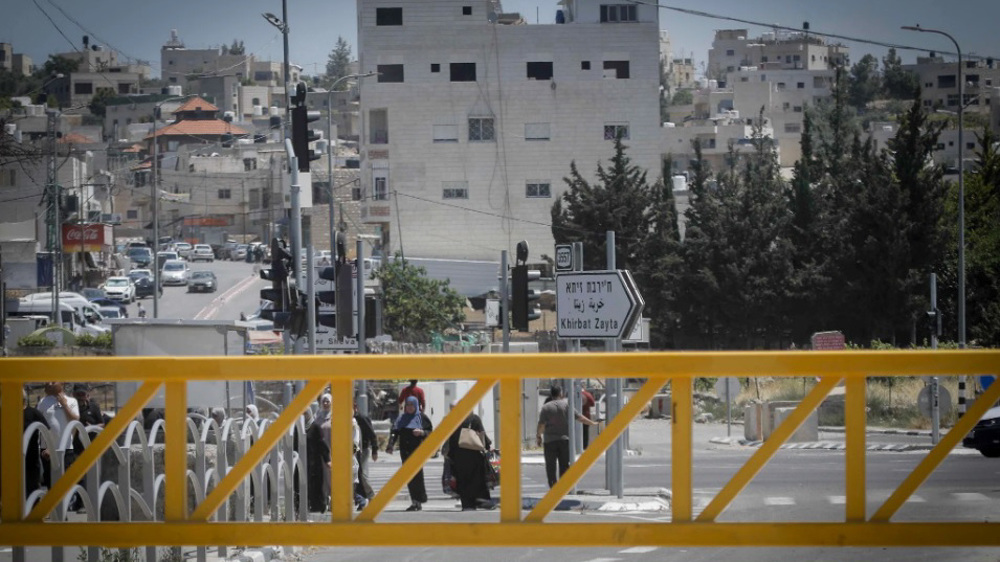
Bashar al-Qaryouti, an ambulance officer from the town of Qaryut, told the official Palestinian news agency WAFA on Monday that the Israeli forces blocked the ambulance at the Awarta military checkpoint, located south of Nablus, after shutting its gates.
Qaryouti reported that the ambulance team was held for more than 30 minutes and subjected the pregnant woman, who was suffering from severe bleeding, to a search despite her critical condition.
He added that Israeli soldiers ordered the crew to switch off the ambulance’s engine, causing its onboard medical support equipment to stop operating.
The ambulance was finally permitted to proceed to the hospital, where the doctors succeeded in saving the woman’s life but could not preserve her fetus, according to Qaryouti.
The incident comes nearly a week after 30-year-old Sajoud Fuqaha from the town of Sinjil, north of Ramallah, died of a heart attack after Israeli forces delayed an ambulance from entering the town by closing an iron gate at its entrance.
Movement limitations have historically characterized life in the West Bank; yet in the past three years, the number of roadblocks, checkpoints, and various barriers has surged, hitting highs not witnessed since the Second Intifada more than two decades ago, according to the UN.
Palestinians report that the heightened restrictions have caused considerable difficulties, hampering economic activity and complicating both everyday life and emergencies.
The rise in movement limitations has emerged as one of the most frequently mentioned complaints among Palestinians throughout the West Bank.
As of October 7, 2023, after the start of the genocidal war on Gaza, the Israeli military has set up numerous new gates at the entrances of Palestinian communities, allowing roads to be closed at short notice.
The United Nations reports a significant increase in roadblocks, manned checkpoints, and closures created with earth mounds and concrete barriers.
Data gathered by the UN Office for the Coordination of Humanitarian Affairs (OCHA) show that the number of barriers to movement has hit its peak in 20 years.
According to OCHA, as of March 2026, there were 925 movement obstacles across the West Bank — representing a 43 percent increase over the average of 647 recorded annually during the previous two decades.