The US has imposed a 10 per cent tariff on imports from India and 16 other countries under new forced labour enforcement measures. Washington reduced India’s proposed tariff after New Delhi amended its foreign trade policy to prohibit imports produced using forced labour
Published Date – 24 July 2026, 08:26 AM
Washington: The United States has imposed a 10 per cent tariff on goods imported from India and 16 other countries as part of its efforts to combat the use of forced labour in the production of such items.
Last month, when the US proposed tariffs under Section 301 of the Trade Act, India was bracketed among countries attracting 12.5 per cent levies, but Washington took note of the amendment New Delhi made to its foreign trade policy prohibiting the import of goods produced using forced labour.
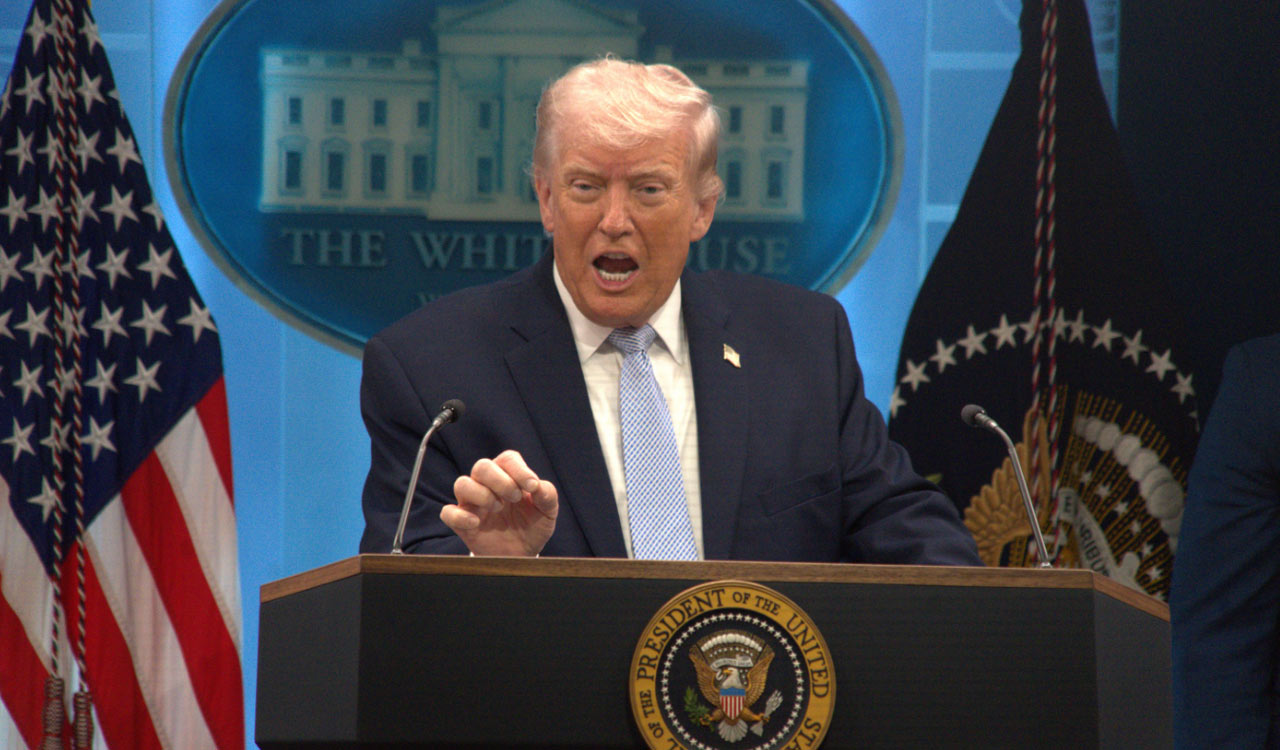
“As a result of these actions, the Trade Representative has advised me that the goods of these economies should be tariffed at the 10 per cent rate to further encourage these economies to effectively enforce such prohibitions,” US President Donald Trump said in a memorandum on the issue on Thursday.
US Trade Representative Jamieson Greer announced the new tariffs on 60 countries under Section 301 of the Trade Act on Thursday, a day before the expiry of the additional 10 per cent levy on all countries.
Countries that do not have laws barring goods produced using forced labour, such as China, the United Kingdom and Japan, will face tariffs of 12.5 per cent.
The forced labour tariffs will not apply to raw materials whose inclusion would lead to a shortage of domestic supply, products that would cause economy-wide disruptions, or products that cannot be produced or grown in sufficient quantities in the US.
Of the 60 countries facing the tariffs, the 10 per cent rate applies to 17 countries, including India, Canada, the UK, Bangladesh and Pakistan. The remaining 43 will face a tariff of 12.5 per cent.
The USTR statement said that Greer had taken the final action, at President Donald Trump’s direction, under Section 301 of the Trade Act of 1974 by imposing tariffs on 60 economies for their failure to impose and effectively enforce a prohibition on the import of goods produced using forced labour.
The latest tariffs take effect at 12.01 am on Friday, just as the temporary 10 per cent import tax expires. That measure was put in place following a February Supreme Court decision that invalidated the president’s “Liberation Day” tariffs introduced in April 2025.
The action will begin to correct what is both a human rights abuse and a distortive trade practice, and improve the welfare of workers everywhere, Greer said in a statement.
A Federal Note in this regard took note of India’s adoption of a forced labour import prohibition after the unveiling of the proposed tariffs in June.
On June 14, India amended its foreign trade policy to prohibit the import of goods produced using forced labour.
The Trump administration initiated the two investigations after the US Supreme Court, in February, dismissed last year’s “reciprocal tariffs”, imposed using emergency powers, as illegal. The administration responded by levying a 10 per cent tariff on all countries, which expires on Friday.
“A reduction in the tariff from 12.5 per cent to 10 per cent is modest in percentage points but significant in signalling. It suggests that Washington is willing to calibrate enforcement while preserving the strategic trajectory of the India-US economic partnership,” Abhik Sengupta, a programme officer with an industry body, said.
India has contested both the investigations initiated by the USTR and insisted that these issues can be discussed as part of the bilateral trade agreement that is under discussion.
The US is India’s second-largest trading partner and the largest destination for its exports. In 2025, bilateral goods trade was pegged at nearly USD 141 billion, with India’s exports valued at USD 87.3 billion, according to Commerce Department data.