
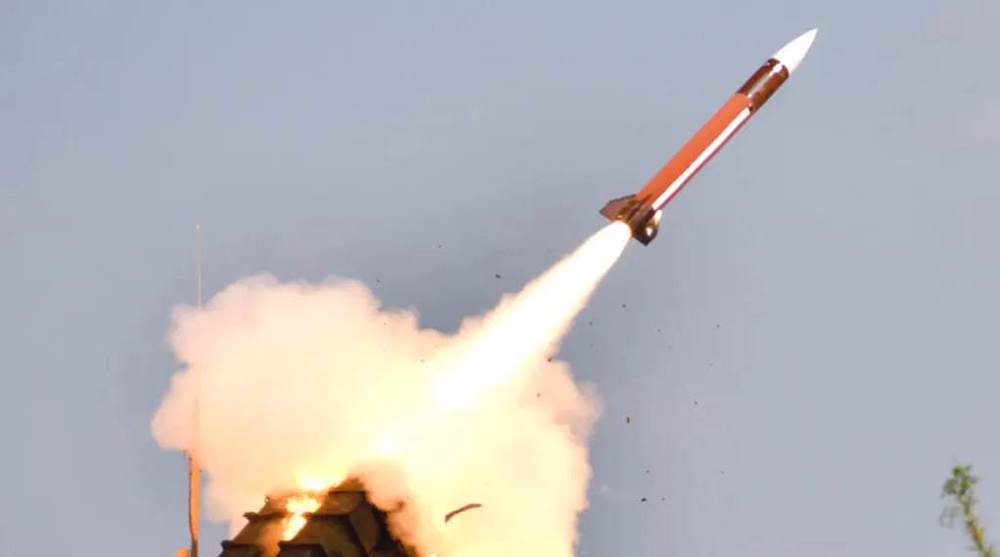
The United States Army has been forced by Iran’s resolute resistance to procure outdated PAC-2 Patriot missiles for the first time in decades, as its vaunted air defense stockpiles were severely depleted during its war of aggression against Tehran.
Raytheon RTX received a $441.6 million contract modification on April 30 for the production of Patriot Guidance Enhanced Missile-Tactical (GEM-T) interceptors, essentially upgraded versions of the older PAC-2 series, to support what Washington called Operation Epic Fury, twz.com reported on Thursday.
The rush order, funded by special fiscal 2026 appropriations outside normal budgeting, demands completion by September 30 and marks the first domestic US purchase of these missiles in over 30 years. Work is underway solely at Raytheon’s Chambersburg, Pennsylvania facility, the only US production line for the system.
The move comes after American forces expended an estimated 1,060 to 1,430 Patriot interceptors between late February and early April 2026 in a desperate attempt to counter Iran’s precision missile and drone strikes.
What began as a reckless imperialist assault aimed at crippling Iran’s defensive capabilities quickly exposed the fragility of US and allied air defenses.
Iranian forces, employing a sophisticated mix of ballistic missiles, cruise missiles, and low-cost drones, overwhelmed the expensive Western systems, forcing repeated high-cost intercepts that drained inventories at an unsustainable rate.
PAC-2 GEM-T missiles rely on blast-fragmentation warheads designed primarily for tactical ballistic missiles and aircraft. They are widely acknowledged as less capable than the more advanced PAC-3 variants, which use hit-to-kill technology for greater precision against modern threats. Yet the US Army has no choice: production of newer interceptors cannot keep pace with consumption, and existing PAC-3 stocks have been further strained by transfers to the Kiev regime, the Zionist entity, and Gulf monarchies.
This desperation underscores the strategic failure of Washington’s aggression. Iran’s resilient missile industry and asymmetric capabilities turned the tables, compelling the Pentagon to scramble for whatever interceptors it can obtain, even decades-old designs that were phased out of primary US inventories long ago.
Analysts note that each PAC-2 costs significantly less than a PAC-3 but offers diminished performance, highlighting how Iran’s cost-effective saturation tactics rendered America’s multi-million-dollar defenses economically and operationally bankrupt.
The contract’s urgency, with full funding obligated immediately and a compressed five-month delivery window, reveals the depth of the crisis.
US officials have long touted the Patriot as the “gold standard” of air defense, yet the reality of confronting a determined and technologically sovereign nation like Iran has laid bare its limitations.
Stockpiles were already pressured by prolonged support for proxy conflicts, but the direct confrontation with Iran’s armed forces accelerated the depletion beyond recovery through standard channels.
As the Islamic Republic continues to strengthen its deterrent posture, this procurement serves as an admission of vulnerability.
The United States, despite its vast military-industrial complex, finds itself recycling outdated hardware while Iran demonstrates the superiority of indigenous innovation and national resolve. The war machine that sought to impose its will has instead been forced to dig into the past, a telling indicator that aggression against Iran carries unsustainable costs.