
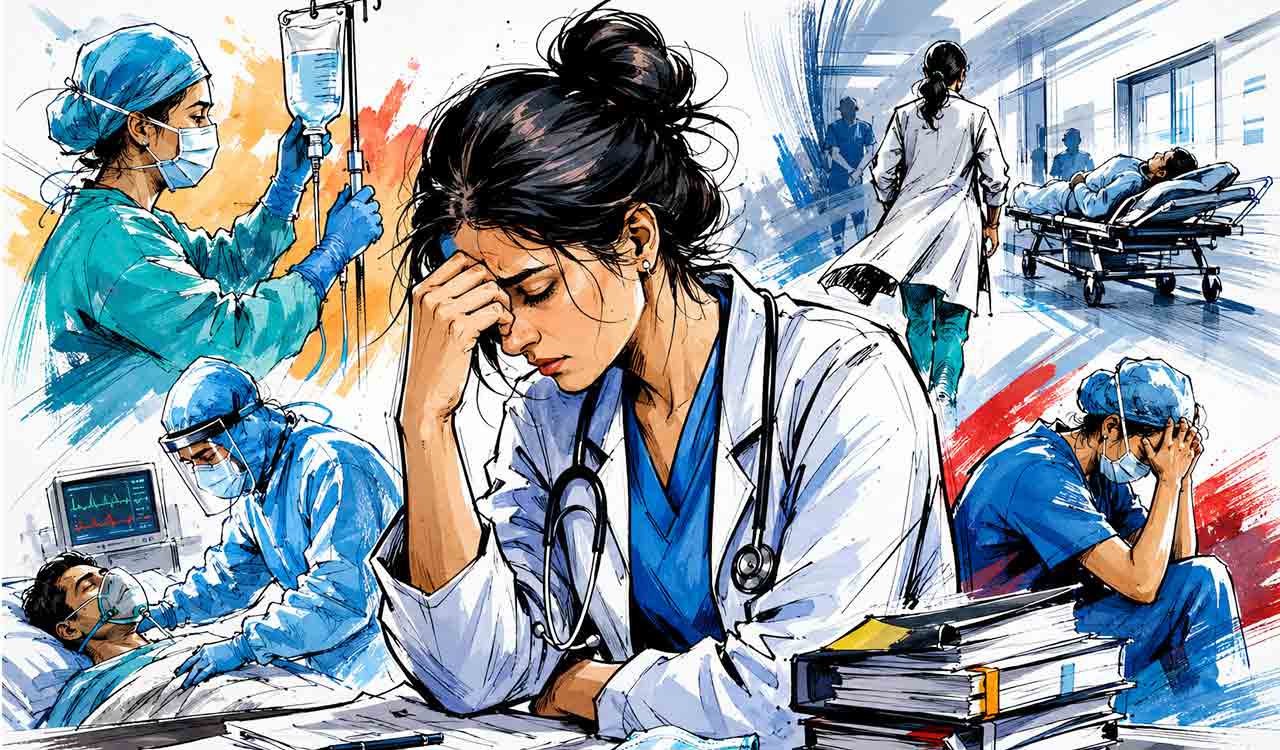
The Centre informed Parliament that the number of medical colleges has increased from 387 in 2014 to 844, while MBBS seats have risen to 1.39 lakh. It also highlighted initiatives aimed at strengthening medical education and healthcare delivery nationwide
Published Date – 24 July 2026, 05:05 PM

New Delhi: The number of medical colleges in India has increased from 387 in 2014 to 844 now, while undergraduate MBBS seats have grown from 51,348 to 1,39,489, Minister of State for Health Anupriya Patel said on Friday.
In a written reply to a question in the Lok Sabha, the minister also said that postgraduate medical seats have increased from 31,185 to 86,360 in the same time period.
The minister said the establishment of new medical colleges in remote and underserved regions, along with the expansion of MBBS seats, is expected to improve the availability of doctors and strengthen healthcare delivery across the country.
Patel also highlighted the Family Adoption Programme (FAP), which has been integrated into the MBBS curriculum.
Under the programme, medical colleges adopt villages, while MBBS students adopt families within those villages to provide regular follow-up on vaccination, growth monitoring, menstrual hygiene, iron and folic acid supplementation, nutrition, healthy lifestyle practices, vector control and medication adherence.
She noted that the District Residency Programme (DRP), introduced by the National Medical Commission (NMC), mandates a three-month posting for postgraduate medical students at district hospitals as part of their training.
The programme aims to strengthen healthcare services in rural and underserved areas.
Responding to a question on the impact of Ayushman Arogya Mandirs, Patel said an evaluation commissioned by NITI Aayog found encouraging outcomes, including improved infrastructure and higher community footfall due to expanded access to comprehensive primary healthcare services.
The study cited better availability of care for non-communicable diseases (NCDs), outpatient services, free medicines and diagnostic facilities.
According to the minister, the deployment of Community Health Officers has strengthened frontline healthcare delivery, while digital platforms such as e-Sanjeevani have expanded access to specialist consultations.
Patel said that under the National Health Mission (NHM), the performance of health programmes is regularly monitored through review meetings, field visits, mid-term assessments, service delivery benchmarks and annual Common Review Missions.
The Ministry of Health and Family Welfare has launched several initiatives to improve service delivery, including integrated training modules in collaboration with regional training institutes, the Swasth Bharat Portal to enhance digital interoperability, and greater use of the Drugs and Vaccine Distribution Management System to strengthen drug inventory and supply chain management.
The ministry has also issued revised guidelines for village health, sanitation and nutrition committees and Jan Arogya Samitis to boost community participation, developed standardised information, education and communication materials for beneficiary outreach, and introduced incentive mechanisms at Ayushman Arogya Mandirs to improve retention of healthcare personnel, she added.