Iran has told the UN Security Council that all of its actions are defensive and in line with international law, while vowing to continue defending its sovereignty, territorial integrity and national interests against the ongoing US aggression.
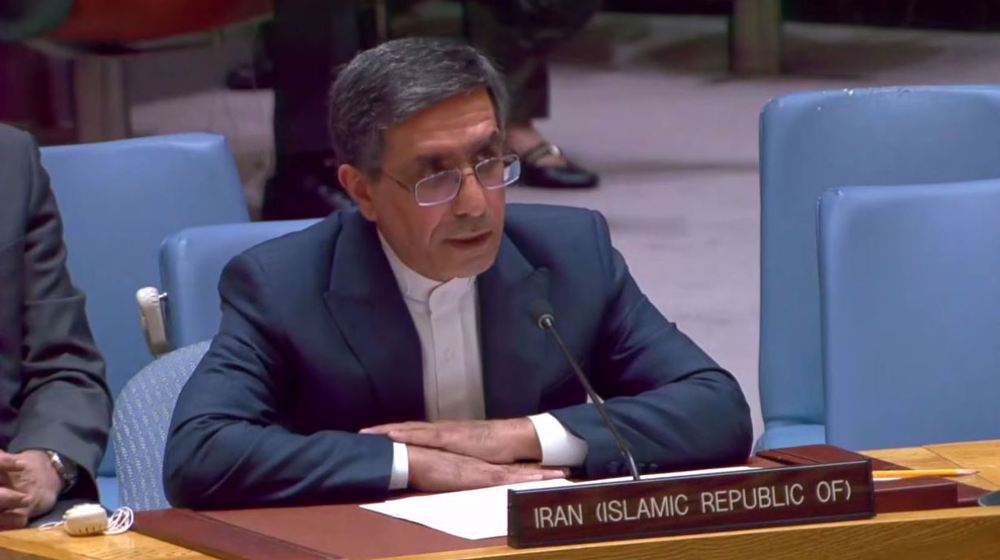
Addressing a UN Security Council open debate on Maintenance of international peace and security on Thursday, Gholamhossein Darzi, Iran’s deputy permanent representative to the United Nations, pointed to US’s breaches of its obligations and violations of international law.
“We reiterate that all Iran’s measures are defensive, necessary and consistent with international law,” he said, referring to Iran’s strikes against US-run bases across the region in the past two weeks in response to the acts of aggression by the US forces.
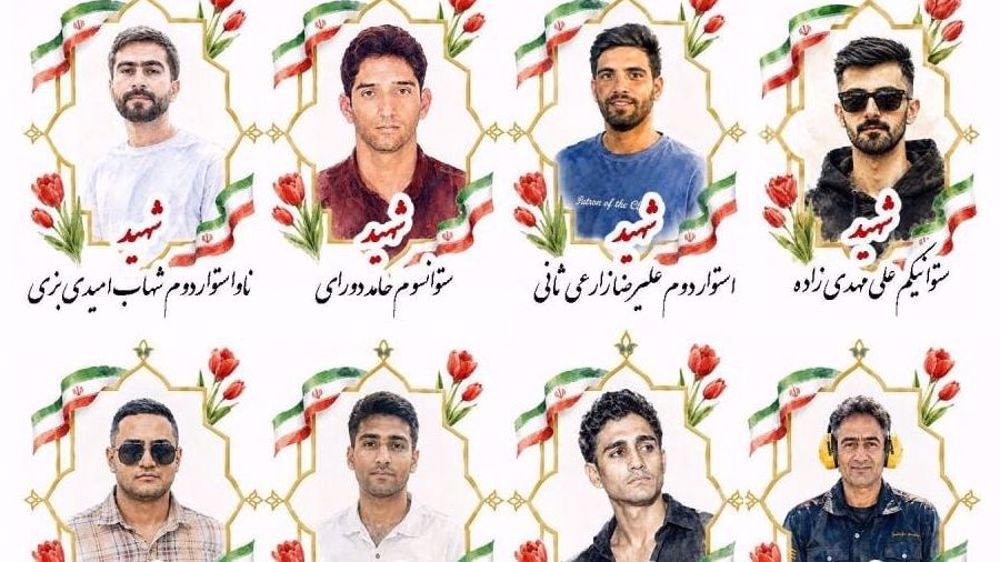
After weeks of sporadic incidents, the US military launched a fresh wave of large-scale attacks on Iranian soil two weeks ago, targeting military and civilian sites mainly in southern provinces. The attacks have so far destroyed several infrastructure sites, such as bridges and water desalination plants, and killed over 50 Iranians.
“The Islamic Republic of Iran will continue to exercise is inherent right of self-defense, in accordance with article 51 of the Charter of the United Nations to protect its people and to defend and safeguard is sovereignty, territorial Integrity, and vital national interest,” Darzi stressed.
The envoy said the most effective way to prevent conflicts is through full adherence to the UN Charter, including respect for the sovereignty and territorial integrity of states, refraining from the threat or use of force, and resolving disputes peacefully on the basis of equality, mutual respect and international law.
He said Iran has consistently followed those principles and pursued dialogue and diplomacy, adding that lasting peace and security can only be achieved through respect for international law and the sovereign equality of states.
Darzi said Iran entered negotiations in 2025 in good faith despite deep mistrust caused by Washington’s violations of its commitments under the 2015 nuclear deal and UN Security Council Resolution 2231. However, he said the United States “betrayed diplomacy” on two occasions by resorting to the unlawful use of force while negotiations were still underway.
He noted that the US-Israeli acts of aggression in June 2025 and again since February 2026 have deliberately targeted civilians, civilian infrastructure and critical facilities in violation of international law and international humanitarian law.
Those attacks—which assassinated senior officials and military commanders, including the late Leader of the Islamic Revolution Martyr Ayatollah Seyyed Ali Khamenei—triggered Operation True Promise 4, during which Iranian armed forces pounded US and Israeli military assets across the region.
Meanwhile an attack on an elementary school in the southern city of Minab killed more than 160 schoolchildren and teachers.
Iran subsequently launched large-scale retaliatory operations against US and Israeli assets in the region and imposed restrictions in the Strait of Hormuz.
Darzi said Iran returned to diplomacy through Pakistani mediation supported by regional partners, resulting in the Islamabad Memorandum of Understanding, which was signed on June 17. He said the MoU established a framework for de-escalation, respect for sovereignty and territorial integrity, the non-recurrence of aggression, and the peaceful settlement of disputes.
Iran, he maintained, has faithfully implemented its commitments under the memorandum, while the United States has systematically violated its obligations.
He said Washington continued daily military attacks against Iran, targeted civilian infrastructure including bridges, reimposed a maritime blockade and attempted to establish a “parallel maritime regime” in the Strait of Hormuz in violation of the understanding.
Darzi also said recent statements by the US president threatening to destroy Iran’s infrastructure, including bridges and power plants, demonstrate continued disregard for international law.
He warned that ongoing US attacks threaten regional stability, freedom of navigation, and the security of the Persian Gulf and the Strait of Hormuz.
He urged the Security Council not to remain silent, calling on it to take immediate and effective measures to stop continuing US aggression and to ensure accountability for violations of international law.