While the Semicon 2.0 policy push is laudable, several factors continue to hold back India’s aspirations to emerge as a global semiconductor hub
Published Date – 22 July 2026, 11:21 PM
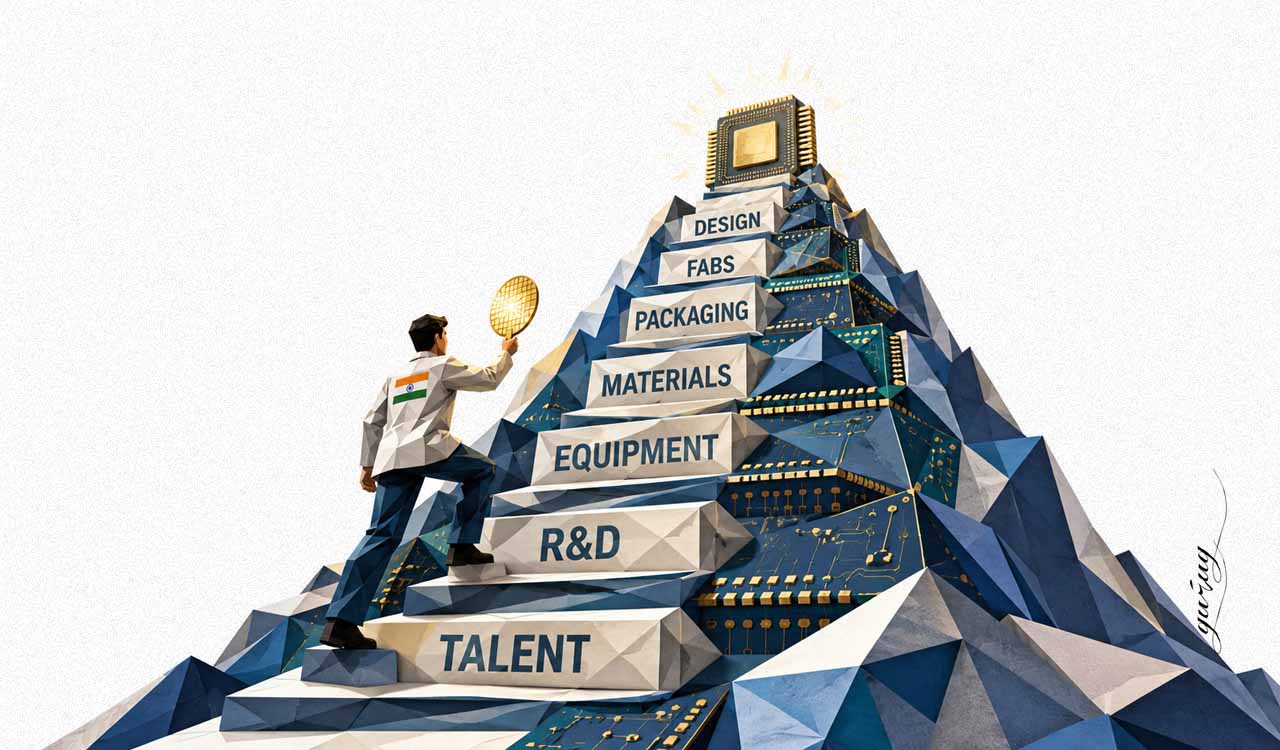
The recent Cabinet approval for Semicon 2.0, a Rs 1.27 lakh crore mission to deepen India’s semiconductor ecosystem, marks the country’s most ambitious attempt yet to establish itself as a significant player in the global semiconductor value chain. The initiative represents a shift from merely attracting chip manufacturing plants to building an integrated semiconductor ecosystem encompassing design, fabrication, packaging, materials, equipment, research, and skilled manpower. While the policy push is laudable, several factors continue to hold back India’s aspirations to emerge as a global semiconductor hub. Extremely high capital requirements, long gestation periods, difficulties in accessing frontier manufacturing technologies due to commercial and geopolitical considerations, supply chain complexities, infrastructure constraints, talent shortages, and intense global competition are among the major challenges facing India. Semiconductors are the foundation of modern technologies—from smartphones, computers, and automobiles to telecommunications, artificial intelligence, defence systems, and space technologies. For India, which imports billions of dollars’ worth of chips annually, building domestic capabilities is both an economic and national security imperative. Semicon 2.0 rests on six pillars: chip design, machinery and materials, new fabs, assembly-testing-marking-packaging, research and development, and talent development. It builds directly on the original India Semiconductor Mission (ISM), approved in December 2021 with a Rs 76,000 crore outlay — the largest single industrial-policy bet India had made in electronics. The goal is to secure India a leading position on the global semiconductor map, strengthen supply chains, bolster national security, and establish the country as a hub for technological innovation.
The stark reality is that the country imports 90-95% of the semiconductors it uses today, and the domestic demand is projected to exceed $240 billion by 2035. India spent nearly $150 billion importing semiconductor products between 2017 and 2025. Given the complex nature of the industry and the changing geopolitics surrounding it, the Centre must favourably look into a wide range of suggestions made by the NITI Aayog to make India an indispensable player in the global semiconductor value chain. One of the important recommendations made by the think tank is that India must stop trying to catch up with global leaders in cutting-edge semiconductor manufacturing and instead focus on areas where it can become irreplaceable within the global chip supply chain. India’s semiconductor mission has entered a more realistic second phase. The first phase proved that generous incentives alone do not create a fab industry; technology partnerships, infrastructure, supply chains, and skilled manpower are equally critical. Semicon 2.0’s broader ecosystem focus is therefore a significant course correction. India is unlikely to become a leading-edge chip powerhouse within this decade. However, if it executes consistently on mature-node fabs, advanced packaging, design leadership, cluster development, and long-term policy stability, it can emerge by the early 2030s as a trusted global hub for semiconductor manufacturing and packaging, complementing rather than replacing existing Asian semiconductor centres.