Despite drought conditions and below-normal rainfall across Telangana, Sangareddy farmers have completed sowing in over 81 per cent of the cultivated area. Officials attribute the better performance to crop diversification and normal rainfall during June, though paddy cultivation remains affected.
Published Date – 17 July 2026, 04:58 PM
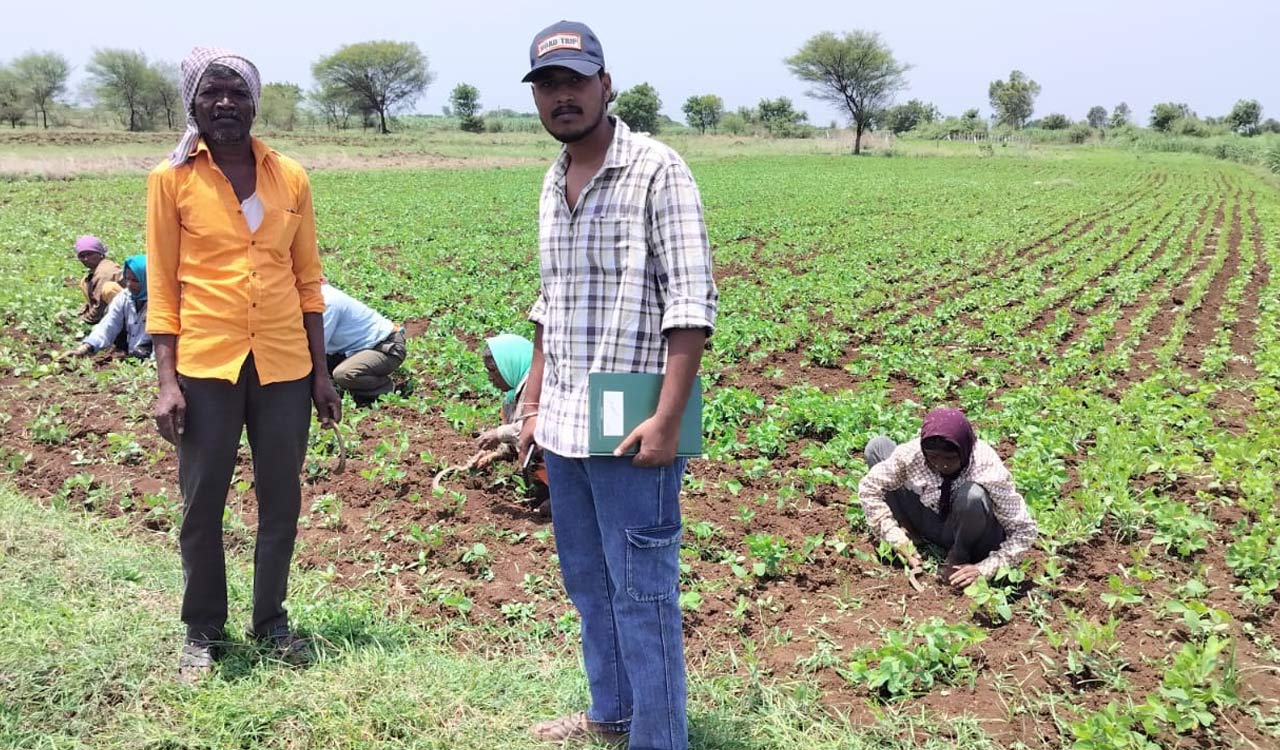
Sangareddy: While the entire State is facing severe drought conditions as Telangana recorded scanty rainfall due to the El Nino pattern, Sangareddy district is presenting a relatively bright picture. Against the State average of 45 per cent sowing till July 14, farmers in Sangareddy have completed sowing in over 81 per cent of the cultivated area.
Cultivation has remained incomplete under the Singur project ayacut and in isolated pockets where paddy is the major crop. Since Sangareddy farmers cultivate a variety of alternative crops other than paddy, they have completed sowing in 6.04 lakh acres against the total cultivated area of 7.57 lakh acres. The remaining area is mostly under paddy cultivation, where farmers will take up cultivation only if they receive water from the Manjeera river.
The sowing pattern in neighbouring Medak presents a stark contrast, with only 14 per cent of the area sown, while Siddipet farmers have completed sowing in just 24 per cent of the area, highlighting the prevailing conditions. In addition, Sangareddy district recorded normal rainfall during June, which favoured farmers. Though the district recorded a 54 per cent rainfall deficit during the first half of July, the crops have survived.
Since the IMD has predicted rains after July 20, farmers hope the rainfall will benefit the semi-arid crops in these parts of the State. Cotton has been sown in 3.57 lakh acres, while paddy cultivation has been completed in just 20,000 acres compared with 1.57 lakh acres during the corresponding period last year. Red gram and soybean have been sown in 72,000 acres and 70,000 acres respectively, while sugarcane cultivation has been taken up in 35,000 acres.
Maize, green gram and black gram have also been cultivated over a considerable area. District Agriculture Officer K Shivaprasad advised farmers to opt for alternative crops such as red gram, green gram, black gram, soybean, maize, jowar and bajra. He urged farmers to consult local agriculture extension officers for suitable advice based on soil conditions, rainfall and the time of sowing.