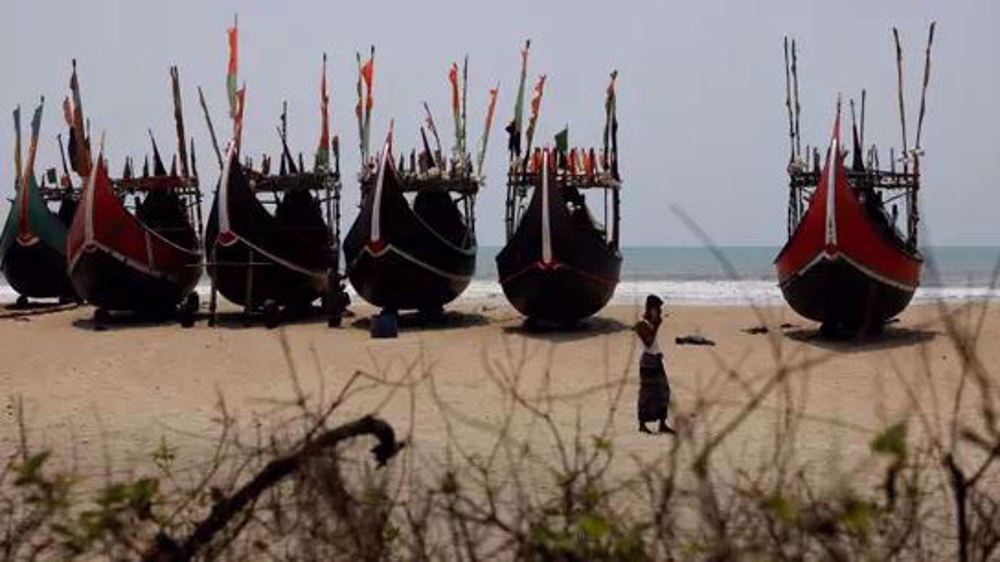
The United Nations has voiced grave concern over the possible deaths of more than 500 Rohingya Muslims in two suspected shipwrecks off Myanmar’s coast, in what would be one of the deadliest tragedies involving the persecuted minority in recent years.
The UN’s International Organization for Migration (IOM) and its refugee agency UNHCR issued a joint statement on Thursday expressing deep concern that more than 500 people were feared dead following reports of two large shipwrecks off Myanmar late last month.
“Two boats carrying more than 500 people may have capsized off the coast of Myanmar in recent days,” the statement said.
Preliminary information indicated that the two vessels, carrying Rohingya Muslims fleeing persecution in Myanmar, sailed off in late June. One boat, believed to be carrying around 250 people, lost contact shortly after departure.
A second boat, reportedly carrying some 280 people, sank off Myanmar’s Ayeyarwady coast on July 8.
“While the incidents and casualty figures have yet to be officially confirmed, UNHCR and IOM are gravely concerned by the potentially devastating loss of life,” the statement said.
The UN agencies called for “enhanced search and rescue efforts, access to asylum and protection, and actions against smuggling and trafficking networks.”
They stressed that if the deaths are verified, “this tragedy would add to the nearly 300 people reported to be missing or to have lost their lives in the Andaman Sea and Bay of Bengal so far this year, including Rohingya refugees and Bangladeshi nationals.”
According to UNHCR, nearly 900 Rohingya refugees were reported missing or dead at sea in the northern Indian Ocean last year alone, out of more than 6,500 who had attempted such perilous sea crossings.
The Rohingya, an Indo-Aryan ethnolinguistic group from Rakhine State in western Myanmar, undertake these dangerous journeys every year in search of better living conditions, traveling aboard rickety boats often operated by trafficking networks.
The UN agencies hailed Bangladesh for its “remarkable generosity in hosting Rohingya refugees for many years,” but stressed the need for “sustained international support” for the refugees and host communities, as well as “greater efforts to address the underlying drivers of forced displacement.”
For decades, the Rohingya community in Myanmar has been persecuted by the country’s Buddhist majority, enduring forced labor, food and health crises, severe restrictions on movement, and obligatory detainment in displacement camps.
The UN has described them as “the most persecuted minority” in the world, as they flee systemic violence, discrimination, and all other forms of persecution.