The agreement with Australia will help India secure uranium supplies towards achieving its target of ‘net zero’ carbon emissions by 2070
Published Date – 13 July 2026, 12:53 AM
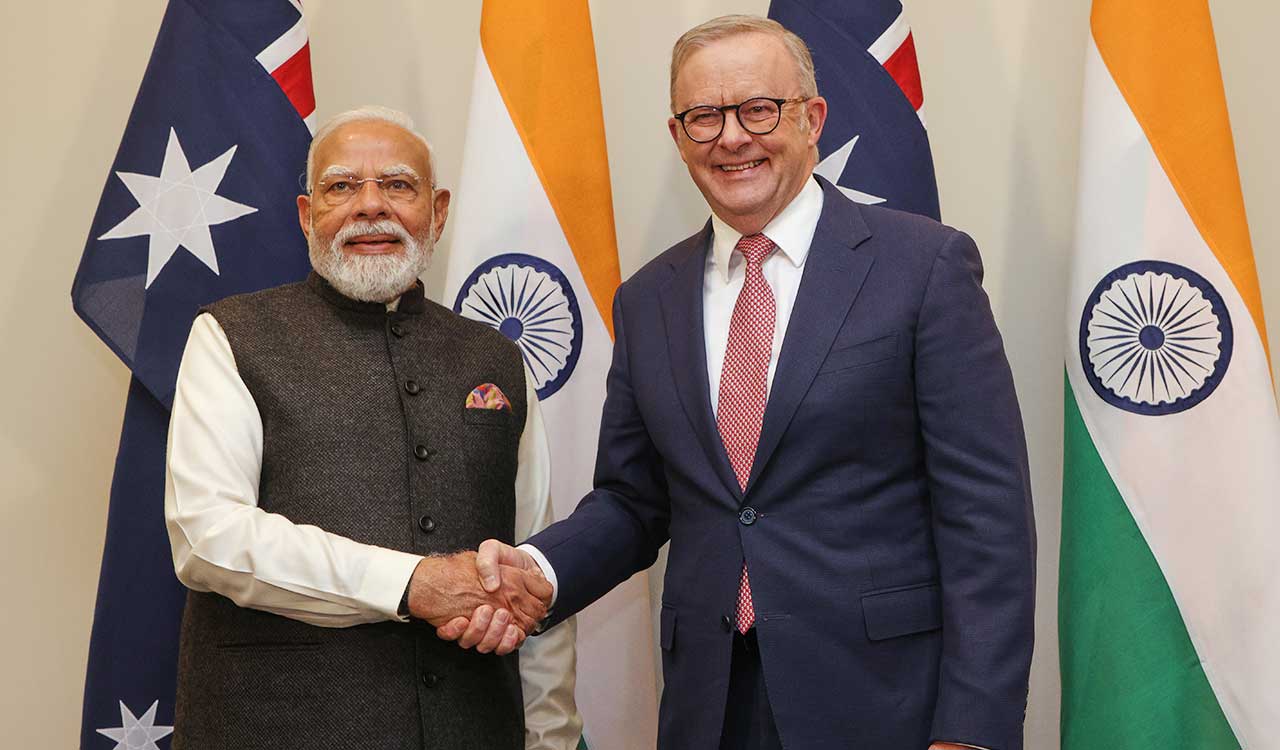
India has learnt lessons the hard way on what it costs to be dependent on energy imports. The recent shock came due to the disruption in oil supplies through the Strait of Hormuz in the wake of war in Iran. Understandably, India has been making conscious efforts to explore new suppliers. More importantly, there has been a renewed focus on doubling down on nuclear power – the clean, carbon-free source of energy that is crucial for the country to achieve its target of ‘net zero’ carbon emissions by 2070. It is in this context that the agreement with Australia on the purchase of uranium, finalised during Prime Minister Narendra Modi’s recent visit, assumes strategic significance. Australia holds the world’s largest known uranium resources and can serve as a reliable long-term supplier of uranium. Nuclear power is no longer only about electricity for homes and industries. It is increasingly about reliable, low-carbon baseload power for data centres, artificial intelligence infrastructure and future industrialisation. India currently generates only a small share of its electricity from nuclear power, constituting roughly 2% of the installed capacity. Conventional gigawatt-scale reactors require huge upfront investment, long construction timelines and complex site-specific infrastructure. India will need international partnerships because the scale and urgency of its ambitions require capital, technology, risk-sharing and secure fuel supplies. Russia and France remain important partners. The new legal framework could finally make American participation more realistic. Canada, too, has been an important partner in supplying uranium to India. Australia could now become another reliable long-term supplier.
Uranium partnerships are central to operating an expanding civilian reactor fleet. Imported uranium can support safeguarded civilian reactors while India continues its indigenous fuel-cycle work. Australia and India first agreed to uranium trade in 2014, but exports stalled for over a decade because of concerns the material could be diverted for weapons use. Australia holds nearly 28% of the world’s known uranium reserves, making it one of the most resource-rich uranium producers globally, and access to it would diversify India’s nuclear fuel imports and reduce long-term dependence on suppliers like Russia’s Rosatom. India has set a target of 100 GW of nuclear capacity by 2047. Since its domestic uranium reserves are small, it depends on imports to fuel its nuclear programme, and Russia has been a major supplier since the early 1990s. A reliable Australian source reduces overreliance on any single geopolitically exposed supplier. India’s nuclear industry has long been a government monopoly, with state-owned entities overseeing every aspect from uranium mining to power generation. However, the Centre’s decision in November last year to permit private players in the nuclear power sector marks a decisive shift in energy policy. It is poised to enhance the country’s long-term energy security and technological innovation. Allowing private participation could unlock capital, speed up project execution and bring in operational efficiencies that government entities often struggle to guarantee.