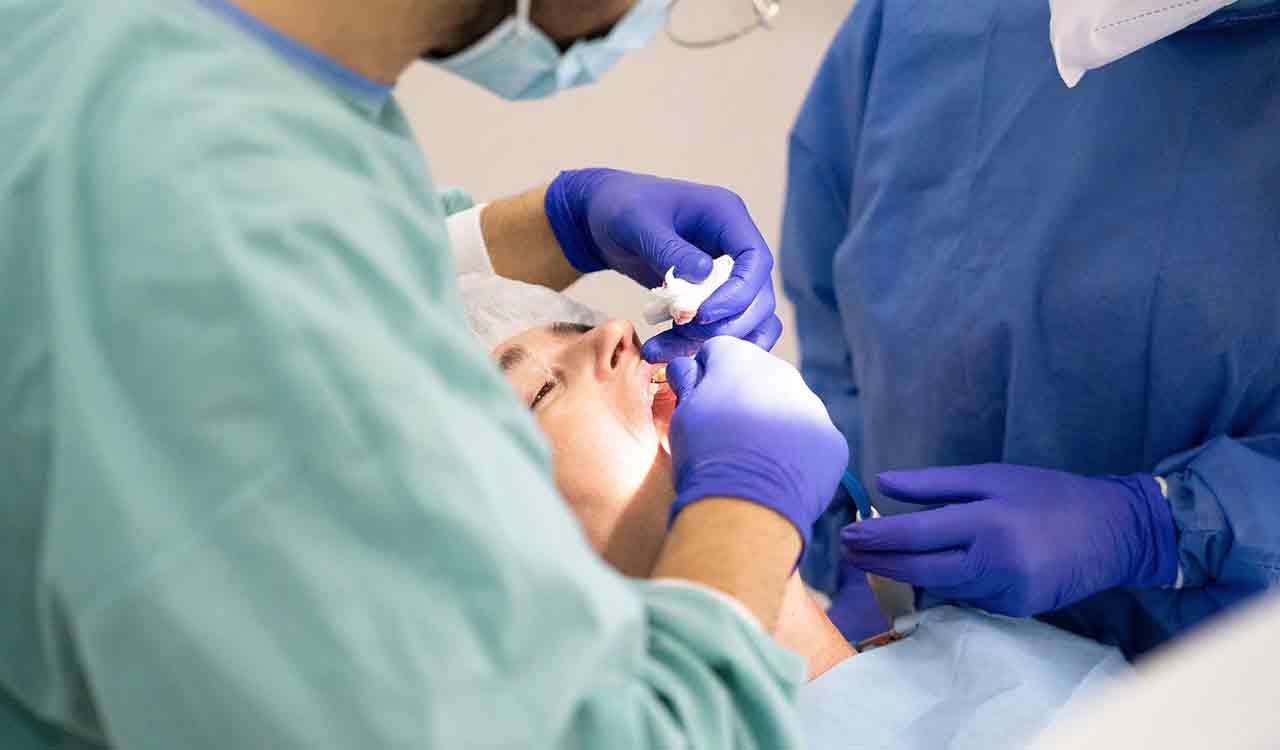
As routine dentistry becomes less profitable, many Hyderabad dentists are shifting to cosmetic dentistry and facial aesthetics. The trend has sparked regulatory scrutiny, safety concerns, and professional disputes, prompting the Telangana Medical Council to advise patients to verify practitioners’ qualifications before treatment.
Published Date – 8 July 2026, 04:30 PM
Hyderabad: The landscape of dental healthcare in Hyderabad has undergone a major transformation over the last few years, with almost every young, talented dentist switching to cosmetic dentistry and advanced facial aesthetics as routine dentistry has become financially unviable.
The shift to cosmetic treatments, however, has come at a price. Patients in Hyderabad seeking such aesthetic enhancements are often completely unaware of the actual success rate or risks of such procedures. The trend has also led to a fierce turf war among medical specialists, triggering inspections by Telangana Medical Council (TGMC).
“There is over-saturation of BDS/MDS dental graduates, not only in Hyderabad but in all tier-I and tier-II cities, leading to less employment and severe competition. Traditional dentistry is afflicted by high overheads from real estate, expensive dental chairs, staff salaries, low margins, highly competitive basic procedures, and price-sensitive patients. The focus, therefore, has shifted to premium services,” a senior member of Indian Dental Association (IDA), Hyderabad, explained.
To survive, young dental practitioners are transitioning from routine dentistry to high-value aesthetic packages that allow clinics to switch to cash-based, out-of-pocket elective treatments. Such services also elevate the dental clinic into a luxury status and create highly predictable recurring revenue opportunities like Botox and fillers that require maintenance every 4 to 6 months.
The shift to cosmetic treatments has led to regulatory clashes between dermatologists, cosmetic surgeons and Telangana Medical Council.
While cosmetic dentistry, such as veneers, aligners, and composite bonding, remains entirely within a dentist’s legal purview, the extension into facial cosmetics like Botox, dermal fillers, and hair transplants attracts regulation.
“Aesthetic procedures, advanced dermatological treatments, and hair transplant surgeries must strictly be performed only by allopathy doctors, specifically MD/DNB Dermatologists or MCh/DNB Plastic Surgeons. We conduct these inspections only for public good to make them aware of the ground realities,” says Dr G Srinivas, senior Telangana Medical Council (TGMC).
In the last few years, the National Medical Commission (NMC) and various state bodies, including the TGMC, have flagged severe safety concerns, citing instances of permanent scarring and severe infection resulting from complex facial procedures performed by unqualified practitioners.
On their part, a few dental associations have argued that their intensive training in head, neck, and maxillofacial anatomy qualifies them to take up aesthetic surgeries related to skin and hair. Quite often, to bridge the legal gap, many enroll in private, short-term fellowships/weekend certification courses. However, short-term aesthetic certificate courses do not substitute for a formal residency in dermatology/plastic surgery, regulatory bodies clarify.
The Medical Council has urged patients to verify a practitioner’s core registration and qualification before undergoing any advanced facial aesthetic procedure.
Why dentists are becoming cosmetic experts:
Saturation of BDS/BDS dental practitioners
Very low profit margins in traditional dentistry
General dentistry, like root canal, etc., is not financially lucrative
Traditional dentistry requires investment and high overheads
Premium procedures like Botox, fillers, etc are premium and cyclic
Aesthetic/cosmetic patients need regular follow-up