Parliament Speaker Mohammad Baqer Qalibaf says Iran remains at odds with the United States despite a recently signed memorandum of understanding (MoU), whose implementation is “difficult but achievable.”
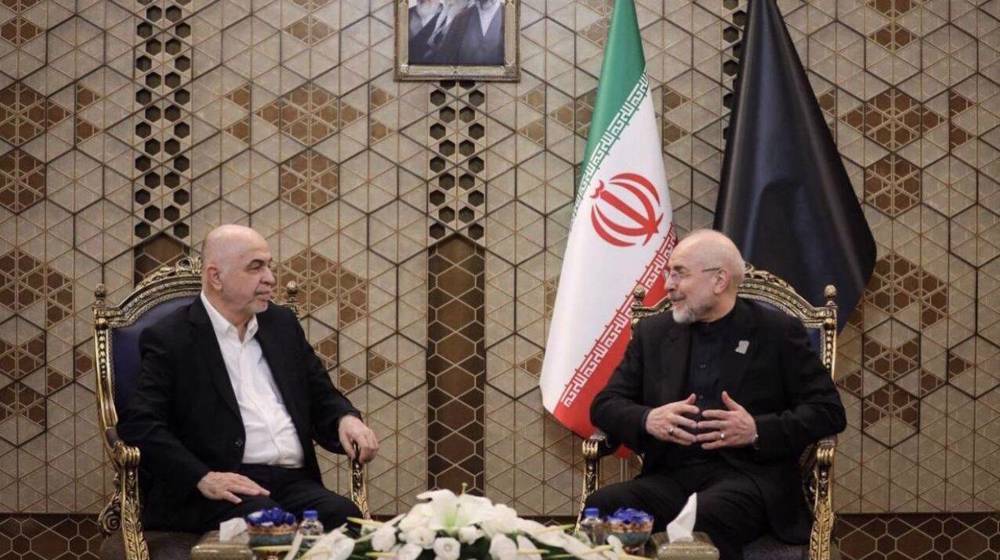
Qalibaf made the remarks in a meeting on Sunday with Mohammad Darwish, head of the leadership council of the Hamas resistance movement, who is in Tehran to take part in the funeral ceremonies for martyred Leader of the Islamic Revolution Ayatollah Seyyed Ali Khamenei.
“We have no peace with the United States and we will not recognize Israel,” he said.
He added that Iran would continue assisting Muslims and the resistance front in accordance with the guidelines of the Leader “if needed with missiles, and if political pressure is required, pressure through negotiations.”
Qalibaf, who serves as Iran’s top negotiator in talks with the US, emphasized the need to avoid “negotiation for the sake of negotiation.”
He noted that the negotiations between Tehran and Washington were suspended on the eve of the MoU’s signing following Israel’s military strikes on the Lebanese capital Beirut’s Dahiyeh district.
“We told the American side that the territorial integrity of regional countries and the cessation of war against Iran’s allies in the resistance groups must be part of the memorandum and it was added to the text,” the lead negotiator emphasized.
“Today, this memorandum is being implemented and its enforcement is difficult, but possible,” he said.
Qalibaf stressed that diplomacy and negotiations must serve to resolve military deadlocks while preserving and consolidating the military gains achieved on the battlefield.
“This can only be realized when the country, alongside diplomacy, remains prepared for defense,” he added.
Qalibaf said Muslim countries play a “very effective” role under these circumstances, adding, “They have now realized that cooperation with the US and Israel will not bring them security.”
On July 17, Iran and the US signed the 14-point Pakistan-brokered MoU, which calls for a permanent end to hostilities across all fronts, including Lebanon, as well as the removal of the naval blockade on Iran within 30 days, and the restoration of commercial traffic through the Strait of Hormuz.
Under the MoU, the two sides have entered a 60-day negotiation period, with the goal of reaching a comprehensive final agreement.
Darwish, for his part, commended Iran’s diplomatic gains and said the Islamabad MoU was a significant achievement for the resistance front.
Every single clause of the memorandum represents a victory for Iran and a defeat for the US, he said, while expressing his appreciation for the inclusion of the paragraph concerning Iran’s allies in the resistance front.
This shows that Iran has also succeeded in shifting the balance in favor of Muslim nations on the diplomatic field, the Hamas official emphasized.
He also described Operation Al-Aqsa Flood as the biggest defeat for the Israeli regime, which shattered the prestige of both Washington and the Tel Aviv regime.
The Hamas official further expressed hope that ongoing conflicts in the Palestinian territories would come to an end through broader cooperation among Muslim countries.