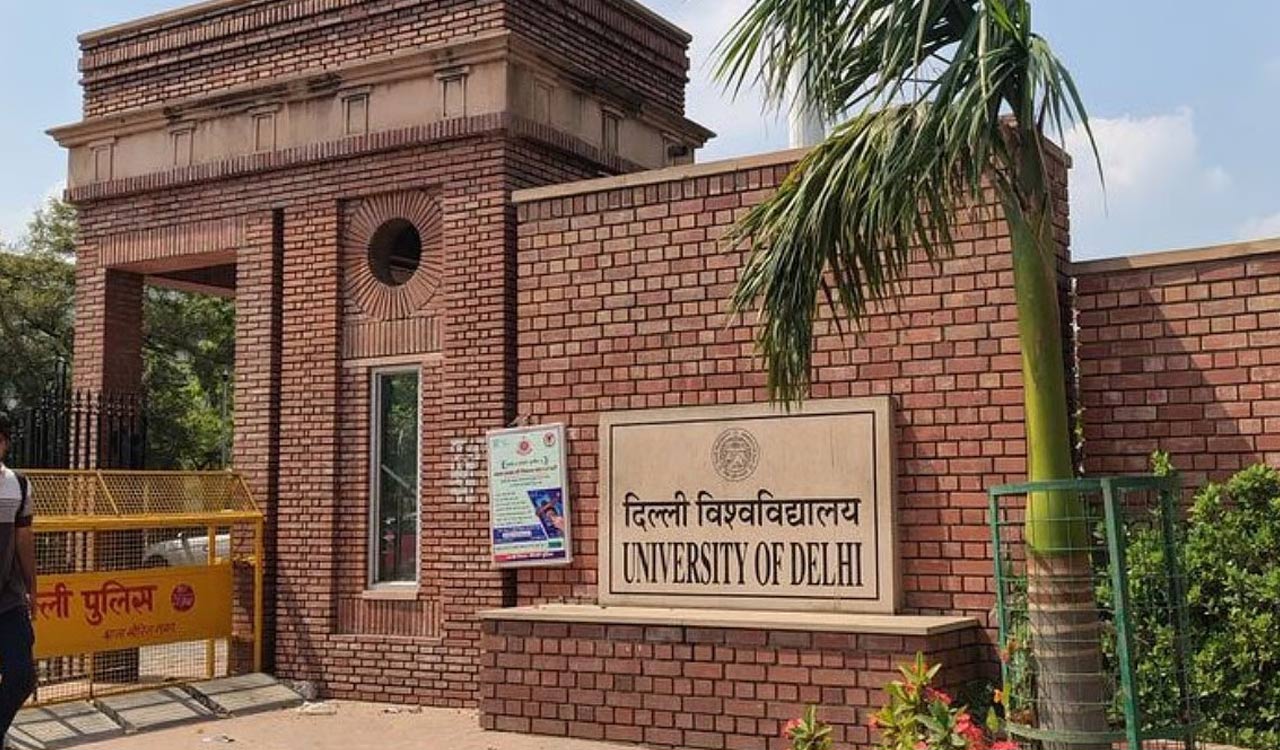
Delhi University’s Centre for Independence and Partition Studies has completed 100 interviews with Partition survivors, creating a digital archive of oral histories. The initiative aims to preserve personal accounts, expand nationwide, and strengthen research on the human impact of India’s 1947 Partition
Published Date – 3 July 2026, 12:01 PM
New Delhi: Some stories are better forgotten, while some deserve to be unearthed, excavated and restored for generations to come.
The Partition of the country was probably a bit of both, but according to Delhi University’s Centre for Independence and Partition Studies (CIPS), remembering is the only way to ensure the same mistakes do not get repeated.
The humongous task of compiling stories from partition survivors has been undertaken by the centre, a research department dedicated to unearthing the stories of partition.
While the department set out on a journey with a vision to understand the cultural damage inflicted by the Partition of the country, a primary project remained interviewing partition survivors and creating a digital archive of those accounts for the next generation.
And so they did.
Established in 2023, the CIPS on Thursday, completed the 100th interview.
“The stories we get to hear from partition survivors entail a whole spectrum of emotions. From how they were living in Pakistan to how they got displaced, from the people they lost to the things they saw, and lastly how they rebuilt their lives after the Partition; each is a story on its own,” said Ravinder Kumar, director of the CIPS.
Kumar continued, “The survivors have not forgotten: the sufferings, the struggles and the wounds. It is now our responsibility to collect those stories, analyse and understand them to address the gaps in historical narratives.” The centre, meanwhile, has organised one of the most chaotic periods in India’s history into a neatly structured repository of narratives. Besides conducting interviews, which continue to be uploaded on the centre’s website and the YouTube channel, the centre has also created a catalogue of books and other literature.
The catalogue already contains a list of 245 English books, 31 Hindi books, four in Urdu, 87 in Punjabi, seven in Bengali, and one in Assamese and Tamil each. It also contains multiple theses on the Partition as well.
The mission for the centre, however, does not end there.
“We have been interviewing partition survivors who live in Delhi NCR up till now. Our aim is to expand to other states now and we want to stay focused on interviewing as many partition survivors as possible before it is too late to tell their stories,” Kumar said.
Kumar added, “It is crucial that the coming generations know about the history of their ancestors and their sacrifices, as this is not about any particular community, it is about the country’s Partition.”
The interviews available on the centre’s website include names like Mohan Lal Abrol, retired principal, PGDAV College; Kapil Kapoor, former pro vice chancellor, Jawaharlal Nehru University; Rajinder Kumar Mohatta, whose ancestors owned the lavish Mohatta Palace in Karachi, and many more.
Kumar added that the centre’s success would not have been possible without the contributions of DU vice chancellor Yogesh Singh; Ravi Prakash Tekchandani, who is the chairperson of the CIPS, and Jyoti Trehan Sharma, the joint director of the CIPS.
The centre was established in 2023 with a vision to conduct comprehensive research, collect archival material and create a repository of documents, photographs and oral histories of communities impacted by the Partition in 1947.
Officials from the centre said that the creation of a dedicated centre was crucial for an empirical understanding of the challenges in achieving Independence from colonial rule, the extensive physical, emotional, economic, and cultural damage inflicted by the Partition, and the enduring trauma experienced by subsequent generations.
Some stories are painful, but they deserve to be remembered.