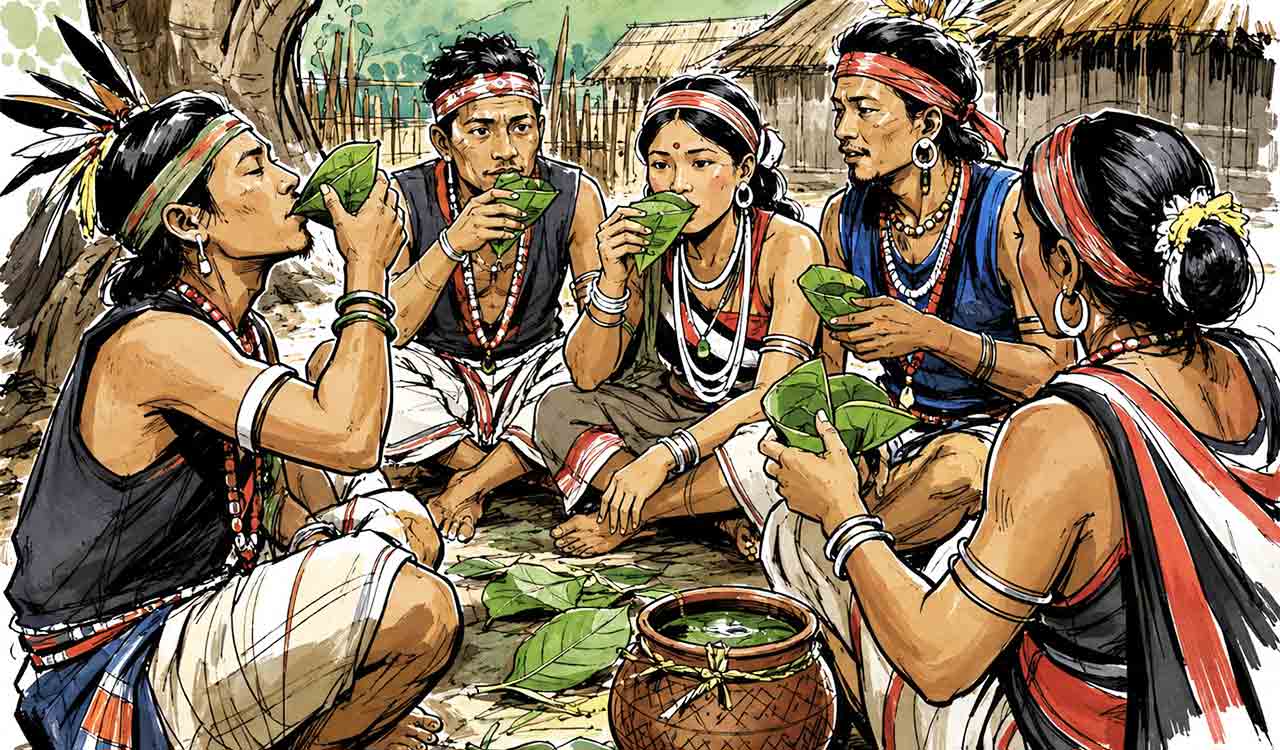
While the exact botanical identity of Soma remains disputed, its cultural memory and the beliefs surrounding its powers have endured for centuries in Telangana’s historical and tribal traditions
Published Date – 27 June 2026, 10:00 AM
By Dr Dyavanapalli Satyanarayana
The story of Apālā in the Rigveda (VIII.91) suggests that Soma plants grew near river-stream confluences, that Soma juice could be extracted through Soma yaga implements or by chewing the stalks, and that Soma was believed to cure chronic ailments, including baldness and skin diseases, while also enhancing the fertility of the land. Other Vedic sources associate Soma with heavenly joy and even immortality. Its importance is reflected in the dedicated (Ninth) Mandala of the Rigveda.
Because of its significance, many scholars have attempted to identify the Soma plant. Rahul Sankrityayan proposed that Soma was cannabis. A decade ago, Baba Ramdev claimed to have identified the sanjeevani plant. More recently, researcher Rekha Rao argued that Soma creepers were depicted on Indus Civilisation pottery and that Soma juice was prepared in such vessels. Her findings have generated considerable discussion among scholars of Harappan archaeology on Facebook.
Against this background, the question arises: Did Telangana also possess the knowledge of the Soma drink?
Telangana Connect
Traditions associated with Sage Agastya provide one possible answer. After crossing the Vindhya Mountains and entering southern India, Agastya is believed to have halted near Chennur on the Godavari River, where the Agastyeswara temple commemorates his presence. Local tradition holds that knowledge of Soma accompanied him into the Godavari valley of Telangana.
Among the Gond tribes, memories of Soma-related knowledge survive in oral tradition. A Naikpod elder informed me in 2016 that Kumram Bheem claimed in the late 1930s to possess knowledge of Soma that could protect tribal youth from police bullets during their struggle against the Nizam’s administration for podu land rights. Another Gond elder stated that Soma creepers grow in the hill valleys near Mathadiguda, close to Utnoor.
Near the Gundala waterfall in Adilabad district, a Gond elder described, 15 years ago, a medicinal Khando plant whose sap could heal fractures, cure stubborn diseases, and prolong life. Similarly, tribal communities along the Godavari reportedly consumed Ippa liquor mixed with wood from the Somidi (Soma) tree and were believed to enjoy remarkable longevity.
Long-standing Tradition
Comparable traditions are found among the Chenchus of the Nallamala forests. Chenchu elder Thokala Guruvayya spoke, a decade ago, of rare medicinal plants whose locations were carefully guarded to prevent exploitation. Agastya is also associated with Somasila, the confluence region of seven rivers near Alampur, where another Agastyeswara temple stands. The very name ‘Somasila’ is cited as evidence of a long-standing Soma tradition in the region.
Archaeological remains indicate continuous occupation of the Somasila area from the Neolithic and Megalithic periods. It is believed that sages and siddhas cultivated Soma plants near the deep channels of the Krishna River. Greek ambassador Megasthenes mentioned, in the 4th century BCE, naked ascetics roaming near the Krishna–Tungabhadra confluence.
Further evidence comes from inscribed bricks bearing the words ‘Siddhāntam’ and ‘Andhira Lokam,’ suggesting the antiquity of ascetic and intellectual traditions in the region. These findings indicate that knowledge of Soma may have existed there for nearly three millennia.
Because Soma was also associated with immortality, the region became known as Amaragiri, the ‘Hill of the Immortals.’ Caves in the area, some identified by the Archaeology Department and others documented by this author, contain paintings interpreted as depicting sages, immortals, and unusual aerial objects.
Historical records by Colonel Mackenzie and Syed Ghouse mention Chenchu beliefs that celestial maidens visit(ed) the area during full-moon nights, sing, dance and disappear into the sky. Chenchus also reportedly mixed Soma wood extract with Ippa (mahua) liquor during social gatherings, believed to contribute to their longevity.
The Vishnukundin rulers, who emerged from this region during the 4th century CE, called themselves the ‘Lords of Amarapuri.’ Later, Telugu poet Tikkana performed a Soma sacrifice and earned the title ‘Somayaji’. In the 14th century, Nityanatha Siddha discussed Soma in Rasaratnakaram. These references indicate the continued prestige of Soma traditions in the Telugu-speaking region.
Closely related to these traditions is Rasa Vidya (alchemy). Acharya Nagarjuna and his disciples are said to have conducted alchemical experiments in the Nallamala forests, seeking to cure diseases, prolong life, and create wealth. Inscriptions mentioning siddhas and the word ‘Soma’ at Saleswaram suggest continuity between Soma traditions and later alchemical practices. Indeed, Rasa Vidya may be viewed as a continuation of the older Soma tradition.
Disappearing Beliefs
Evidence from oral traditions suggests that knowledge of Soma survived among tribal communities even after the 14th century. Similar beliefs were known among people living in nearby plains regions as well. In my native village of Chegyam on the Godavari, elders spoke of a creeper like Dussaveru, resembling the Soma plant, whose root was believed to bring wealth, remove difficulties, and ensure health and longevity. Such beliefs were common in local conversations until a few decades ago, after which they gradually disappeared.
Taken together, Vedic literature, oral traditions, archaeological remains, place names, inscriptions, and tribal knowledge suggest that traditions associated with the Soma drink were known in Telangana for a very long period, perhaps for more than 3,000 years. While the exact botanical identity of Soma remains a matter of debate, the cultural memory of Soma and its perceived powers has survived in Telangana’s historical and tribal traditions for centuries. Since the prohibition of country liquor (Gudumba) a few decades ago, such traditions have largely disappeared.
(The author is a historian)