Twelve years after achieving statehood, Telangana continues to face cultural and linguistic prejudice, particularly in cinema and social media. The backlash against the film ‘Idupu Kayitham’ has once again highlighted the deep-rooted stereotypes and discrimination that fuelled the Telangana movement.
Published Date – 27 June 2026, 03:34 PM
Hyderabad: After a long struggle for statehood, for self-respect and for its rightful share of jobs, water and funds, the people of Telangana finally realised a decades-old dream by carving out a separate State.
That dream was born out of years of discrimination, years of being treated as second-class citizens in their own land, years of seeing their language ridiculed and their culture misrepresented.
The discrimination was so deeply entrenched that mocking Telangana and its people became normalised in popular culture, especially in Telugu cinema. For decades, prejudice against the region was packaged as entertainment.
In countless films, the henchmen, sidekicks and comic characters invariably spoke in the Telangana dialect. The accent was deliberately associated with crudity and villainy. It was never allowed dignity.
Perhaps no actor symbolised this stereotyping more than Shakuntala. She was repeatedly cast as a foul-mouthed lady don, surrounded by goons, chewing paan and terrorising people in a thick Telangana dialect. The typecasting became so severe that she eventually came to be known as ‘Telangana Shakuntala’, a label that itself reflected how cinema had reduced an entire region’s identity to a caricature.
Only after Telangana achieved statehood did this blatant stereotyping begin to recede. Filmmakers realised that the sentiment surrounding Telangana could no longer be ignored and that audiences in both Telugu-speaking States had to be respected.
Yet, even today, stories rooted in Telangana continue to face resistance from sections of the neighbouring State.
Films such as Balagam, which earned both critical acclaim and commercial success, were not spared from prejudice. Despite its universal themes of family, grief and reconciliation, the film was subjected to dismissive comments merely because it was deeply rooted in Telangana’s culture and dialect.
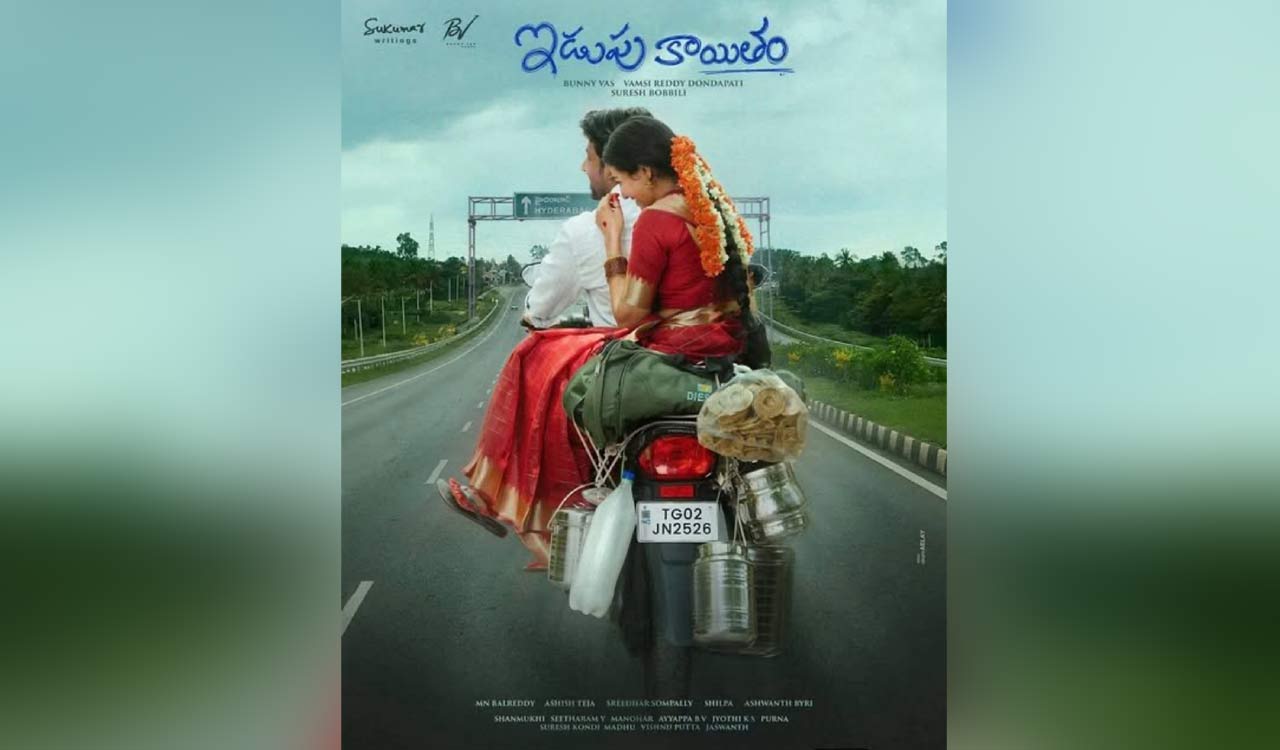
Now, another Telangana-based film is facing a similar fate. ‘Idupu Kayitham’ has become the latest target of regional prejudice, with social media platforms flooded with comments mocking its title, language and cultural setting.
Several users, apparently from Andhra, who did not understand the title ‘Idupu Kayitham’, which translates to ‘certificate of divorce’, responded to the film’s poster by asking whether the movie would be “dubbed in Telugu”, while others questioned whether the language spoken in the film was Telugu at all. Some even went on to ask if the movie would release with subtitles in Telugu.
I deleted my post regarding “DUBBING” for some personal reasons. 🥲
I genuinely had no intention of offending anyone.
I was only asking a question in good faith, but unfortunately, a few people misunderstood it. 😏😏
I have no hatred or ill feelings towards any “region or…— Ayyappa Chowdary (@Ayyappa200) June 26, 2026
ఇంతకీ ఉత్తరాంధ్రలోని శ్రీకాకుళం తెలుగు కావాలో,
రాయలసీమ తెలుగు, గోదావరి తెలుగు ఇలా ఏ తెలుగులో కావాలో ఈ అయ్యప్ప చౌదరుడికి..!?#Telangana #hyderabad #Idupukayitham pic.twitter.com/e2Y7s0WBGr— Usha Rani Seetha (@RaniUshaa) June 26, 2026
It is perfectly understandable if some viewers from another region struggle to understand a dialect that is unfamiliar to them. But difficulty in comprehension can never be an excuse for ridicule. Linguistic diversity is not a defect. Dialects are not inferior versions of a language. They are living expressions of history, geography and identity.
What these comments expose is something far more troubling.
Even 12 years after bifurcation, sections of society continue to carry the same condescending attitude towards Telangana that fuelled the statehood movement in the first place.
The mockery may now be confined to social media comments rather than political institutions, but the mindset remains disturbingly familiar, belittling the language, dismissing the culture and treating Telangana’s identity as something lesser.
As demands for subtitles and insensitive remarks continue to surface online, voices from Telangana have pushed back. Actor Rahul Ramakrishna perhaps summed it up best when he declared: “We will go on, we will tell our stories in our preferred medium of language.”
The discrimination that people are witnessing today is precisely what generations of Telangana people fought against during every phase of the statehood movement. They fought for the right to speak in their own dialect without shame, to tell their own stories without seeking validation and to celebrate their culture without being mocked.
The tragedy is that, even after achieving statehood, they still find themselves fighting the very prejudices that gave birth to the movement.
Telangana may have won its political battle in 2014, but the struggle for cultural respect and linguistic dignity clearly continues.