According to the final statement issued by the two mediators after last week’s talks in Zurich, the channel was created to avoid incidents in the strategic waterway that may lead to military conflict and to implement the provisions of Article Five of the Islamabad memorandum of understanding, a source told Press TV.
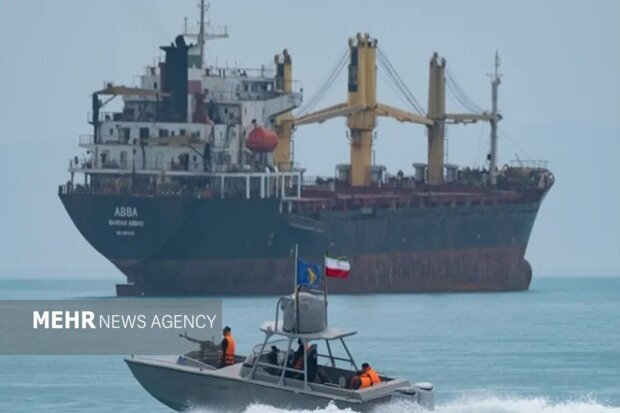
Iran has stressed that, under the understanding reached, any transit through the Strait of Hormuz must take place along routes announced by the Islamic Republic.
Deputy Foreign Minister Kazem Gharibabadi underlined that position on Friday, saying, “Safe passage through the Strait of Hormuz cannot be guaranteed under ambiguous arrangements, parallel routes or decision-making that does not take Iran’s role as a coastal state into account.”
He further warned that any failure to coordinate with Tehran would lead to the suspension of parallel routes.
Under the 14-point interim agreement signed on June 18, which halted the war triggered by US-Israeli strikes on Iran, Tehran agreed to make best efforts to ensure the safe passage of commercial vessels for 60 days at no charge.
Article 5 of the memorandum also provides for talks between Iran and Oman to define the future administration of the strait and maritime services in line with international law and the sovereign rights of coastal states.
In line with that framework, Iranian officials say Tehran’s role is central to any future arrangements. The Supreme National Security Council has set up a Persian Gulf Strait Authority to process vessel transit requests, requiring prior applications and adherence to designated routes and schedules.
Iran and Oman have also formed a joint working group involving officials from the two foreign ministries to discuss the future administration of the strait, maritime services and related costs. Both sides have reaffirmed that all arrangements must fully respect the sovereignty and sovereign rights of the coastal states.
The issue gained further urgency after Oman announced on Wednesday that it had established two temporary shipping lanes through the strait in coordination with the International Maritime Organization. Iranian officials rejected that move, maintaining that the only authorized route is the one designated by Tehran.
Tehran also pushed back strongly against a joint statement by the United States and the Persian Gulf Cooperation Council calling for “free, unconditional, and unrestricted navigation” without tolls or attempts to assert control over the waterway. Iran’s Foreign Ministry described that statement as “interventionist, irresponsible and provocative.”
The latest diplomatic moves followed an incident on Thursday in which an “unknown object” struck the Singapore-flagged vessel Ever Lovely near Oman. All 21 crew members were reported safe and the vessel continued its voyage, though the International Maritime Organization temporarily paused its escort operations through the strait.
On Thursday, US Vice President JD Vance said that Iran and the US militaries were set to establish a direct communication channel as part of efforts to reduce tensions.
MNA