
Union Home Minister Amit Shah launched a national anti-narcotics roadmap proposing action against 100 major drug cartels, mandatory financial investigations, tighter pharmaceutical controls, AI-enabled border surveillance, expanded de-addiction services and amendments to the NDPS Act to curb drug trafficking
Published Date – 26 June 2026, 08:45 PM
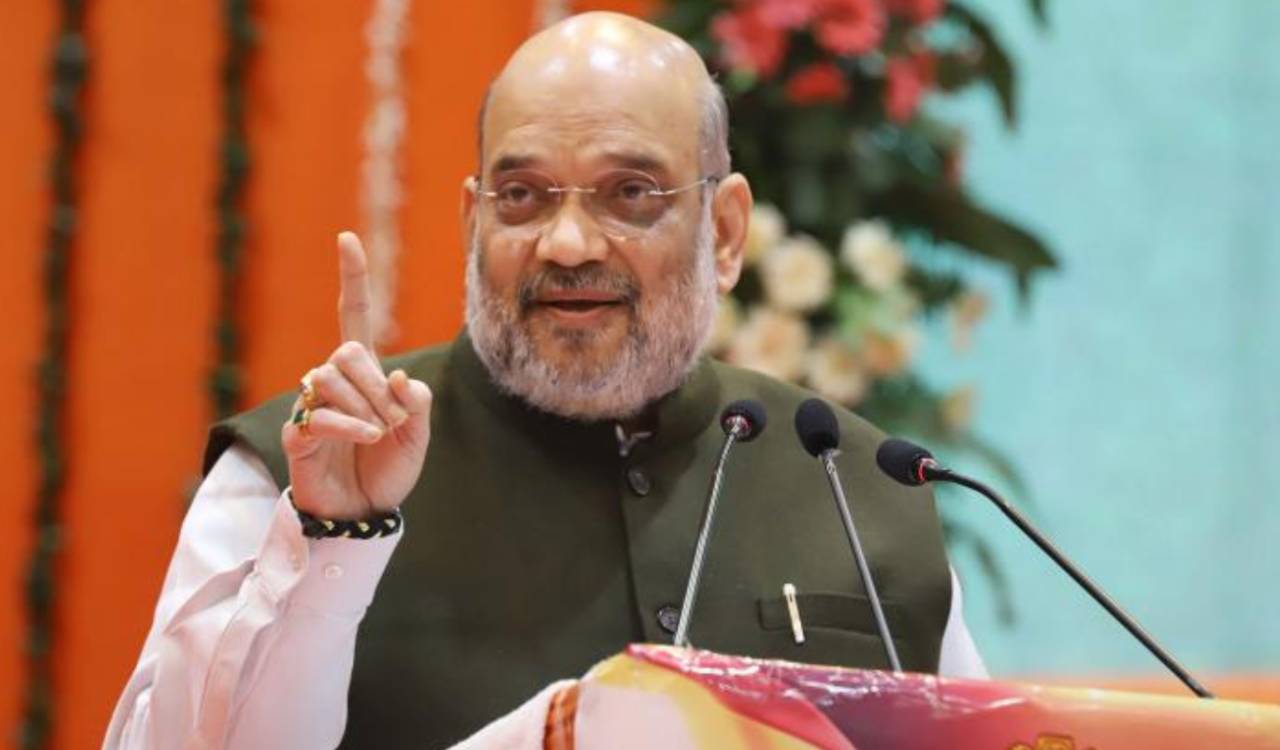
New Delhi: Union Home Minister Amit Shah on Friday unveiled a comprehensive vision document to strengthen India’s fight against narcotics, laying out a roadmap that ranges from dismantling 100 major drug cartels and following the money trail to tightening controls on the diversion of pharmaceutical drugs and expanding de-addiction services.
Launching the “Roadmap for Narcotics Control” at the 10th apex-level meeting of the Narco-Coordination Centre (NCORD), Shah said the strategy seeks to substantially dismantle the narcotics ecosystem through coordinated action against trafficking, drug abuse, illicit finance and organised criminal networks.
“The Roadmap provides a time-bound national strategy to substantially dismantle the narcotics drug ecosystem and protect future generations through coordinated action against trafficking, abuse, illicit finance and organised criminal networks,” the document said.
Among the key proposals is a mission-mode campaign to identify and dismantle 100 major interstate and transnational drug cartels through intelligence-led investigations, coordinated operations, financial disruption and effective prosecution.
The document also marks a shift to network-centric enforcement, under which agencies will move beyond targeting individual drug carriers to identifying and dismantling complete trafficking networks, including suppliers, financiers, handlers, facilitators and organised criminal syndicates.
Another major focus is “following the money trail”. The roadmap makes financial investigations mandatory in major drug cases and calls for the attachment of illicit assets and enhanced use of the Prevention of Illicit Traffic in Narcotic Drugs and Psychotropic Substances (PITNDPS) Act to target drug kingpins and dismantle the financial foundations of trafficking networks.
The vision document also proposes stronger controls to prevent the diversion of pharmaceutical drugs. It says regulatory reforms under the Drugs and Cosmetics framework will strengthen pharmacy oversight, improve traceability and prevent the diversion of prescription medicines for abuse as psychotropic substances.
The roadmap further calls for enhanced surveillance at borders, airports and maritime routes through AI-enabled profiling, anti-drone technologies, container scanning and better inter-agency coordination.
It also envisages a national offensive against synthetic drugs, a crackdown on clandestine laboratories and greater participation of the chemical and pharmaceutical industries in reporting suspicious transactions and preventing the diversion of chemicals and pharmaceutical products.
Besides strengthening enforcement, the strategy seeks to modernise the NDPS legal framework, expand de-addiction, counselling and rehabilitation facilities, scale up the Nasha Mukt Bharat Abhiyaan to reach more than 50 crore citizens and promote drug-free campuses through awareness and early intervention.
Shah told the meeting that the Centre would amend the Narcotic Drugs and Psychotropic Substances (NDPS) Act to plug loopholes exploited by narco syndicates and stressed the need for a ruthless approach against drug peddlers and suppliers.
The home minister also asked the states to submit suggestions on the proposed amendments to further strengthen the country’s anti-narcotics framework.