Keir Starmer’s departure marks the latest turn in Britain’s now-familiar political turmoil, extending the cycle of post-Brexit instability
Updated On – 23 June 2026, 11:55 PM
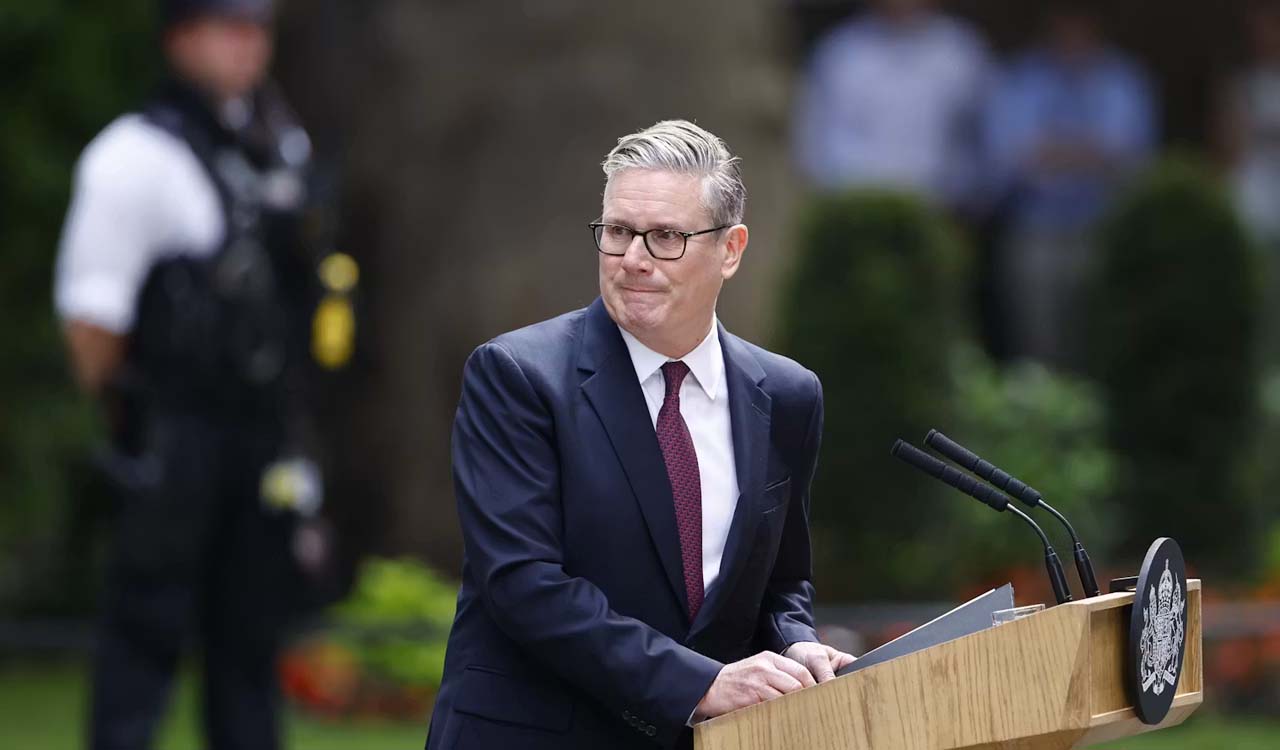
Post-Brexit Britain continues to be embroiled in political instability. In fact, 10 Downing Street has turned into some kind of conveyor belt for prime ministers. The resignation of Prime Minister Keir Starmer is the latest twist in the now-familiar political turmoil. Nearly two years after steering the Labour Party to electoral victory, Starmer has quit following an internal rebellion. Andy Burnham, the former mayor of Greater Manchester, is likely to become the country’s next leader. Starmer, the sixth Prime Minister to leave office prematurely since the country chose to leave the European Union in 2016, will continue as caretaker until his successor is chosen before the opening of Parliament in September. Starmer has faced calls from members of his party to resign after disastrous local elections in May that saw the Labour Party lose control of Wales’ Parliament, recording its worst Scottish election results on record. Although Starmer campaigned on the promise of change to create a fairer, healthier, and more secure Britain, he struggled to deliver on his electoral promises and fell to the same post-Brexit malady that has troubled British politics and economy for a decade now. He and his cabinet colleagues came under the scanner for accepting gifts in what has come to be known as the “freebies gate.” Over the last two years, his approval rating has been dwindling. Starmer’s resignation raises questions about the future of Britain’s foreign policy.
Two of his predecessors, David Cameron and Theresa May, lost their jobs in the fraught aftermath of the country’s Brexit referendum. Later, Boris Johnson had to leave amid several scandals, including breaches of Covid lockdown rules in Downing Street. Liz Truss lasted just 44 days, leaving after her budget offering tax cuts spooked the bond markets. Then Rishi Sunak called a general election in 2024, which he lost. The continued political instability has cost the country dearly at a time of global unrest, marked by the ongoing war in Ukraine, instability in the Middle East, a rising China and a United States that is pulling back from its decades-long commitments to Europe and NATO. In his speech, Starmer said he accepted with ‘good grace’ the desire of his colleagues to replace him. When he took over as leader of the Labour Party, following its crushing 2019 general election defeat, almost no one imagined it could win the next general election. Under Starmer’s leadership it did win a landslide. Few would have predicted his ouster less than two years later. Now, Labour officials are expected to begin a leadership contest immediately, with Burnham emerging as the hot favourite. The collapse of Labour, including in its traditional strongholds, and the subsequent surge of the ‘Reform UK’ party in the recently held local elections further weakened Starmer’s position, prompting many in his own party to question his ability to govern.