The BJP government in West Bengal presented its first full budget, announcing one lakh government recruitments, a 20-percentage-point DA hike and expanded welfare measures. The Rs 4.38 lakh crore budget also prioritises infrastructure, employment generation, healthcare, education and fiscal discipline
Published Date – 22 June 2026, 07:47 PM
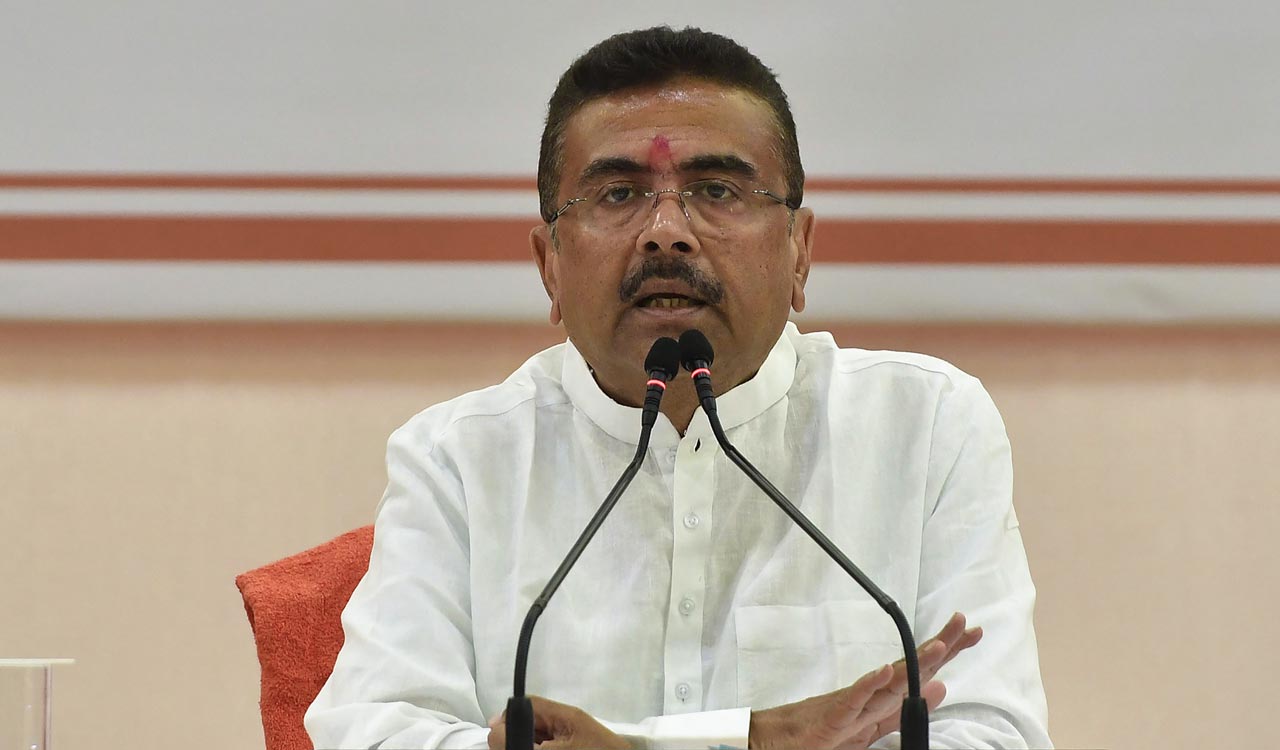
Kolkata: The BJP government in Bengal sought to blend welfare continuity with political and administrative reset in its maiden budget presented on Monday, as it pledged to fill one lakh government vacancies and increase dearness allowance by 20 percentage points while stressing the need for fiscal discipline.
Finance Minister Swapan Dasgupta presented a Rs 4.38 lakh crore budget for 2026-27, the first full-fledged financial statement of the BJP government that assumed office in May after ending the 15-year rule of the Mamata Banerjee-led TMC.
The TMC government had presented a Rs 4.06 lakh crore vote-on-account budget in February.
Dasgupta sought to project the BJP government’s budget as a roadmap for a “modern, progressive and developed Bengal” while repeatedly contrasting the new administration’s approach with that of the previous regime.
Amid loud desk-thumping by treasury bench members, Dasgupta announced that dearness allowance for state government employees and pensioners would be increased by 20 percentage points from October 1, taking the total DA to 38 per cent.
With this, the gap between the DA received by state government employees and their central government counterparts has narrowed to 22 percentage points. State government employees had long agitated over the issue under the previous regime.
Before presenting the budget, Dasgupta and Chief Minister Suvendu Adhikari participated in a brief prayer ceremony on the Assembly premises.
The budget sought to reassure beneficiaries that welfare programmes would continue despite the change in government, even as the BJP moved to put its own stamp on several flagship schemes.
Rs 36,000 crore was earmarked for the Annapurna Yojana, the BJP government’s replacement for the TMC-era Lakshmir Bhandar scheme. Under the programme, women between 25 and 60 years of age will receive direct financial assistance in their bank accounts.
The Women and Child Development and Social Welfare Department received the highest allocation of Rs 52,308 crore. The Panchayats and Rural Development Department received Rs 51,836.55 crore, while School Education got Rs 44,948.21 crore.
Projecting employment generation as a central pillar of governance, Dasgupta announced that one lakh vacancies in government departments would be filled in phases, including 20,000 posts in the police department and 50,000 teaching and non-teaching jobs in schools.
Thirty-three per cent of the jobs would be reserved for women, while a 10 per cent quota would be provided to Agniveers wherever applicable. The government also decided to continue the five-year relaxation in the upper age limit for recruitment for another two years.
A new assistance scheme, ‘Bharosa’, was unveiled, under which eligible unemployed graduates from families earning less than Rs 1 lakh annually would receive Rs 3,000 a month, while other eligible unemployed persons would get Rs 2,000 each.
The government also enhanced old-age, widow and disability pensions by Rs 500 per month. It announced higher honorariums for anganwadi workers, ASHA workers, para-teachers, civic volunteers and other grassroots functionaries.
While retaining the welfare-heavy character of Bengal’s budgets, the BJP government signalled a shift in political and administrative priorities.
The allocation for the Minority Affairs and Madrasa Education Department saw a sharp cut. The BJP government earmarked Rs 2,165 crore for the department, against the Rs 5,713 crore provided in the last budget presented by the TMC government.
In contrast, the North Bengal Development Department saw its allocation nearly double to Rs 1,821 crore from Rs 920.13 crore earlier, reflecting the BJP’s longstanding emphasis on accelerating development in the region where it has enjoyed strong electoral support.
The Home and Hill Affairs Department was allocated Rs 17,925.42 crore, up from Rs 16,439.12 crore in the previous budget, underscoring the new government’s focus on law and order and internal security.
Dasgupta said the administration had inherited a debt burden of Rs 8.15 lakh crore from the previous government and stressed that restoring fiscal discipline and public confidence in governance would be among its foremost priorities.
“Building a corruption-free administrative structure is a cornerstone of our vision. We have to restore people’s trust in governance,” he said.
The minister announced a monthly pension of Rs 5,000 for retired journalists and Rs 10,000 for persons who had spent time in jail in what the government described as politically motivated or false cases.
The budget also proposed increasing the MLA Local Area Development Fund from Rs 70 lakh to Rs 1 crore annually.
On the infrastructure front, the government allocated Rs 900 crore for the proposed Chingrighata-New Town elevated corridor and Rs 1,200 crore for a new bridge over the Bhagirathi river.
It announced plans for a deep-sea port at Dadanpatrabar, metro rail projects in Durgapur, Asansol and Siliguri, and a greenfield airport at Kalyani.
In the health sector, Rs 3,100 crore was earmarked for the implementation of the Centre’s Ayushman Bharat health insurance scheme, with nearly seven crore people expected to be covered under it in the state.
The education sector saw a series of announcements, including a Tribal University, women’s universities in Contai, Kaliachak and Falta, two Kendriya Vidyalayas in Jhargram, a proposed IIT and IIM in north Bengal, and a state Artificial Intelligence Mission.
The budget also proposed a sports university, an international-standard stadium in north Bengal and mini indoor stadiums across districts.
The government allocated Rs 100 crore for strengthening communication infrastructure in the Sundarbans and Rs 50 crore for riverbank protection and rehabilitation in the erosion-prone Jangipur region.
In its first budget, the BJP government retained the social safety net built over the past decade while shifting the spotlight towards governance, infrastructure, security and regions that form the bedrock of its political support.