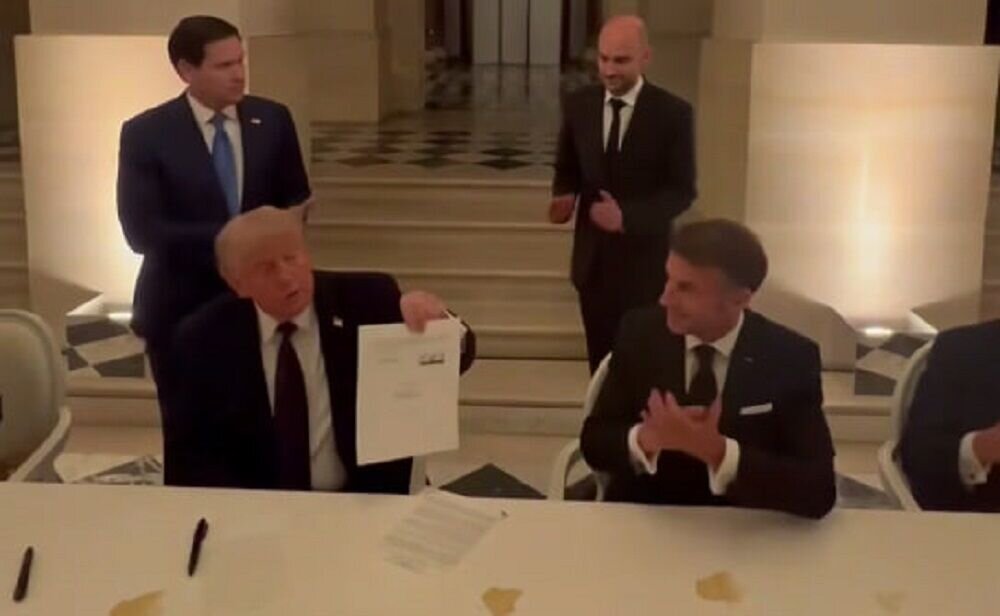
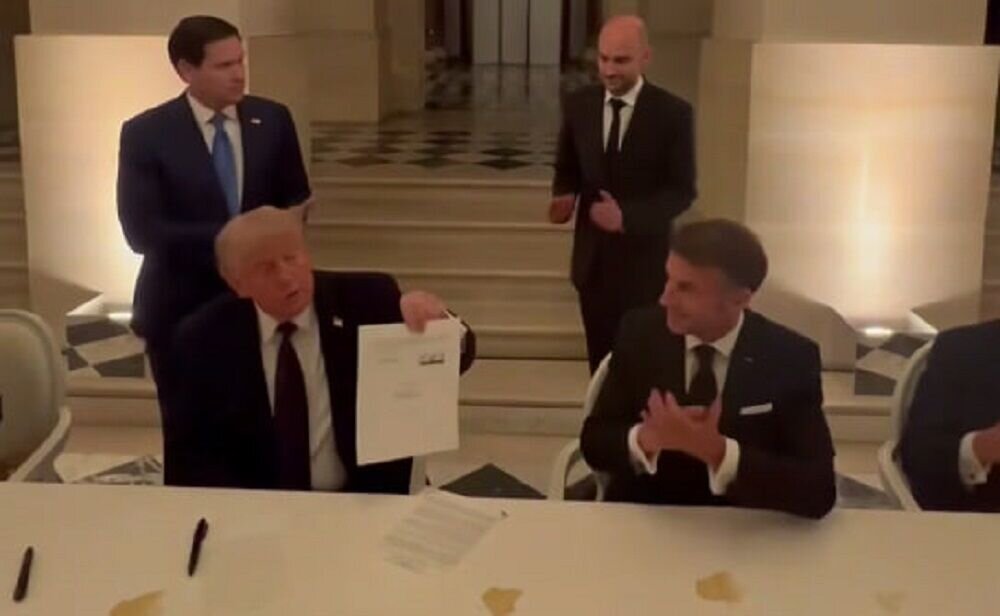
The agreement has deeply divided American politicians, drawing sharp rebukes from both Democrats and former members of the first Trump administration, while receiving unexpected defense from some Republican quarters.
A Shocking Document of Surrender
Former U.S. National Security Advisor Susan Rice slammed the accord, characterizing Trump’s agreement as a horrific and shocking document of surrender that was topped off with hundreds of billions of dollars in reparations.
She argued that this outcome was the predictable result of incompetent negotiations and what she described as a clumsy, strategic disaster regarding the initiation and continuation of a catastrophic war. Rice further noted that the United States would not recover anytime soon from what she labeled the greatest national security blunder in recent decades.
Former Trump Allies Attack the Accord
Prominent figures from Donald Trump’s first term openly broke ranks to criticize the terms of the deal.
Former U.S. Ambassador to the UN Nikki Haley criticized the administration on social media, pointing out that despite continued anti-American rhetoric from Tehran, the Trump administration still intended to release billions of dollars to Iran.
Former Vice President Mike Pence, while praising Trump’s past military actions against Iran, expressed real concerns regarding the specific terms of the newly signed memorandum.
Written on Iran’s Terms
Senior Democratic Senator Chris Murphy expressed deep dissatisfaction with the published framework, arguing that it handed Tehran a total victory.
Speaking to a local Connecticut media outlet, Murphy stated that under the memorandum, Iran makes no concessions, the United States allows Iran to freely sell oil, and an additional $300 billion is to be paid to them in reparations. He concluded that the agreement was entirely written on Iran’s terms.
Murphy added that the deal made two points clear: first, that the war was a total and shameful disaster for the country, and second, that the Iran-hawks who insisted that bombing Iran would yield a good deal were proven entirely wrong.
U.S. Concedes Control of the Strait of Hormuz
Senator Ted Cruz, traditionally a supporter of Trump’s foreign policy framework, labeled the deal ill-advised for the American side. In an interview with the Daily Wire, Cruz asserted that the agreement effectively formalizes the Islamic Republic’s permanent control over the Strait of Hormuz, adding that it was difficult to imagine how such a concession could benefit America.
Defending the Deal: A Realist Approach?
Despite the onslaught of criticism, some lawmakers and analysts argue the deal represents a necessary pivot away from an unsustainable military entanglement.
GOP Senator Claims Iran Has a Right to Defend Itself
Republican Senator Roger Marshall of Kansas offered a pragmatic defense of the MoU during an interview with CNN. He admitted that while he would prefer Iran not to have missiles—and certainly not long-range or nuclear-armed ones—he did not believe that was the key issue at hand. Marshall stated that Iran needs to be able to defend itself.
He concluded by defending the diplomatic route, arguing that the United States could never force Iran into total surrender or an unconditional agreement without deploying ground forces and establishing a military occupation. He emphasized that the agreement has the support of most Middle Eastern countries, which he believes will give it long-term stability and success.
The Dilemma for Trump
Barbara Leaf, a diplomatic member of the Middle East Institute and former U.S. Assistant Secretary of State for Near Eastern Affairs, highlighted the trap the administration built for itself. Leaf observed that Trump now faces a dilemma because he does not want to return to war, yet he has lost much of the leverage he could have held had the war ended in its first or second week.
International Reactions: NATO, Russia, and Media Analysis
NATO Views Agreement as a Positive Step for Stability
NATO Secretary-General Mark Rutte described the MoU ending the hostilities as a positive step toward regional stability. Rutte claimed that the agreement successfully curbs Iran’s nuclear and missile capabilities and will help restore freedom of navigation in the Strait of Hormuz.
The NATO Secretary-General’s comments on the reduction of Iran’s missile power contrast with recent remarks by President Trump himself, who admitted that it would be somewhat unfair for Iran to be denied ballistic missiles when other regional nations possess them.
Russia Welcomes the Peace Framework
The Russian Foreign Ministry issued a formal statement welcoming the achievement of an agreement to end the conflict, noting it was signed at the presidential level. The ministry emphasized the importance of all involved parties adhering to the reached understandings and avoiding any new escalations.
Furthermore, Moscow stated that Iran’s emphasis on adhering to its commitments under the Non-Proliferation Treaty serves as the best response to groundless allegations, expressing hope that this peace will restore trust among the Persian Gulf states.
Tucker Carlson Warns of the End of the American Empire
Prominent American commentator Tucker Carlson offered a stark historical analogy, comparing the MoU to the 1956 Suez Crisis that signaled the collapse of British imperial power. Carlson analyzed that the United States officially accepted Iran as a decisive player, which fundamentally changes the global dynamic.
He asserted that despite possessing the largest and most expensive military in the world, the United States demonstrated it lacks the military power to impose its will on the world’s thirty-fourth largest economy.
International Press Analysis
N-TV (Germany): The German network reported that Donald Trump’s defense of the initial framework at the G7 summit in France was driven by a fear of an economic crisis, thereby indirectly acknowledging Tehran’s immense leverage over global markets.
Al-Quds Al-Arabi: The newspaper argued that the agreement solidifies Tehran’s regional deterrence. The publication noted that after its victory in the Strait of Hormuz, Iran is making history, and an analysis of recent statements by Iranian leaders shows that Tehran has extended its strategic deterrence from Lebanon in the west, to the Red Sea, Yemen, and the Horn of Africa in the south, and as far as Azerbaijan and the Caspian Sea in the north.
The Guardian (UK): In an editorial analysis, the British newspaper concluded that Trump’s agreement with Iran was the inevitable outcome of unrealistic ambitions for an indefensible war.
MNA