
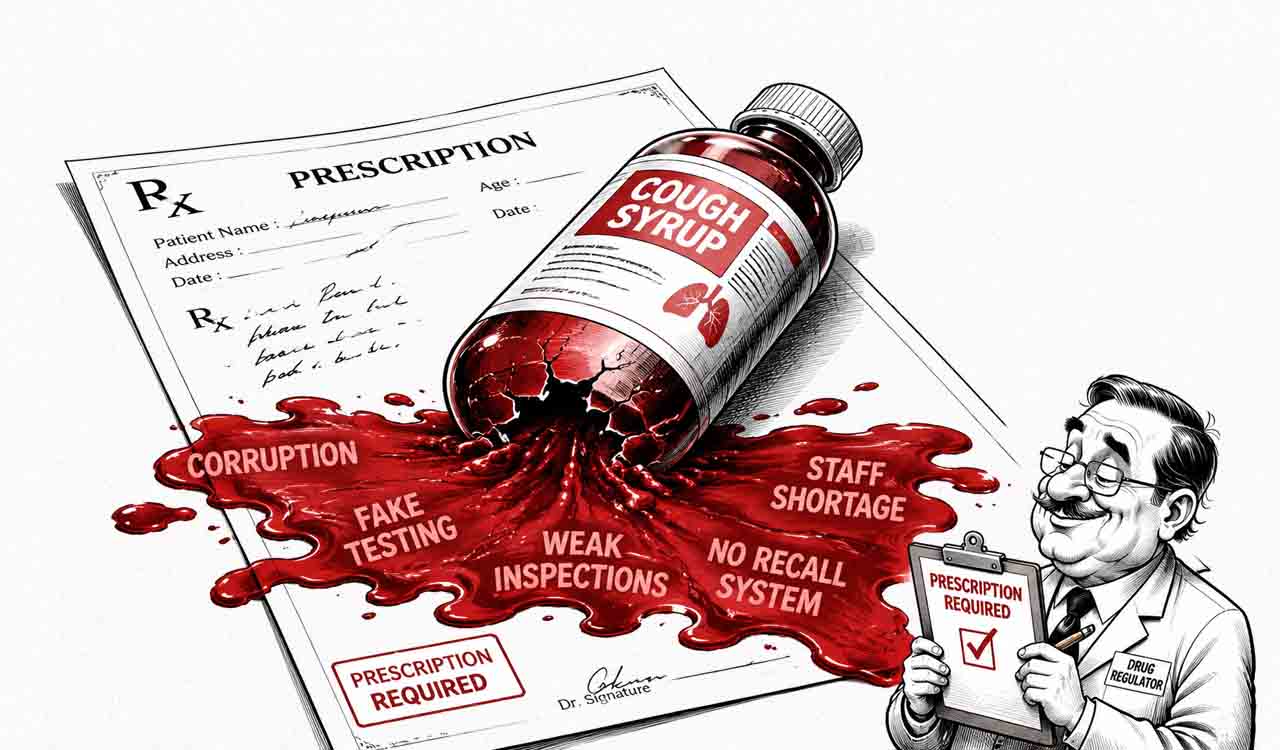
The Centre’s decision to restrict over-the-counter sales of cough syrups is a positive step, but systemic weaknesses in India’s drug regulatory framework continue to undermine effective oversight
Published Date – 18 June 2026, 09:56 PM
India may take pride in earning the tag of the ‘pharmacy of the world’, but along with it comes the responsibility of ensuring the strictest standards for products that can make the difference between life and death. A series of tragedies in the recent past, involving the deaths of children due to the consumption of adulterated cough syrup manufactured by Indian pharma companies, seriously damaged the country’s reputation as a global pharma hub. The Centre’s latest decision to end the over-the-counter sale of cough syrups and other syrup-based medicines is a welcome step, but the bigger challenge is ensuring foolproof quality standards. As per the notification issued by the Ministry of Health and Family Welfare, a doctor’s prescription is mandatory to buy cough syrups or any syrup-based medication. While the move is ostensibly meant to strengthen regulatory oversight of syrup formulations and to align the exemption framework with contemporary public health and safety requirements, it is only a very small step in a series of reforms that are urgently needed in the drug regulatory system. While many consumers have long treated such cough syrups as harmless remedies for seasonal ailments, more serious systemic lapses were exposed when the deaths of children were attributed to the cough syrups manufactured in the country. Indian-made cough syrups were linked to mass child deaths in Gambia, Cameroon and Uzbekistan. Back home, similar tragedies were reported in Madhya Pradesh and Rajasthan. These incidents have exposed serious lapses in drug safety.
The reports of fatalities linked to substandard medicines have repeatedly raised questions about quality control, testing and oversight. A plethora of problems plagues the pharma sector. Manufacturing units operate in unregulated conditions. Apart from rampant corruption, there is chronic understaffing and inconsistent inspections. Licences cancelled after a major incident are quietly reversed once public attention fades. There is no system for doctors to flag clusters of poisoning symptoms, and there is no effective drug recall mechanism. So, contaminated batches remain in circulation and cause deaths again. Despite rules that mandate every batch of raw material and final product be tested, and records maintained, there is no documentation of a chain-of-custody of inputs. Experience shows that tighter rules alone will not guarantee safer outcomes. India has no shortage of regulations governing the sale of medicines, yet prescription drugs often remain easily available without proper scrutiny. The real challenge lies in enforcement. Unless pharmacies are regularly inspected and violations attract meaningful penalties, the latest notification risks becoming another well-intentioned rule with limited impact on the ground. Stronger audits, criminal liability for negligence and swift justice are essential. Without them, every adulteration tragedy chips away at public trust — the most vital ingredient in any medicine. Though the Union government has been insisting on stricter adherence to revised manufacturing practices and periodic inspections, enforcement remains patchy. State regulators lack manpower, and penalties are rarely effective.