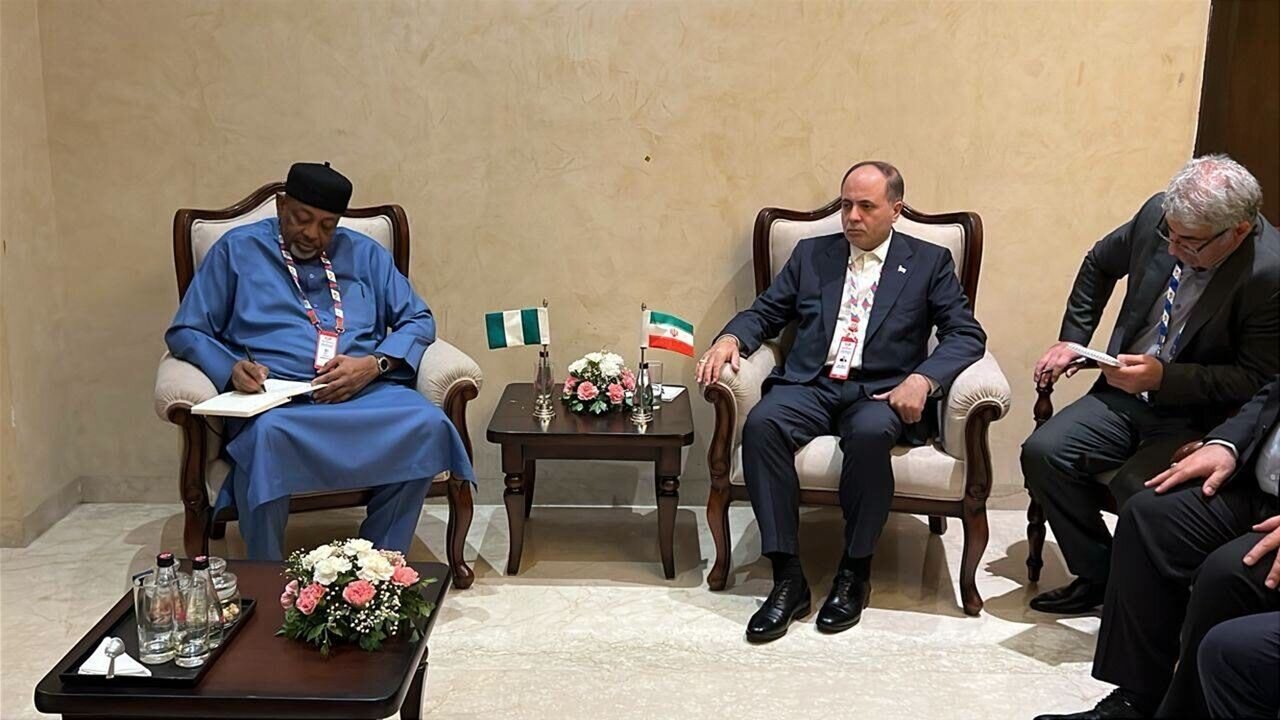
Speaking in a meeting with his Nigerian counterpart Abubakar Kyari on the sidelines of the BRICS Agriculture Ministers’ Conference in Indore, India, Ghezeljeh exchanged views to expand agricultural cooperation, technology and technical-knowhow transfer, and implementation of joint projects.
He hailed Nigerian government’s condolences with the Iranian government and nation following the US-Israeli aggressions against Iran which led to the martyrdom of the Leader of the Islamic Revolution – Ayatollah Seyyed Ali Khamenei, some senior military commanders, and the Iranian people.
The independent nations’ stances in supporting the rights of people demonstrate that cooperation and solidarity among developing countries can play an important role in countering unilateralism in the world, he added.
Livestock breeding, production and supply of livestock vaccines, transfer of technical knowledge, development of mechanization and agricultural machinery, as well as extraterritorial agriculture, are among the most important areas of cooperation between the two countries, he stated.
Meanwhile, Kyari noted that Nigeria’s population will reach approximately 400 million by 2050 and said that ensuring food security is one of the Nigerian government’s main priorities, and extensive programs are underway to increase agricultural production and productivity in the country.
Currently only about half of the country’s arable lands are being utilized, and there are significant capacities for agricultural development, attracting investment, and cooperating with international partners, he added.
Approximately 42 million households are active in Nigeria’s agricultural sector, he said urging the expansion of technical and technological cooperation with Iran.
MNA