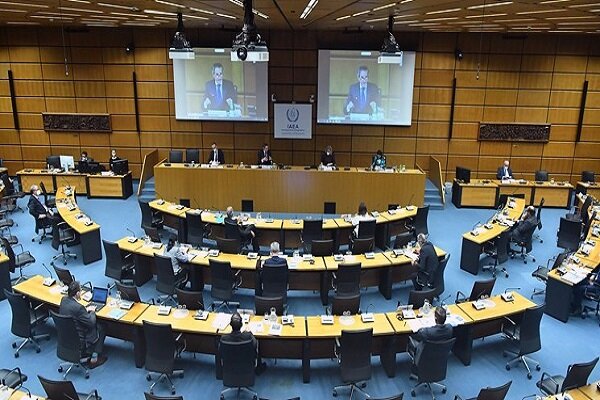
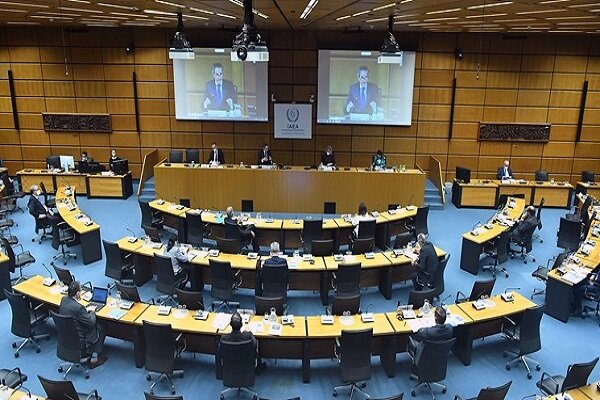
A draft resolution targeting Iran’s peaceful nuclear program has been officially adopted by the International Atomic Energy Agency (IAEA) Board of Governors.
The text, spearheaded by the United States and heavily backed by the European trio of France, the United Kingdom, and Germany (E3), was pushed through during the Board’s quarterly session despite strong objections from Tehran and its diplomatic allies.
The text of the resolution expresses regret over what Western powers termed Iran’s continuous failure to rectify its “non-compliance” over the past 12 months.
However, observers noted that the resolution intentionally omits critical context regarding the situation on the ground. The final draft passed without any acknowledgement of Iran’s long-standing cooperation with the UN nuclear watchdog, or the highly exceptional circumstances created by direct military strikes launched by the United States and the Israeli regime against Iran’s safeguarded nuclear facilities.
Instead, the document claims that Iran has consistently refused to provide the necessary information and access requested by the IAEA to verify previously declared nuclear materials, rendering the agency unable to do so for a full year.
Following the vote, the Permanent Mission of the Islamic Republic of Iran to the United Nations in Vienna issued a harsh rebuke on social media.
The mission lambasted the vote’s legitimacy and the agency’s integrity, stating: “Today, the Board of Governors adopted with a shaky vote, another political resolution on Iran’s peaceful nuclear activities; devoid of professionalism expected from a technical body.
How can IAEA be trusted when instrumentalized by warmongers, and decapitated in a way that is not even able to express a simple concern over the most extensive unlawful armed attacks – unprecedented in its history- on peaceful safeguarded nuclear facilities of a member State?”
The Iranian mission further highlighted a stark contradiction between the resolution’s text and actual U.S. foreign policy, explicitly pointing out the hypocrisy of calling for negotiations while simultaneously escalating regional conflict.
MNA