
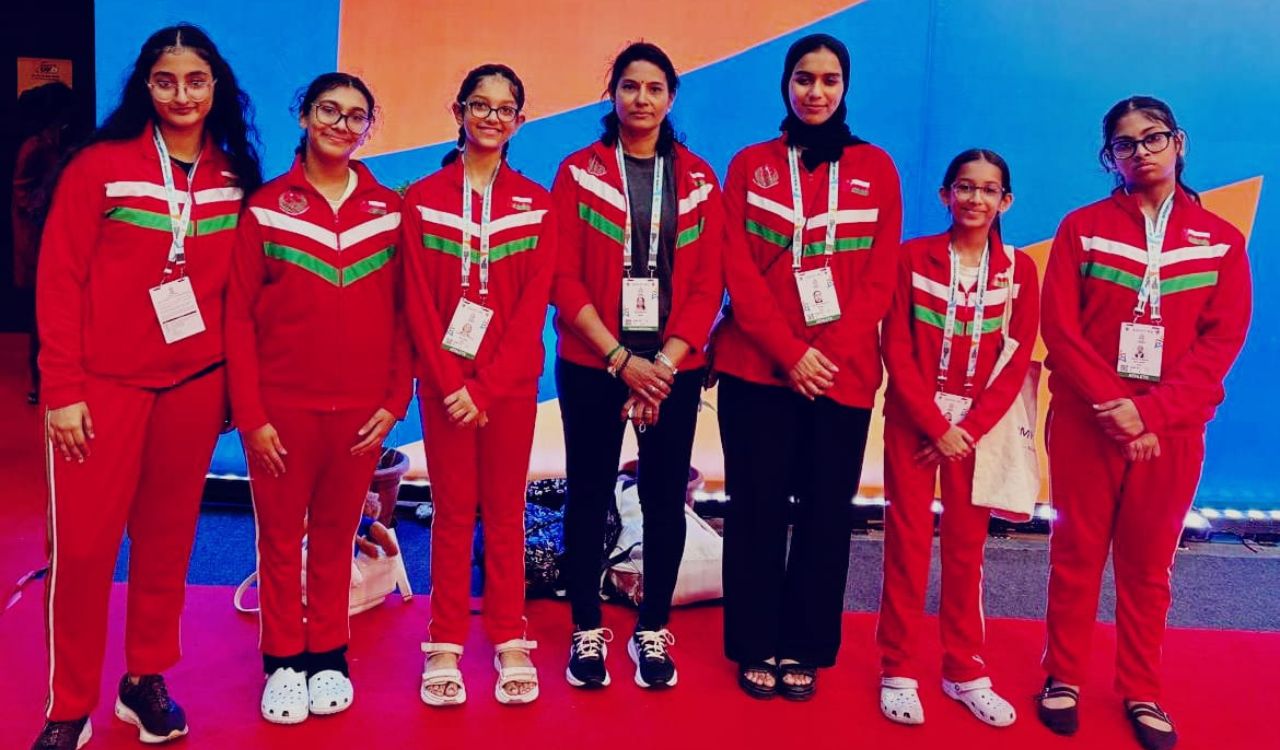
The historic World Yogasana Championships in Ahmedabad saw unprecedented success from Middle Eastern nations, led by Oman’s 21-medal haul. The event marks a major shift as competitive yoga gains massive structural momentum across the Gulf region
Published Date – 10 June 2026, 02:48 PM
Ahmedabad: The inaugural World Yogasana Championships may have underlined India’s traditional dominance, but for several Middle Eastern nations, the event offered a crucial opportunity to accelerate the sport’s competitive growth across the region.
Held at the EKA Arena, the marquee event drew 522 athletes from 78 countries, providing emerging Yogasana nations with vital exposure to international competition, elite judging standards, and modern coaching methods.
The participation of Oman, Jordan, Iran, and the United Arab Emirates (UAE) highlighted the sport’s expanding footprint in a region where yoga has historically been viewed as a wellness routine rather than an organized competitive sport.
Oman emerged as the most successful Gulf nation at the event, securing 21 medals (eight silver and 13 bronze). Jordan claimed two bronze medals, while athletes from Iran and the UAE gained high-intensity global competitive experience.
For 15-year-old Omani athlete Jay Rajesh Soneji, who clinched two bronze medals, the impact of the tournament extends far beyond the podium.
“It feels amazing. I am very happy with my performance. Winning two bronze medals is a big achievement for me,” Soneji told SAI Media, adding that he expects the event to catalyze the sport’s popularity back home. “This championship will create more awareness and encourage more people to take up competitive yoga in Oman.”
Yoga Oman President Salha Hakeem hailed the national contingent’s performance as a watershed moment.
“We are extremely proud. Winning 21 medals at the first-ever Yogasana World Championships is a historic milestone for Oman that reflects the dedication, discipline, and hard work of our athletes, coaches, and administration,” Hakeem said.
Officials note that Oman’s success mirrors a broader trend across the Gulf, where yoga has gained mainstream acceptance over the past decade via rising health awareness, large expatriate communities, and government-backed wellness mandates.
Jordanian bronze medalist Maya Alostath observed that the discipline is rapidly gaining traction in her home country.
“Yoga in Jordan is growing year after year,” Alostath said. “More people are beginning to understand that Yogasana is not only about flexibility or physical postures, but also about self-discovery, balance, and inner strength.”
For Alostath, the tournament also demonstrated yoga’s soft-power diplomacy: “This championship is not just about winning medals. It is about uniting people from all over the world through the spirit of yoga.”
Beyond podium finishes, visiting delegations gained deep structural insights into elite coaching modules, tournament frameworks, and youth development pathways required to build sustainable grassroots national programs.
With youthful populations, expanding wellness economies, and increased state investment in sports infrastructure, analysts view the Middle East as a primary frontier for Yogasana’s global expansion.
While the medals won in Ahmedabad represent tangible milestones, the true legacy of this inaugural edition lies in the institutional confidence it has injected into emerging nations. If this momentum holds, Ahmedabad will be remembered not just as the birthplace of the World Championships, but as the catalyst that sparked Yogasana’s competitive rise across the Middle East.