Shifting away from centralized tournament templates, the Centre Court Pickleball Club League’s decentralized home-and-away format across 19 Hyderabad venues has successfully established a sustainable, community-driven grassroots ecosystem for the country’s booming pickleball movement
Published Date – 4 June 2026, 05:08 PM
Hyderabad: India’s pickleball boom has largely been defined by numbers so far: more courts, more players, more celebrity investors, and more leagues. Over the last two years, the sport has rapidly evolved from a niche recreational activity into one of the country’s fastest-growing sporting movements, boasting over 500 courts nationwide and multiple franchise-led leagues emerging nationally.
But while many of India’s new pickleball leagues have focused on spectacle, celebrity ownership, and centralized tournament formats inspired by the Indian Premier League (IPL), the Centre Court Pickleball Club League (CCPL, formerly HPL Club League) attempted something fundamentally different this season: building a decentralized, city-wide club ecosystem.
Much like global football frameworks such as the English Premier League and La Liga—where clubs represent neighborhoods, cities, and deeply local identities—the CCPL Club League spread its competition across Hyderabad through a home-and-away format rooted in existing clubs and communities.
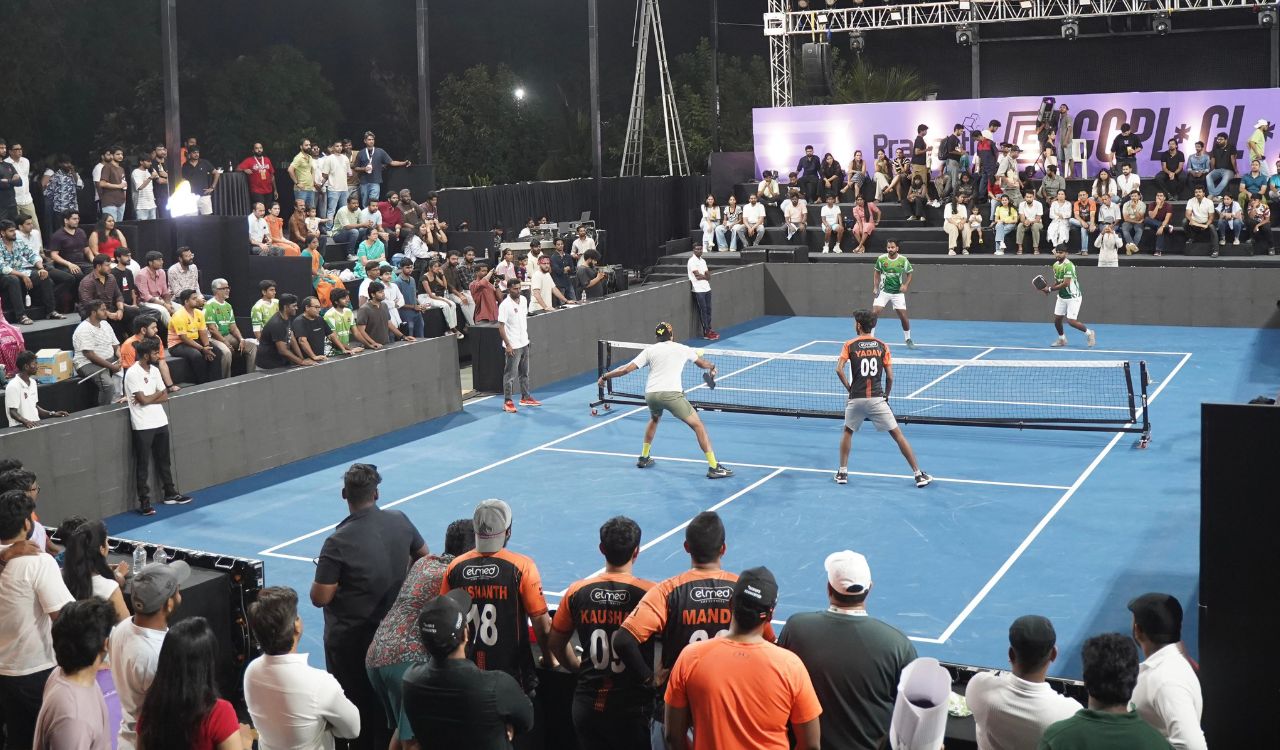
Over the past nine weeks, 20 teams divided into two conferences competed across 19 venues in Hyderabad, stretching from Abids and Habsiguda to Jubilee Hills, Kondapur, Kukatpally, and Tellapur. Instead of relying on a single central stadium or tournament venue, the league allowed clubs to host matches in their own spaces, fostering local rivalries, repeat audiences, and stronger community ownership.
“We didn’t want this to feel like a tournament that showed up for one weekend and disappeared. The idea was to build something that could create a long-term club culture within the city. Globally, the strongest sporting ecosystems are built around communities and local identities, and we wanted Hyderabad’s pickleball growth to move in that direction as well,” said Yashwanth Biyyala, Co-founder of Centre Court Sports & Entertainment.
Globally, the home-and-away structure has long been a defining pillar of successful sporting ecosystems, from European football leagues to American basketball and baseball franchises. The IPL itself borrowed heavily from this model by creating city loyalties and franchise identities that extended far beyond the game. CCPL’s club format adapts that philosophy to the grassroots level where clubs, rather than massive corporate franchises alone, become the center of daily participation and engagement.
The structural impact was visible throughout the season. More than 350 players registered for the league, with over 220 getting opportunities to compete on court. The league also recorded over 20,000 livestream views and drew an estimated on-ground audience of more than 8,000 spectators across venues.
But perhaps the most significant success was cultural. By decentralizing the competition, CCPL transformed pickleball from a weekend novelty into an athletic pursuit embedded within the fabric of the city. Clubs became vibrant gathering spaces, neighborhoods developed allegiances, and players experienced traveling fixtures, home support, and varying playing conditions—elements usually associated with far more established sports.
Vikrant Rao, Co-founder of Centre Court Sports & Entertainment, noted: “The biggest difference the home-and-away format created was emotional investment. Players began defending their home courts, clubs started building their own supporter culture, and audiences had teams and neighborhoods to rally behind. That shift changes how people experience the sport entirely.”
The model also opened up lucrative avenues for local partnerships and sponsorships. More than 100 brands associated with the league and its participating clubs this season, reflecting growing commercial confidence in pickleball not just as a sport, but as a wider lifestyle and community platform.
Crucially, the league played a vital role in widening accessibility. Ninety-two women registered for the season, with more than 40 featuring prominently in matches. Furthermore, over 20 players under the age of 21 received critical competitive exposure during the league.
“Being part of this league has been a great experience. It gives players like us a chance to compete regularly, improve our skills, and gain exposure that we might not otherwise have. It’s exciting to know that performing well here can open doors to bigger opportunities in the sport,” noted Abhaya Vemuri of Vikings PC.
The league’s ultimate triumph may already be visible beyond the points table. As the inaugural CCPL Club League season comes to a close, the lasting takeaway is not simply the crowning of champions, but the emergence of a scalable sporting structure for pickleball in India. In just one season, Hyderabad may have provided an early blueprint for how emerging sports can foster deeper, more sustainable engagement across urban India.
“We believe the future of pickleball in India will be built through strong local clubs, consistent competition, and communities that feel connected to the sport week after week. If we can create that ecosystem across cities, rather than just isolated events, the sport has the potential to grow far beyond a trend and become a lasting sporting culture,” Yashwanth concluded.