Over the past decade, the question of Israel’s collapse has become one of the most prominent topics in global media. This discourse emerged following the decisive and forward-looking statement by the late revered leader of the Islamic Revolution, who declared that Israel would be annihilated within 25 years. Continuing this trajectory, Ayatollah Sayyed Mojtaba Hosseini Khamenei, the Leader of the Islamic Revolution, stressed in a message marking the occasion of the Hajj season: “The shaky regime and the cancerous tumor of Zionism are nearing the final stages of their cursed existence and, by divine grace, in accordance with the decisive and forward-looking words spoken ten years ago by the exalted and martyred leader, may God purify his pure soul, will not see 25 years from that date, God willing.”
In recent years, the debate over the future of the Zionist regime has moved beyond the scope of limited political analyses and has become a central theme in the strategic literature of the region and even in some Western study centers. Within this framework, what has drawn more attention today than ever before is not merely the external threats against the regime, but a set of internal crises that have gradually placed its security, social, and political foundations under strain.
The developments of recent years, particularly after the October 7 operation, marked a turning point in public perception of Israel’s security structure. The image built over decades of this regime as a cohesive and deterrent security power has gradually eroded. In this event, for the first time, a perception took hold among settlers that Israel’s security and intelligence structures, contrary to earlier propaganda, lack the full capacity to prevent infiltration and surprise. This perceptual shift was not merely a military incident but a psychological blow to one of the pillars of the regime’s security legitimacy.
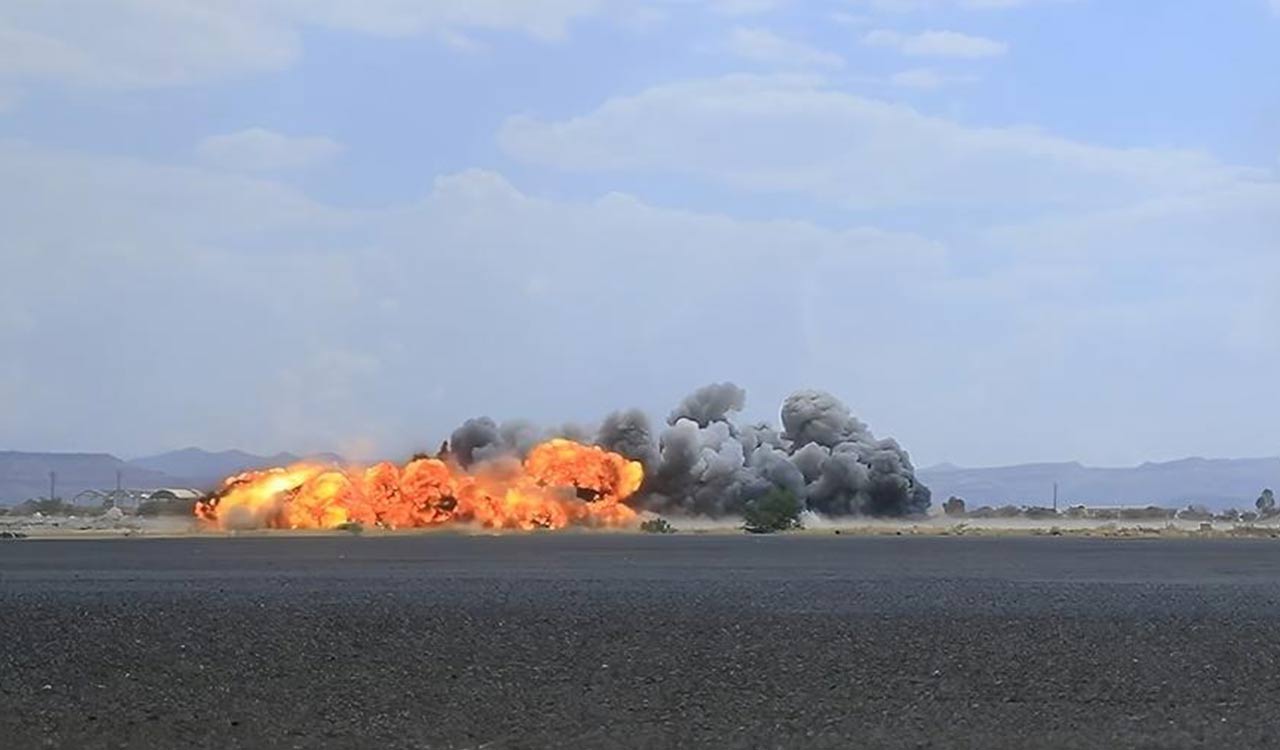
As this process continued, the prolonged and costly wars in Gaza also failed to achieve Tel Aviv’s stated objectives. Despite the vast scale of military operations and the heavy human and economic costs, the resistance structures have remained an active player on the ground. This reality has led segments of Israeli society and its political and military elites to seriously question the efficacy of the regime’s overarching security and military strategies.
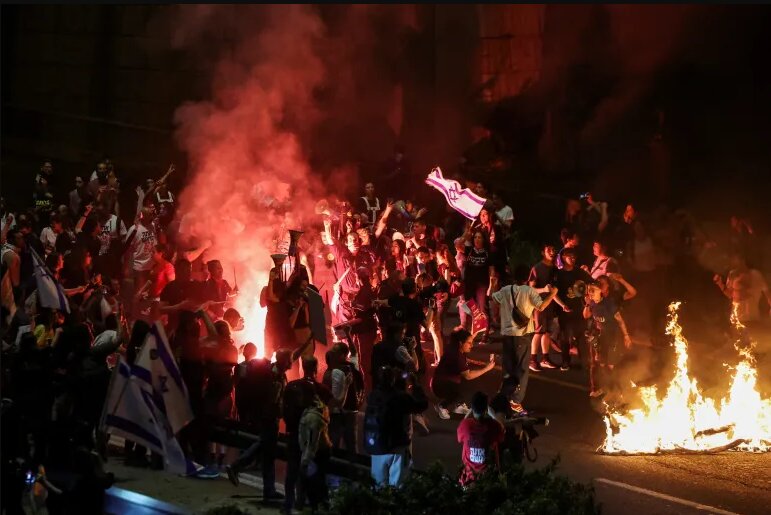
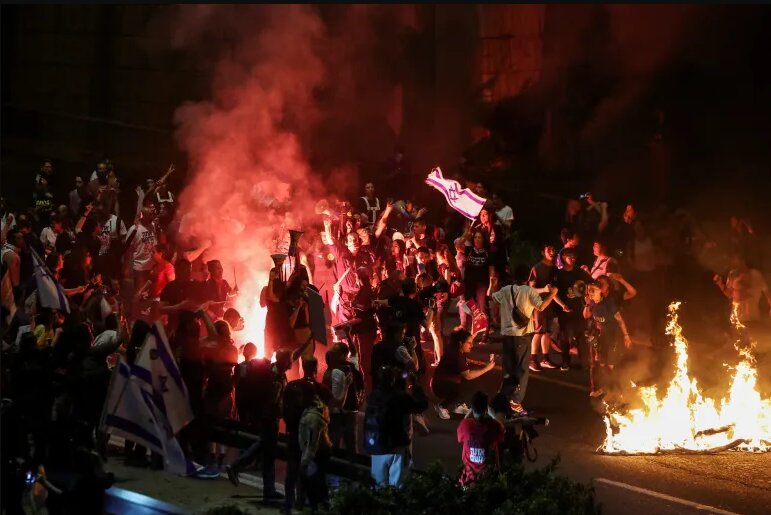
On the domestic front, alongside the deepening security crises, political and social fissures have also widened. Even before the recent wars, extensive disputes over judicial reforms had polarized Israeli society into two opposing camps. At various points, reports emerged indicating that segments of the army’s reserve forces, including within sensitive units, were protesting against continued military cooperation should the government’s policies persist. For a structure that relies heavily on its reserve forces for a significant portion of its military power, this situation constitutes a serious warning.
Concurrent with these developments, the phenomenon of reverse migration has also become a key subject in demographic analyses of Israel. Media and research reports indicate that in recent years, tens of thousands of residents of the occupied territories have decided to leave for various reasons, including insecurity, political instability, an uncertain future, and social divisions. The significance of this trend is magnified by the fact that a substantial portion of these emigrants are skilled professionals, academics, and those active in the technology and medical sectors, precisely the groups that form the backbone of Israel’s knowledge-based economy.
From an economic standpoint, the pressures resulting from wars and ongoing tensions have also left a considerable imprint on Israel’s financial and productive structure. Rising military expenditures, declining foreign investment, stagnation in certain service sectors, and reduced tourism revenues are among the direct or indirect consequences of the region’s unstable environment. Together, these trends paint a picture of an economy that, under continuous security strain, is facing serious constraints on growth.
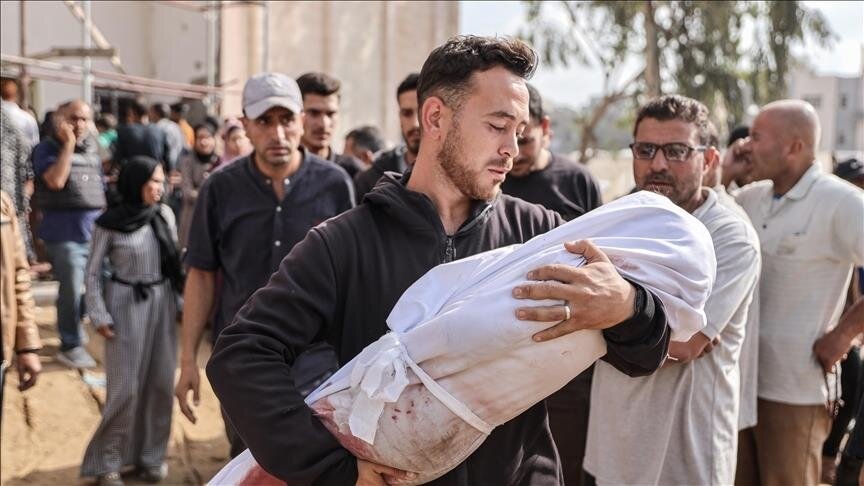
On the international stage, Israel’s image in global public opinion has encountered unprecedented challenges. The widespread dissemination of images from the war and the humanitarian crisis in Gaza, particularly in the media and on social networks, has triggered waves of protest in certain Western countries. These protests, especially among students and civic groups, demonstrate that segments of the global public are beginning to question Tel Aviv’s official narrative.
Alongside these issues, the identity crisis within Israeli society also stands out as one of the deepest challenges. The rift between secular and religious currents, divisions among ethnic and social groups, and tensions between military and political institutions all point to a society that has largely lost its former cohesion. Under such circumstances, the concept of “security solidarity,” which once served as a central pillar of this political structure’s survival, is undergoing serious erosion.
Despite these challenges, Israel continues to enjoy political and military support from the United States. However, historical experience has shown that reliance solely on foreign backing, without domestic cohesion, cannot guarantee the long-term sustainability of a political structure. Many analysts believe that the continuation of internal crises could prove more decisive in the long run than external pressures.
In recent years, discussions about the future of this regime have even surfaced in some Western media outlets and analytical circles. These analyses, regardless of their political orientation, largely focus on a set of indicators such as declining social cohesion, rising emigration, a crisis of public trust, and the erosion of governmental institutional efficacy. Some reports have explicitly spoken of Israel entering a phase of “gradual structural erosion.”
On the whole, what is observable today regarding Israel is a combination of simultaneous crises in the domains of security, politics, the economy, and social identity. These crises do not necessarily signify an immediate collapse, but they point to a gradual process of internal erosion which, if sustained, could pose serious long-term challenges to the foundations of this political structure.
In such a perspective, Israel’s future is tied less to external developments and more to its capacity to manage its internal crises and rebuild its social cohesion, an issue that, under current conditions, represents one of the most complex challenges confronting the Israeli regime.
MNA