Nearly three months have passed since the United States and Israel launched their assault on Iran — an aggression that lasted forty days and whose architects believed a combination of military pressure, psychological warfare, and media operations could force the Islamic Republic into retreat and submission. Yet with the passage of time, not only have those objectives gone unmet, but a steady stream of admissions from Western and Israeli media outlets and analysts has made the scale of the project’s failure increasingly plain. In a notable analysis, the Israeli newspaper *lThe Jerusalem Post wrote that the war did not bring Iran to its knees. It consolidated Iran’s control over the Strait of Hormuz, rebuilt its alliances, and strengthened the very institutions America had targeted.
That admission captures a reality the war’s architects worked to conceal: their calculations about Iran rested on a fundamental misreading of the Islamic Republic’s power structure, its society, and its strategic capabilities. They believed that crushing military and economic pressure, combined with an expansive media campaign, could sow internal chaos and steer Iran’s decision-making apparatus toward capitulation. The outcome of the war proved precisely the opposite.
On the battlefield where Iran’s deterrence was supposed to crumble, the reverse occurred. Not only did the country’s political and security structures remain intact, but the experience of the war deepened internal cohesion and strengthened Iran’s regional ties. In the early days of the conflict, much of the Western press spoke of a “defining moment” and insisted that Tehran was on the verge of a strategic retreat. As time went on, it became clear that Iran had not only managed to absorb the pressure but had in places retained the initiative.
Among the most significant dimensions of this failure was the collapse of the image of deterrence that the United States and Israel had spent years constructing. They had long sought to establish the proposition that any direct confrontation with Washington or Tel Aviv would lead swiftly to the other side’s collapse. The forty-day war demonstrated that this image, at least when tested against Iran, bore little resemblance to reality. The war’s protracted duration, the failure to achieve stated objectives, and the eventual move toward a ceasefire were all signs of the eroding deterrent power of both the United States and Israel.
The question of the Strait of Hormuz acquired particular significance in this context. One of the unstated goals of the war was to curtail Iran’s strategic influence over this critical energy corridor. Not only was that objective not achieved, but in the war’s aftermath Iran’s role in the security calculus of the Persian Gulf came under greater scrutiny than ever before. Many Western analysts now concede that no durable regional arrangement can take shape without accounting for Iran’s position — a clear indication of the failure of the project to isolate Iran.
The recent war also prompted a redefinition of certain regional alignments. Countries that had previously operated within the framework of maximum-pressure policy against Iran adopted a more cautious posture after witnessing the steep costs of the conflict. Many regional actors came to understand that widespread destabilization directed at Iran would not merely threaten Tehran’s security — it would place the entire region in crisis. This realization caused several diplomatic and regional processes to accelerate in the war’s wake.
On the domestic front as well, contrary to the assumptions of the war’s planners, Iranian society did not fracture. Although the economic and psychological pressures of the war were severe, the country’s public mood shifted toward a form of solidarity in the face of external threat.
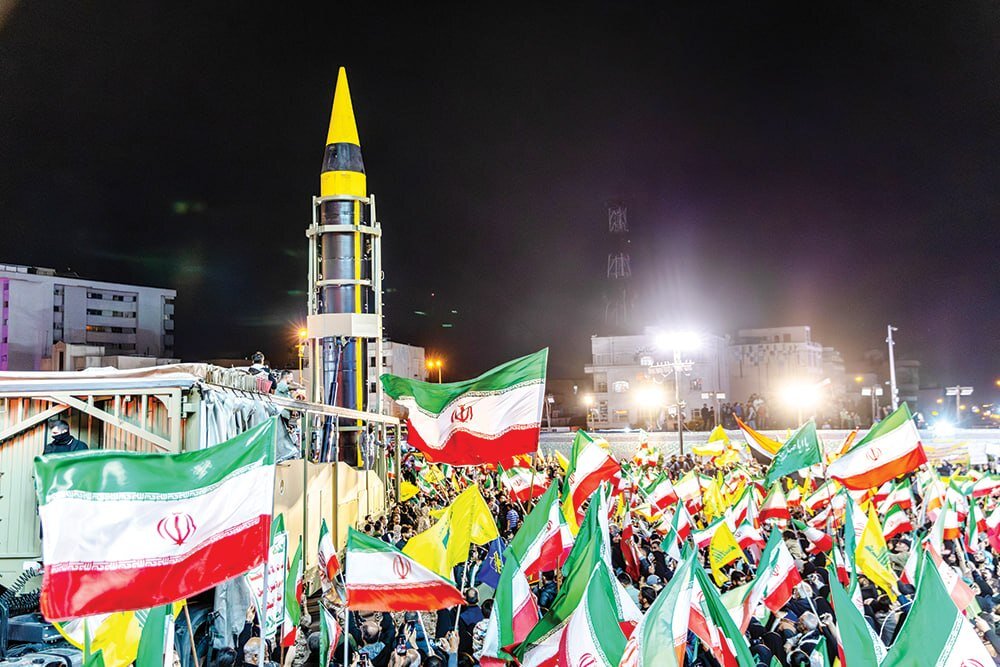
Iranians’ historical experience of confronting outside pressure asserted itself once again, and many of the fault lines on which Iran’s enemies had counted faded in the presence of a common external danger. This was one of the gravest miscalculations made by the United States and Israel: they had analyzed Iranian society almost exclusively through the lens of media warfare and social media, and remained blind to the deeper layers of historical and national identity beneath the surface.
The war also demonstrated that a strategy of “swift and decisive strikes” against Iran lacks the effectiveness its proponents assumed. The initial premise was that a series of heavy blows would disrupt Iran’s command structure and degrade its capacity to respond, forcing Tehran to accept the adversary’s terms. But the continuity of Iran’s responses and the preservation of its operational capability throughout the conflict called that premise into serious question. Some Western analysts are now warning that any broader confrontation with Iran could carry costs that far exceed initial projections for the United States and its allies.
Another significant dimension was the war’s impact on global public opinion. Unlike in previous years, when the Western narrative exercised broad dominance over the international media environment, this time large segments of the public — particularly in the region and across non-aligned countries — received a markedly different account of the conflict. Images of Iran’s resistance, the sustained nature of its responses, and the failure of the United States and Israel to achieve their stated aims caused the narrative of “swift victory” to gradually unravel. Even within the United States, criticism mounted over the costs of the war and the absence of any clear outcome.
Today, three months after the aggression began, it is clearer than ever that the project to “force Iran’s submission” not only failed to deliver results — it produced the opposite of what was intended. A war designed to weaken Iran’s regional standing ultimately elevated Iran’s role and weight in the region’s strategic equation. A war aimed at driving internal wedges ended up reinforcing national cohesion against an external threat. And a war that was supposed to reaffirm American and Israeli deterrence has instead become a symbol of the limits of their power.
Perhaps the most important message to draw from these developments is that the era of unilateral decision-making over the region’s future has come to an end. The new realities of West Asia show that no power can impose its will on the peoples of the region through military superiority alone. The forty-day war against Iran revealed, above all else, that the region’s emerging equations are far more complex than anything being designed in the think tanks of Washington and Tel Aviv. The same media outlets that once spoke of Iran’s “imminent collapse” are now compelled to write about the collapse of their own assumptions — a collapse that was not merely a military setback, but the unraveling of a strategic illusion.
MNA