Karimnagar MLA Gangula Kamalakar accused the state government of failing to procure maize and paddy, leaving farmers waiting at centres for over 20 days.
Published Date – 15 May 2026, 07:22 PM
Karimnagar: Local MLA Gangula Kamalakar said that the state government has utterly failed in the procurement of maize and paddy. Farmers are waiting in procurement centres since the procurement process has not started even after 20 days in Karimnagar.
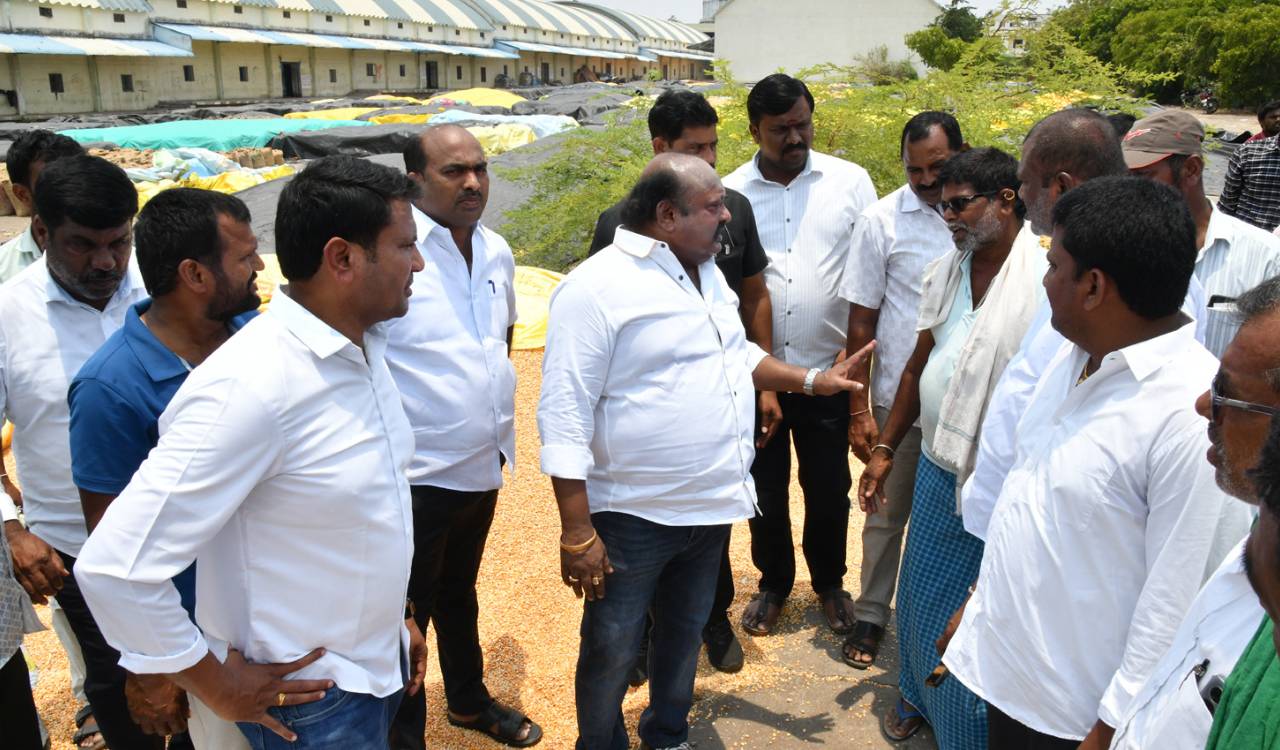
On Friday, Kamalakar visited the maize procurement center in Karimnagar agriculture market yard and inquired about their problems by interacting with farmers. Moved by their troubles, he spoke to market officials on the phone and expressed anger over the delay in procurement.
Speaking on the occasion, the MLA found fault with the state government for not purchasing paddy and maize. Initially, Markfed refused to procure maize. However, it agreed only after pressure mounted by the BRS. Though the centers were opened, the procurement process has not started in many places.
In Karimnagar, maize brought to the market yard center 20 days ago was not purchased so far. Weighted maize has not been transported during the last 15 days due to lack of vehicles.
Though 35 to 40 quintals of yield is being produced in an acre of land, Markfed put another condition to purchase only 25 quintals. As a result, the farmers were forced to sell the remaining crop to middlemen at Rs 1,600 to Rs 1,800 as against Rs 2,400 minimum support price (MSP) fixed per quintal maize. Unfortunately, officials were refusing to procure the crop from tenant farmers without the signature of the land owner.
However, in the BRS government, the entire crop produced by the farmers was procured besides providing all facilities including financial assistance, power, water supply and others. Though the godowns were not available in Telangana to store the crop, they hired godowns in Andhra Pradesh and Karnataka. Some of the schools were also used to store the crop in holidays, he informed.
Kamalakar demanded the government to solve farmers’ problems by speeding up the purchasing process. Otherwise, they would wage agitation along with farmers