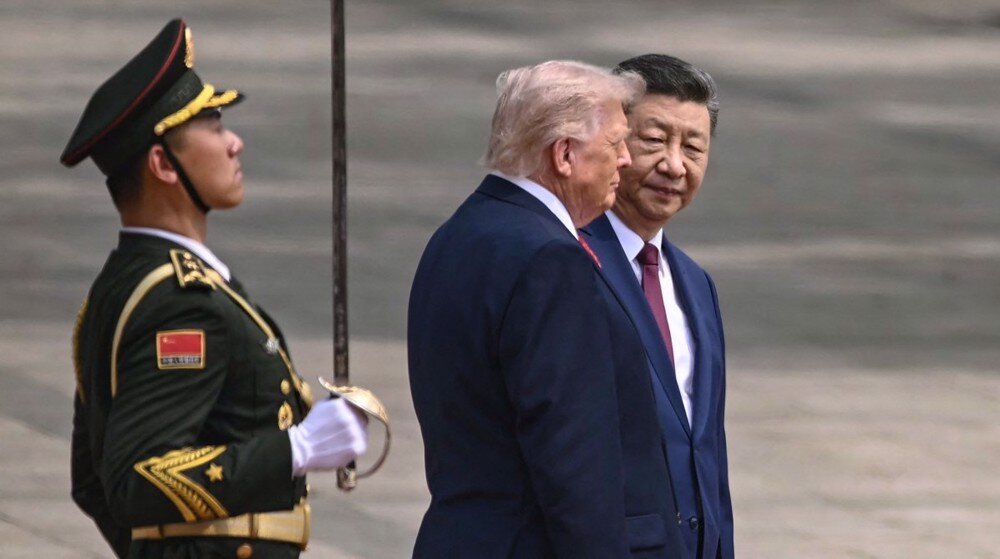
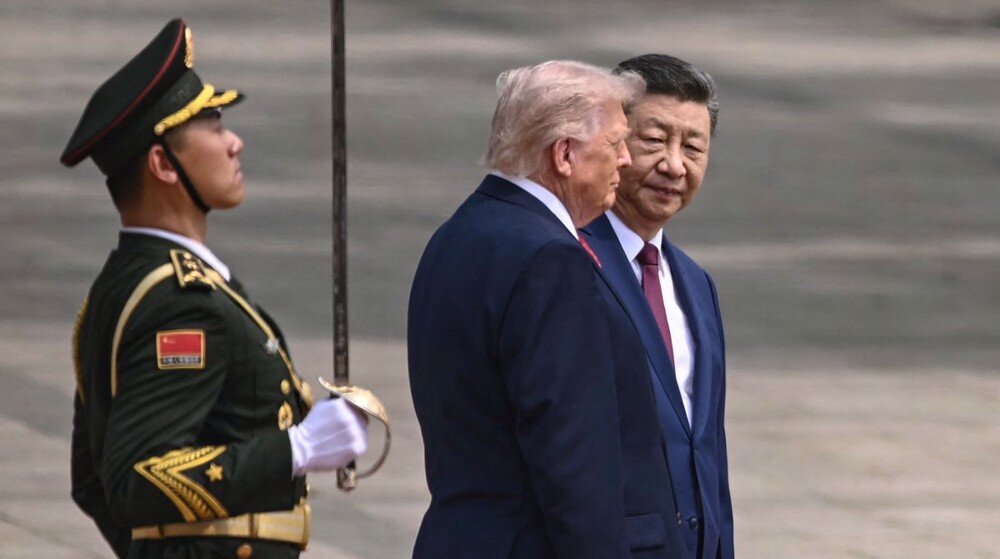
Trump arrived in China on Wednesday, where he was greeted at the airport by Vice President Han Zheng. Xi formally welcomed him on Thursday with full diplomatic protocol.
In their meeting, Xi underscored Beijing’s firm stance on Taipei, saying that continued US interference could place the two powers on a collision course.
“If it is handled properly, the bilateral relationship will enjoy overall stability,” Xi said. “Otherwise, the two countries will have clashes and even conflicts, putting the entire relationship in great danger.”
Xi reaffirmed that the Taiwan question remains “the most important issue in China–US relations,” underscoring that Chinese Taipei has always been an inseparable part of China.
He urged the United States to stop provoking confrontation by supporting separatists and to honour the “One China” principle.
Peace and stability across the Taiwan Strait, Xi said, are fundamentally incompatible with any push for “Taiwan independence.”
He added that preventing conflict and maintaining stability across the strait is “the greatest common denominator” between Beijing and Washington, if the United States chooses to act responsibly.
Analysts say Beijing’s message reflects growing concern that the United States, through arms sales and political backing for separatist figures in Taipei, is attempting to undermine China’s sovereignty while escalating tensions across the region.
Ahead of his arrival in Beijing, Trump signalled that he expected the Taiwan issue to surface in talks, saying he would “have that discussion with President Xi” if asked to explain US meddling.
For years, successive US administrations have armed Taipei, emboldening separatist forces and sending “deeply irresponsible” signals. Under Trump, Washington approved a large-scale weapons package for the island.
US senators have reportedly urged Trump to proceed with a delayed arms deal valued at $14 billion, an action analysts say would further inflame tensions and undermine regional peace.
MNA