TGSRTC is planning to introduce nearly 1,000 mini electric buses in Hyderabad’s congested areas to improve metro connectivity and expand public transport services. The RTC aims to make Greater Hyderabad diesel-free by 2027, though employee unions have raised concerns over staff deployment.
Published Date – 9 May 2026, 04:41 PM
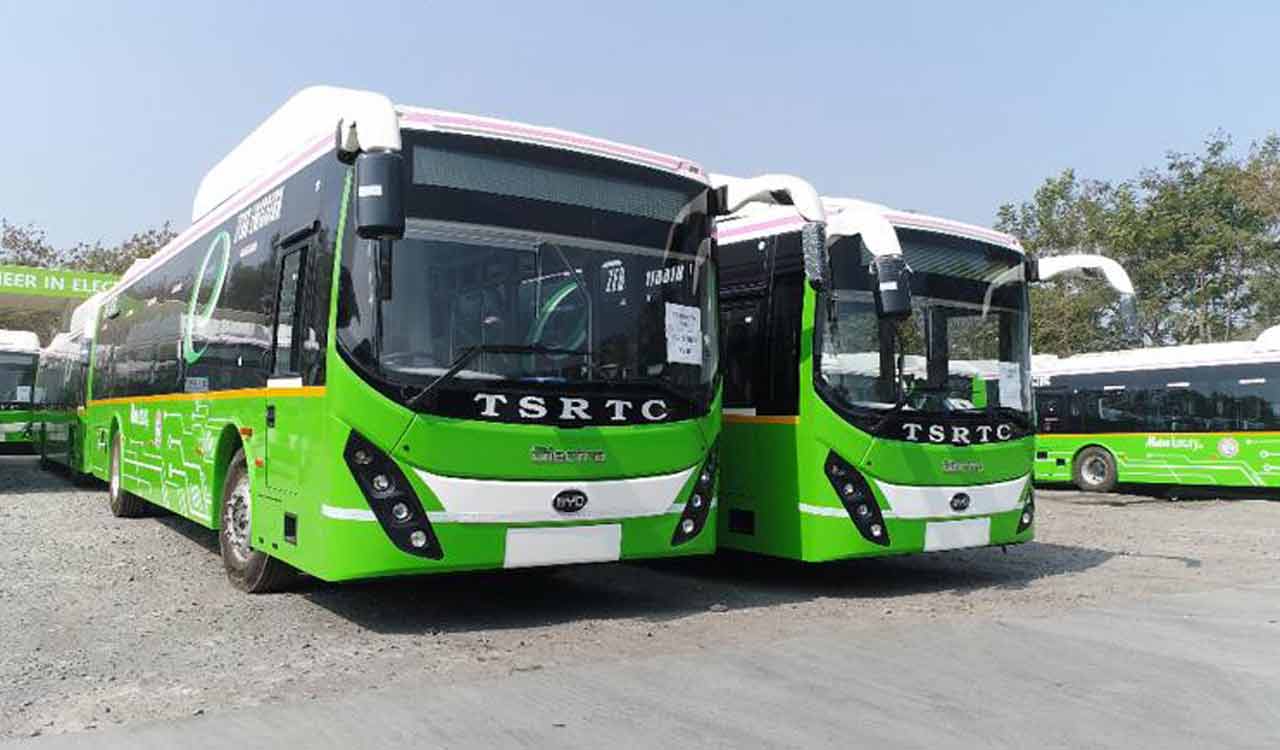
Hyderabad: The Telangana State Road Transport Corporation (TGSRTC) is planning to introduce nearly 1,000 mini electric buses to operate in the congested and narrow-road areas of Hyderabad, particularly in the older parts of the city.
These buses are expected to improve first-mile and last-mile connectivity with the metro rail services by linking residential colonies with metro stations. The RTC is gearing up for a large-scale expansion of its electric bus network, with the State government planning to procure nearly 2,000 buses directly instead of depending entirely on rental-based operations.
Hyderabad currently has fewer than 3,000 RTC buses, far short of the estimated requirement of around 6,000 buses for the city’s growing population. To strengthen public transport services, plans have been drawn to raise the fleet strength to at least 5,000 buses in the coming years.
Under the Centre’s PM e-Drive scheme, Hyderabad has already been allotted 2,300 electric buses. Officials said the remaining requirement would be met through direct purchases by RTC.
As part of its Vision-2047 roadmap, RTC is aiming to make the Greater Hyderabad region completely free of diesel RTC buses by 2027. Diesel buses operating within the Outer Ring Road limits are expected to be shifted to depots outside the city once the electric fleet is fully deployed.
It is learnt that the loans being secured for metro rail expansion could also partly fund the procurement of RTC electric buses. Transport authorities believe the cost of electric buses may reduce in future with domestic manufacturing of batteries expected to increase.
Meanwhile, the shift towards electric mobility, however, has triggered concerns among the RTC employees. Under the current Gross Cost Contract (GCC) model, private operators provide drivers and maintenance staff, while RTC deploys conductors.
Employee unions have been opposing the transfer of RTC drivers and mechanics to depots outside the city. The government has on the other side trying to assure staff that direct ownership of buses in the future would create opportunities for many employees to return to city operations.