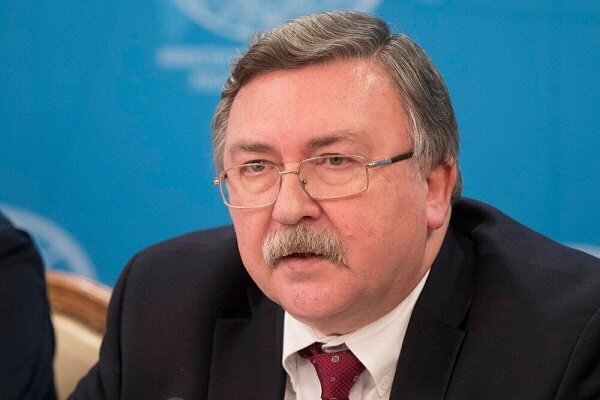


One week before Donald Trump lands in Beijing for his high-stakes summit with Xi Jinping, Iran’s Foreign Minister Abbas Araghchi made his first visit to China since the war began on February 28. It came on the very day Trump suspended “Project Freedom,” his failed military operation to force open the Strait of Hormuz. Against this backdrop, Mehr News Agency reached out to Hongda Fan, professor at the Middle East Studies Institute of Shanghai International Studies University, to ask the question that now preoccupies every capital: can China convert its unique leverage — as Iran’s largest trading partner, a permanent UN Security Council member, and Trump’s summit host — into a genuine breakthrough for peace?
The text of the interview is as follows:
Foreign Minister Araghchi landed in Beijing on Wednesday— his first visit to China since the war began on February 28. Coming exactly one week before President Trump’s scheduled summit with President Xi Jinping on May 14–15, how do you assess the strategic timing of this visit?
The US and Iran are currently at a critical and sensitive juncture in negotiations to reach an agreement. In fact, both countries’ national interests necessitate an immediate end to the war. After days of debate, I believe it is indeed time for both countries to compromise and declare an end to the war. However, due to the US’s poor conduct in dealing with Iran, such as its unilateral withdrawal from the JCPOA, Tehran clearly lacks trust in the US. Therefore, as long-term friendly nations, face-to-face exchanges between the foreign ministers of Iran and China are essential at this time, especially before President Trump’s upcoming visit to China.
How do you think China can use its unique position — as Iran’s largest trading partner and a permanent UN Security Council member with ties to Washington — to bridge the gap between Tehran and the United States amid the peace-making efforts?
From a national interest perspective, both the US and Iran are currently eager to end the war, and China has both the will and the capability to help these two countries achieve this goal. These three countries are on the same path to peace. I believe that the US and Iran, which have no fundamental conflict of interest, have sufficient room for compromise, as long as the US does not bring the demands of third parties into its negotiations with Iran. I believe China will use President Trump’s visit to Beijing to help bring the US and Iran closer together.
President Trump announced “Project Freedom” — the US military operation to escort ships through the Strait of Hormuz — and suspended it within 24 hours, on the very day Araghchi met Wang Yi in Beijing. This follows a pattern of bold US declarations quickly reversed: the “four-week war” prediction, the premature “total victory” announcement. What does this pattern reveal about Washington’s actual strategic position in this conflict? And what do you think is the main reason behind Trump’s retreat from the operation in the Strait of Hormuz?
The core reason is that the prospect of resolving the Strait of Hormuz crisis through military means is unclear for the United States. With the international community, including within the US, generally hoping for a swift de-escalation of the Persian Gulf situation, and with a summit with the Chinese leader approaching, President Trump has been forced to make some compromises. It has been proven that the approach of winning through intimidation has failed.
If diplomacy continues to stall, what are the realistic scenarios for the situation in the region, especially in Iran?
I absolutely support resolving the issue diplomatically and ending the war as soon as possible. Continuing the war will absolutely do more harm than good to Iran.
If diplomacy fails, although all parties involved will continue to suffer, Iran will undoubtedly be the biggest victim. The normal state of a country should be healthy development, not prolonged conflict.
Some analysts argue that this war has permanently altered the regional security architecture of the Middle East. Do you agree — and if so, who emerges as the strategic winner when the hostilities are over?
I agree that this war will have a significant impact on the security landscape of the Middle East, particularly the Persian Gulf. Iran will end the strategic decline caused by the continuous regional wars since October 7, 2023. The UAE, heavily reliant on the United States and Israel, will face a regional security dilemma. Overall, the region’s strategic autonomy will be further enhanced. For Iran, the core issue is not external. As long as its internal policies are appropriate, Iran will certainly be a powerful country. If Iran still does not undertake major reforms [in line with strengthening national power – MNA] after this war, I will share the disappointment of the Iranian people.
Interviewed by Mohaddeseh Pakravan