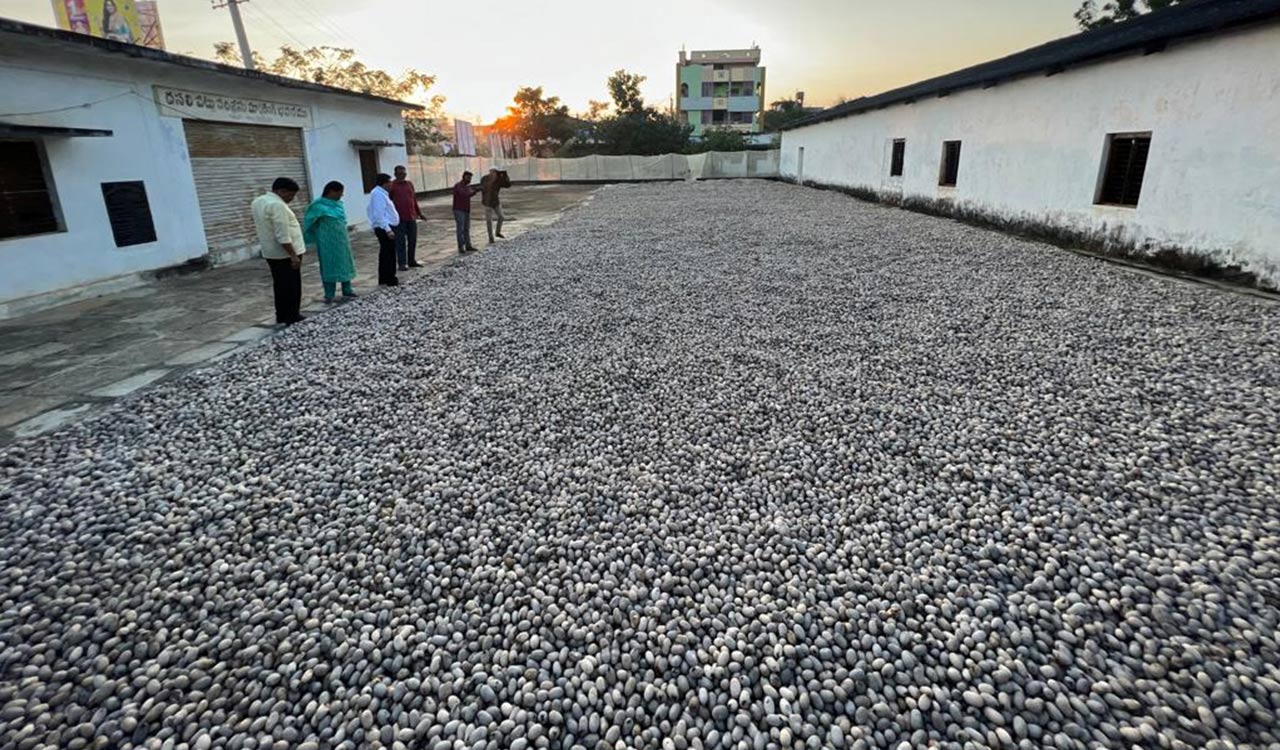
In Telangana’s Mancherial district, tribal communities long engaged in eco-friendly tasar sericulture face restrictions from forest authorities citing wildlife protection, threatening livelihoods. Despite government support and profitable yields, tensions rise over conservation, land access, and sustaining traditional silk farming practices
Published Date – 30 April 2026, 10:23 AM
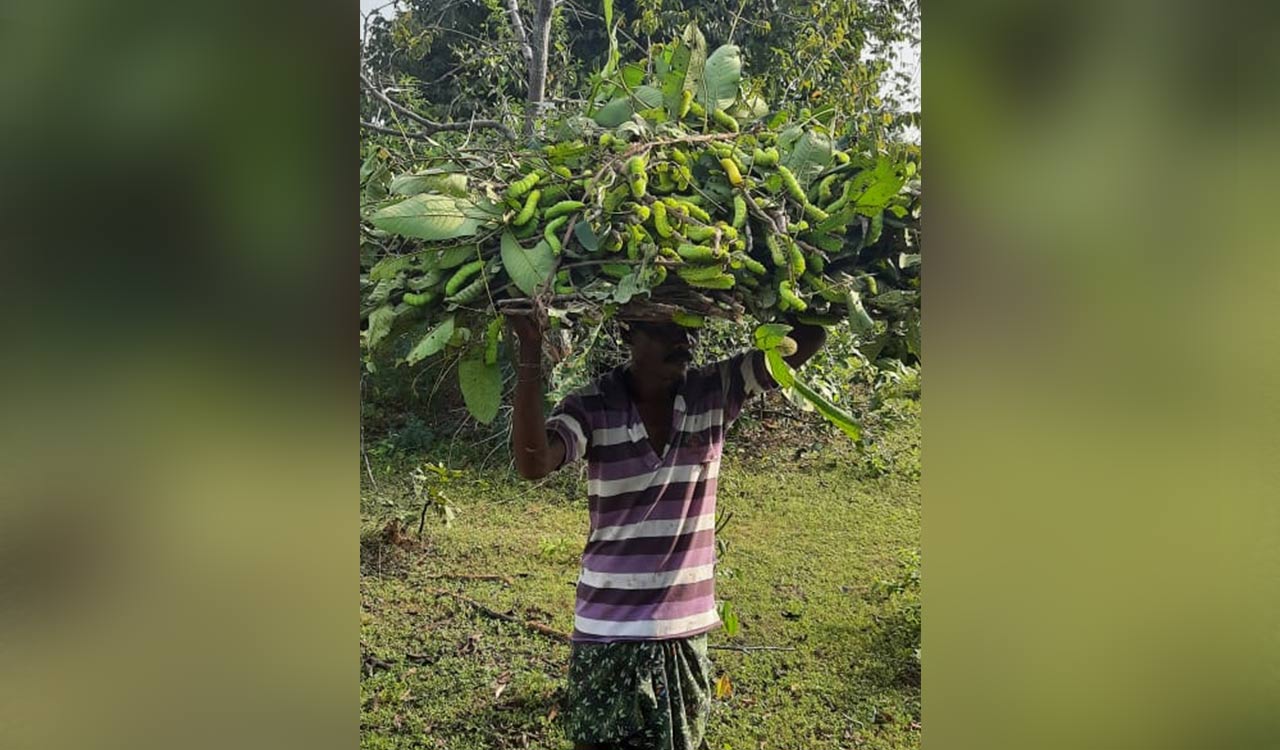
Mancherial: The district is considered as one of the industrially developed entities in Telangana. It has cement manufacturers, coal mines and thermal power companies. It is known for producing mangos. It has silently earned recognition in the country by excelling in sericulture or silk farming, an unconventional yet lesser explored field in Telangana over a period of time. However, the eco-friendly affair has hit headlines with the Forest department setting curbs on it.
Aboriginal tribals from around 14 interior villages in Vemanapalli, Kotapalli, Chennur, Kannepalli and Nennal mandals shine in traditional cultivation of ‘tasar’ or ‘tussar’ silkworm cocoons in Chennur forests region. They are skilled in farming of silkworm cocoons since ancient times. The tribal families are able to earn somewhere between Rs 50,000 and Rs 1 lakh per annum.
Currently, 650 tribals families residing in remote yet forest-fringe villages have been proving their mettle in sericulture for around 100 years. They have formally been encouraged to take up sericulture by the State government since 1950. They are supported by Integrated Tribal Welfare Development Agency (ITDA)-Utnoor in market linkage, production and supply of seeds, guidance, and upgrading their skills since 1982.
What is tasar silkworm cocoon cultivation?
Tasar, is one of the five varieties of silks produced in the country. Cultivation of tasar silkworm cocoons is a comparatively profitable and eco-friendly farming supported by nature. The silkworms are typically grown on Terminalia Arjuna (Tellamaddi) and Terminalia elliptica or Asan (Nallamaddi)) trees abundantly situated in the forests of Chennur of the district, Kagaznagar in Kumram Bheem Asifabad and Jayashankar Bhupalpalli district.
The other variety of silk such as Mulberry is grown in Andhra Pradesh, Tamil Nadu, West Bengal, Jammu and Kashmir. Muga, Eri and Oak silks are produced in northeast states and foothills of Himalayas. Muga is the costliest of all silks. It is sold for Rs 30,000 and Rs 40,000 per kg. The other two silks, Eri and Oak, cultivated by ethnic tribes, are cheap and are sold at Rs 50 per kg.
Why are only tribals encouraged to take up tasar silkworm cultivation?
Tribals from Lingampalli, Kishtampet, Suddala, Kothapalli, Rajaram, Lingannapet, Bopparam, Kondampet, Parupelli, Pinnaram, Errayipet, Edulabandham, Mulkalapet, Manneguda villages are encouraged to take up the cultivation of the silkworms considering their innate technical skill, proficiency and familiarity with intricacies of the rearing inherited from ancestors. A few can produce 70,000 cocoons in two months, showing their hold over the field.
How are tasar silkworms cultivated?
Eggs of tasar silkworms are supplied by the Central Silk Board (CSB) to the selected tribals at subsidized prices. The eggs are hatched and caterpillars are produced and these are released on the leaves of the two types of tree in June. The tribals show special care , skill and meticulously rear the silkworms. They stay in the forests to throughout the day to protect the crop and trees risking their lives as they are prone to wild animal attacks. Later they harvest cocoons from each tree.
What are silkworm cocoons?
The tasar silkworm cocoons are silky casings secreted and spun by silk moths Bombyx mori or larvae. They protect the moths during their pupa stage, which is made of fibroin, an insoluble protein and sericin, a natural glue-like protein. They are processed to extract raw silk, which is used for clothing. The empty shells are also used as skincare tools for exfoliation and medical implants.
How is it profitable farming?
Since the duration of Tasar silkworm crop period is just 40 dys, a farmer can produce three crops between June and January. Two types of cocoons such as Bivoltine and Tri-voltine are cultivated. If moths complete two life cycles per annum inside the cocoons, it is Bivoltine. It is high-quality and superior grade cocoons. Moths complete three life cycles in tri-voltine cocoons.
A tribal couple can make a yield of 20,000 and 40,000 cocoons in a year. A farmer can effortlessly grow at least 10,000 cocoons a year. Each cocoon is offered Rs 6. State government provides Rs 200 to a grower per 1,000 cocoons. The silkwork eggs weighing 200 grams cost Rs 1,600. They are given to the farmers for Rs 800, while the remaining amount is borne by the government.
How are tasar cocoons marketed?
The silkworm cocoons are harvested after completion of pupa stage. They are procured by the CSB from the farmers. The cocoons are processed by killing pupas by keeping them in hot air chambers and drying in a unit owned by the CSB in Chennur. They are sold through an open auction and traders from Chhattisgarh, Jharkhand, Madhya Pradesh, West Bengal and many other parts of the country participate in the auction held in February every year.
What is specialty of tasar silk?
Unlike highly lustrous mulberry silk, this variety of silk has matte, grainy texture and earthy appeal. It is affordable when compared to that of Muga. This variety of silk thread is priced anywhere between Rs 5,000 and Rs 6,000 per kg.The tasar silk thread is used for manufacturing saris, scarves, and furnishings, bed sheets, drapes, cushion covers and curtains.
Due to outstanding quality tasar cocoons produced in Chennur belt, silk traders from across the country compete with each other in the auctions by bidding higher amounts. Jharkhand and Odisha were the leading producers of tasar till recently.
Why restrictions against cocoon cultivation now?
Tribals are accused of cutting trees during rearing of the silkworm cocoons to prevent silkworms from eating leaves of other trees. They are accused of indulging in shifting cultivation by felling trees in certain parts. Forest officials started imposing restrictions on rearing of silkworms in the forests incidentally situated in Pranahita Wildlife Sanctuary (PWS) under Kawal Tiger Reserve (KTR) from 2025.
Poaching of wildlife, in particular tigers, also prompted the forest officials to prevent tribals from cultivation of the cocoons. Officials say that a micro plan would be prepared to provide an alternative piece of land helping the tribals to grow the silkworms. However, Sericulture officials fear that the land, identified the Forest department, may not be suitable for cultivation of the silkworms, affecting livelihood of the tribals.
What can be done to avoid the conflict of interests?
Officials of both Forest and Sericulture departments should strive to maintain balance between wildlife protection and provision of livelihood of the tribals. They ought to address the issue with sensitivity and humanity. Following sustainable and inclusive models to safeguard wild animals in the Tiger Reservice, while ensuring the tribal farmers continue to find the age-old traditional farming. Another practical solution is to convince the Singareni Colleries Company Limited (SCCL) to take up plantation of Tellamaddi and Nallamaddi trees to protect the ancient farming of the tribals.