The recent forty-day war was not merely a limited military confrontation; rather, it constituted a decisive moment for redefining Iran’s position in one of the most sensitive geopolitical points in the world. The Strait of Hormuz is once again the center of these developments; a place to which not only security equations but also the future of the global energy economy is tied. What stood out most during this period was Iran’s movement toward a form of “active management” over this vital passage; a management that, if properly designed and implemented, could elevate Iran’s position from a regional actor to a key regulator at the global level.
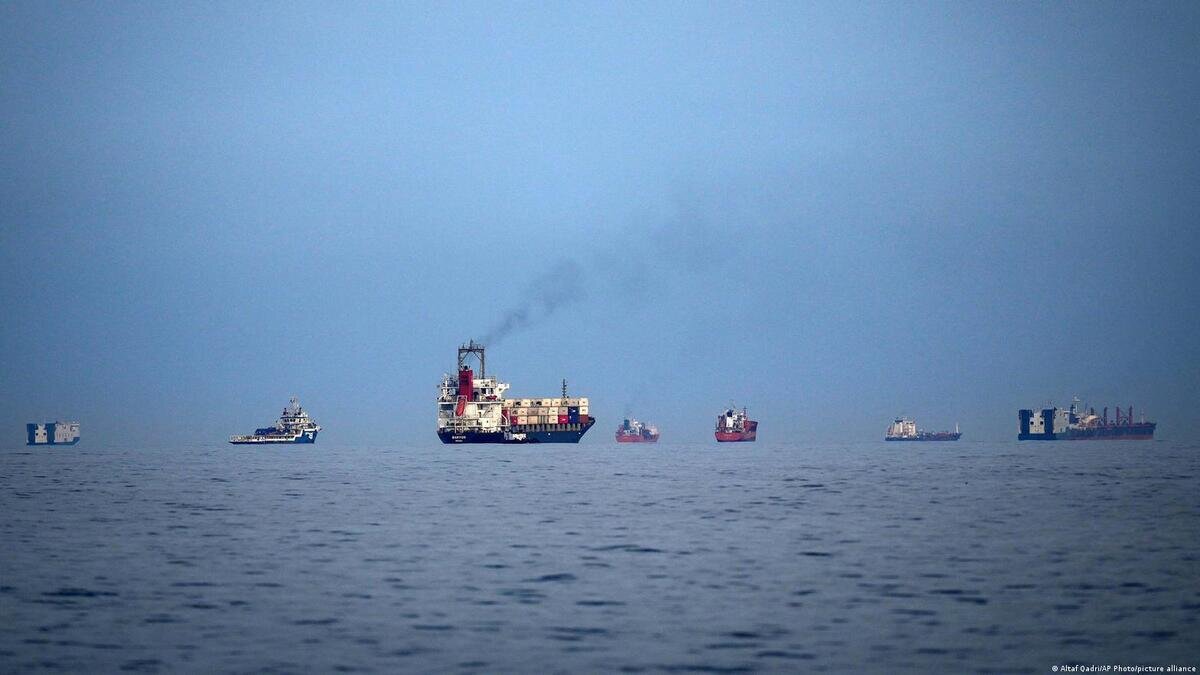
The Strait of Hormuz should not be regarded merely as a narrow waterway through which oil tankers pass. This strait is, in fact, one of the few points in the world whose weight is defined by the simultaneity of three domains: economics, security, and international politics. Approximately one-fifth of the world’s consumed oil and a significant share of liquefied natural gas pass through this route; therefore, any change in its status is immediately reflected in global energy markets, the security decisions of major powers, and even the diplomatic behavior of countries. It is for this reason that the Strait of Hormuz is considered not just a geographical point, but a “lever of power.”
However, amidst all the economic and security analyses, one important legal reality has received less attention: the status of this strait within the framework of international law. Contrary to some common narratives, Iran’s sovereignty over a significant portion of this waterway is not a political claim, but is based on recognized rules of the law of the sea. According to international conventions, including the 1958 Geneva Convention and the 1982 Convention on the Law of the Sea, the principle of “innocent passage” for foreign vessels is recognized, but this principle is by no means absolute and unqualified.
Within this framework, the passage of vessels is considered “innocent” only when it does not prejudice the peace, good order, or security of the coastal state. The key point here is that the determination of this matter ultimately rests with that very coastal state. Put more simply, it is Iran that can determine what kind of passage is acceptable within the framework of its national security and what kind constitutes a threat. Even under certain conditions, the coastal state has the authority to temporarily restrict or suspend passage in order to protect its security; provided, of course, that such action is carried out without discrimination.
This legal capacity, although it has always existed, has rarely been utilized in an operational and strategic manner. The recent war created the opportunity for the perception of the Strait of Hormuz to shift from a “mere chokepoint” to a “regulatory tool.” In this new perspective, management of the strait is defined not as closing the route or disrupting global trade, but as the exercise of a form of smart sovereignty; a sovereignty whose aim is to regulate the flow of passage, enhance safety, and simultaneously safeguard national interests.
If we take this approach as our basis, the importance of managing the Strait of Hormuz for Iran can be analyzed at three primary levels: economic, security, and political.
At the economic level, the Strait of Hormuz is a rare opportunity for value creation. A country that has domination over one of the world’s most important energy arteries can generate substantial and sustainable revenues by establishing service infrastructure. Services such as maritime guidance, rescue and relief, crisis management, traffic safety, insurance, and even the provision of logistical services can gradually evolve into a powerful maritime industry. This is precisely the path that some coastal states in other parts of the world have taken and have succeeded in transforming their geographical position into a long-term economic advantage.
Beyond direct revenue, this position can also elevate Iran’s standing in the global energy chain. Iran will no longer be merely an exporter of oil or gas but will become a regulatory actor, an actor capable of influencing the manner and conditions of energy transit at the global level. Such a position will naturally enhance the country’s economic bargaining power as well.
At the security level, the importance of the Strait of Hormuz becomes even more evident. This waterway is not merely a transit route for goods; it is considered part of the deterrence equation in the region. A country that can exercise operational and legal domination over this route in effect possesses an important tool for managing threats. This does not mean that the strait should be used as a tool of constant pressure, but rather that, in the event of a threat, the cost of hostile actions for the opposing side will increase.
In other words, the management of the Strait of Hormuz can be part of a smart deterrence doctrine; a doctrine that, instead of relying solely on military power, utilizes a combination of legal, economic, and geopolitical tools to ensure security. This type of deterrence is not only more effective, but in many cases less costly and more sustainable.
But perhaps the most important dimension is the political and diplomatic dimension of this issue. In today’s world, power is not defined solely in the military arena; rather, the ability to shape the rules of the game and guide negotiations is also a significant part of power. Control over an international waterway such as the Strait of Hormuz naturally creates an important lever in this domain.
Iran can use this position to define frameworks for regional cooperation in the field of maritime security, dialogue with energy-consuming countries, and even participation in shaping new rules in the domain of energy trade. In such a scenario, the Strait of Hormuz transforms from a potential point of tension into a platform for engagement and even the generation of agreements. This is the very change that can also transform Iran’s image in international equations.
However, realizing such a vision requires one fundamental precondition: the precise and multilayered design of strait management mechanisms. This management cannot be based solely on ad hoc or reactive decisions, but must rest upon a comprehensive legal, technical, and diplomatic framework. Defining the scope of authority, the manner of interaction with other countries, monitoring mechanisms, and even the economic models associated with this management all require deep expert work.
Another important point is creating a balance between national interests and international requirements. The Strait of Hormuz, although located within Iran’s sovereign territory, cannot, due to its global role, be managed in isolation from international considerations. The strategic art lies here: that Iran can, while preserving its rights, also avoid unnecessary tensions and simultaneously consolidate its position.
On the horizon ahead, competition over energy routes and geopolitical chokepoints will increase significantly. Developments in the energy market, shifts in consumption patterns, and even rivalry among major powers will all cause the Strait of Hormuz to receive even greater attention than before. Under such conditions, countries that can properly define their role will not only remain unharmed by this competition but will become one of its decisive players.
For Iran, this is not a choice but a necessity. Its geographical position, legal capacities, and the experiences gained in recent years all indicate that it is possible to redefine this role. What remains is the will to transform this capacity into a coherent and implementable strategy.
Ultimately, the Strait of Hormuz must be seen not merely as a challenge, but as an opportunity; an opportunity to redefine Iran’s position in the changing global order. If this opportunity is managed with an intelligent perspective grounded in legal and geopolitical realities, it can become one of Iran’s most significant levers of power in the coming decades.
MNA