The ceasefire between the United States and Iran has generated sharply divergent interpretations. Tehran has described it as an unconditional surrender by Washington. This draws attention to something more consequential: the difficulty a dominant power faces when it cannot convert pressure into political outcomes.
What unfolded was not simply a war without victory. It was a moment that revealed how hegemonic power begins to falter when it loses alignment with strategic reality—first in diplomacy, then in confrontation, and finally in its attempt to shape the narrative of its own retreat.
Coercive Diplomacy and Its Breaking Point
The roots of this conflict lie in failed diplomacy rather than battlefield miscalculation. Negotiations—both formal and backchannel—preceded escalation. Yet their collapse was not due to technical disagreement or diplomatic missteps. It was the result of fundamentally incompatible premises.
The United States approached talks through coercive diplomacy: applying pressure with the expectation that Iran would concede under threat. Its demands extended well beyond nuclear constraints, reaching into Iran’s regional influence and strategic autonomy. These were not negotiable adjustments; they were demands that cut into the architecture of sovereignty itself.
Iran’s position was shaped by precedent, particularly the collapse of the Joint Comprehensive Plan of Action. For Tehran, that agreement demonstrated a stark asymmetry—commitments could be extracted, but not reliably upheld. Entering another agreement without enforceable guarantees would have meant accepting exposure without reciprocity.
The result was an impasse embedded in logic. Washington demanded compliance before trust; Tehran demanded trust before compliance. Neither position could shift without strategic cost. What remained was not diplomacy in its classical sense, but an attempted imposition—and impositions, when resisted, tend to fail.
Maximalist Ambition, Minimalist Outcome
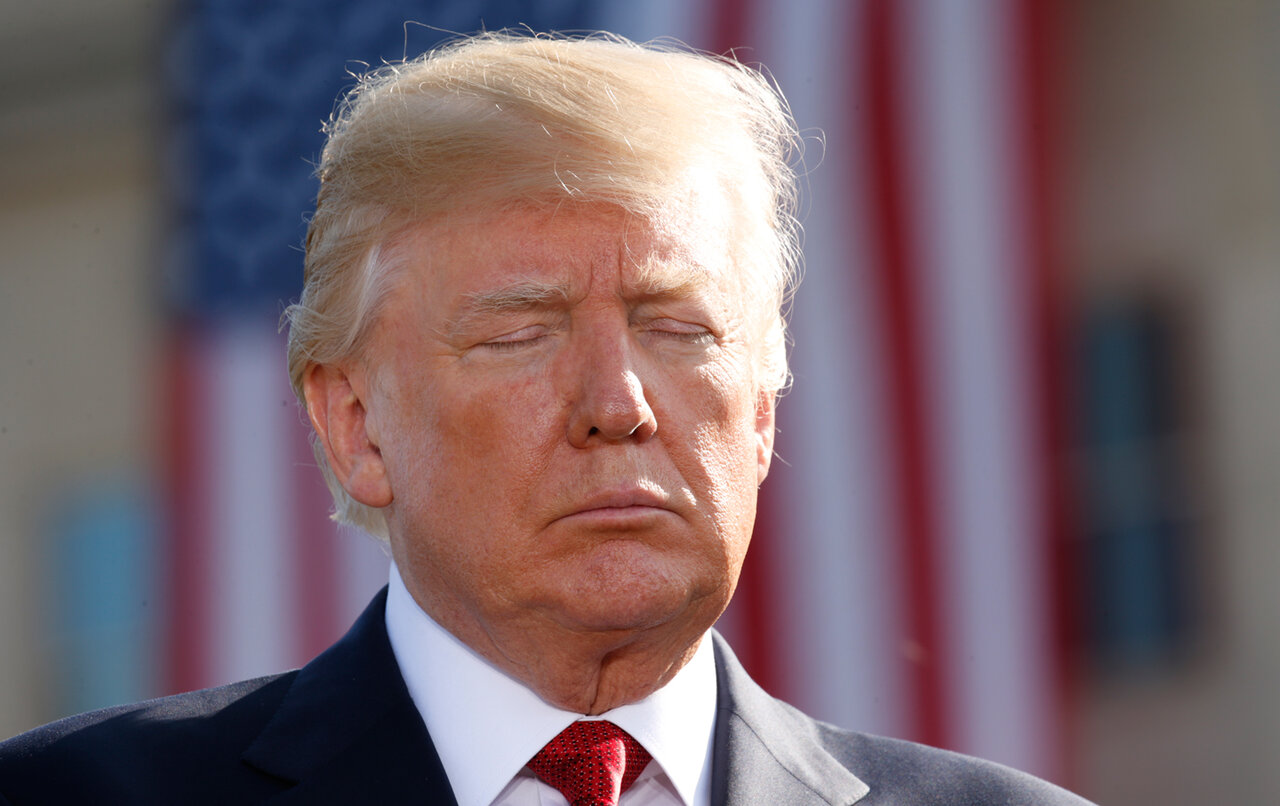
The political framing of the conflict hardened this deadlock. Early rhetoric from Donald Trump calling for Iran’s “unconditional surrender” was not mere exaggeration – it defined the strategic horizon. The objective was not limited to adjustment but total compliance, possibly extending to government transformation.
Yet the trajectory that followed was familiar. The United States entered with expansive intent and an overwhelming projection of power. It exited through a ceasefire that left Iran’s political system unaltered and its regional posture largely unchanged.
This does not constitute a conventional military defeat. It is, instead, a failure of strategic conversion – the inability to translate superiority in force into submission in politics.
Hegemonic Overreach and Misreading Reality
This outcome aligns with a well-established concept in political theory: hegemonic overreach. It describes the moment when a dominant power extends its ambitions beyond what its resources, context, and constraints can sustain.
Three miscalculations stand out.
First, Iran’s resilience was underestimated. It is not a fragile polity but a state with institutional depth, ideological coherence, and a long-honed strategy of endurance.
Second, the limits of coercion were misjudged. Economic sanctions and military threats do not automatically yield compliance—particularly against a state accustomed to operating under sustained pressure.
Third, the broader costs of escalation were insufficiently anticipated. Conflict imposes not only military risks but political and reputational burdens, especially when outcomes remain uncertain.
Strategic analysts such as Pravin Sawhney have argued that modern conflict operates across multiple domains, requiring coherence between military action, political objectives, and information strategy. In this case, that coherence was notably absent.
The United States applied pressure. It did not secure submission. That gap defines the overreach.
When Strategy Loses Its Coherence
More revealing than the outcome is what it suggests about decision-making. An effective strategy depends on aligning ends, means, and context. When this alignment collapses, even great power capabilities become blunt.
The failure of negotiations should have prompted recalibration. Instead, escalation followed. When escalation produced no decisive results, the shift to ceasefire came abruptly—less a planned transition than an enforced adjustment.
This sequence – diplomatic failure, coercive escalation, and eventual withdrawal—points to policy drift rather than strategic clarity. It reflects a decision-making environment where assumptions harden and dissent narrows. In such settings, maximalist goals persist long after they cease to be viable.
The result is not decisive action, but delayed recognition of limits.
Legitimacy: The Invisible Constraint
Power in international relations is not only material – it is also rooted in legitimacy. The ability to sustain alliances, mobilise support, and justify action depends on how power is perceived.
In this conflict, the United States operated with a legitimacy deficit. Its intervention was widely seen not as necessary or defensive, but as discretionary. This constrained coalition-building and diluted the impact of its actions.
Iran, by contrast, framed the confrontation as resistance to external imposition. This narrative, while selective, proved effective. It consolidated internal cohesion and complicated external efforts to isolate Tehran.
Legitimacy does not determine outcomes on its own. But it shapes the field on which power operates. Where legitimacy is weak, resistance intensifies and strategic options narrow.
The Battle Over Meaning
Iran’s claim of “unconditional surrender” must be read as a narrative strategy rather than a literal truth. By appropriating Washington’s own language, Tehran exposed the dissonance between declared objectives and actual outcomes.
In contemporary geopolitics, narrative is not peripheral – it is a domain of power. It shapes perception, frames legitimacy, and influences long-term positioning.
The United States entered with maximalist goals and exited without achieving them.
The Reluctance to Acknowledge Limits
Great powers rarely admit constraint. To do so carries domestic and international costs. As a result, outcomes are often reframed as deliberate choices rather than imposed realities.
Yet the sequence here – failed negotiations, ineffective coercion, and eventual ceasefire—points to something less controlled. It suggests that initial ambitions exceeded available leverage.
Limits are not signs of weakness; they are the conditions within which strategy must operate. Ignoring them does not eliminate them—it magnifies their consequences.
A Familiar Pattern
This episode is not anomalous. It reflects a recurring pattern in U.S. foreign policy: expansive entry, misreading of context, reliance on coercion, and inconclusive exit. From the Vietnam War to the Iraq War and the War in Afghanistan, the structure repeats itself. The Iran case differs in scale, but not in logic.
Conclusion: Power That Could Not Convert
The ceasefire between the United States and Iran will not stand out as a decisive military turning point. It will be remembered as a moment of exposure.
It exposed the limits of coercive diplomacy.
It exposed the risks of hegemonic overreach.
It exposed the widening gap between ambition and outcome.
Iran’s claim of US defeat is rooted in a visible reality: the United States sought to impose its will—and could not.
In international politics, that is not a neutral result. It signals not a loss of power in the material sense, but a weakening of strategic authority. And when authority erodes, power itself begins to lose coherence—its direction uncertain, its purpose diminished, and its meaning increasingly challenged.
Escalation as Theatre: The Limits of Threat Inflation
The trajectory of the conflict did not end with rhetorical maximalism. It escalated into explicit threats that revealed the widening gap between declared intent and credible capability.
At the height of tensions, Washington signalled the possibility of a ground war—an option that, on paper, reflects overwhelming military superiority. In reality, such a move would have been strategically untenable. A ground invasion of Iran would not resemble previous interventions. It would entail confronting a geographically vast, politically consolidated, and militarily adaptive state with deep experience in asymmetric warfare. The costs—in lives, resources, and regional destabilisation—would be incalculable, and the prospects of a decisive victory uncertain at best.
The threat, therefore, functioned less as a viable plan and more as an instrument of pressure—one that lacked credibility precisely because its consequences were so severe.
What remains is a paradox central to hegemonic decline: the louder the threat, the clearer the limit. The threat of ground invasion was meant to signal resolve. Instead, it revealed constraint. When power relies on options it cannot realistically use, it ceases to be a strategy and becomes performance.
MNA