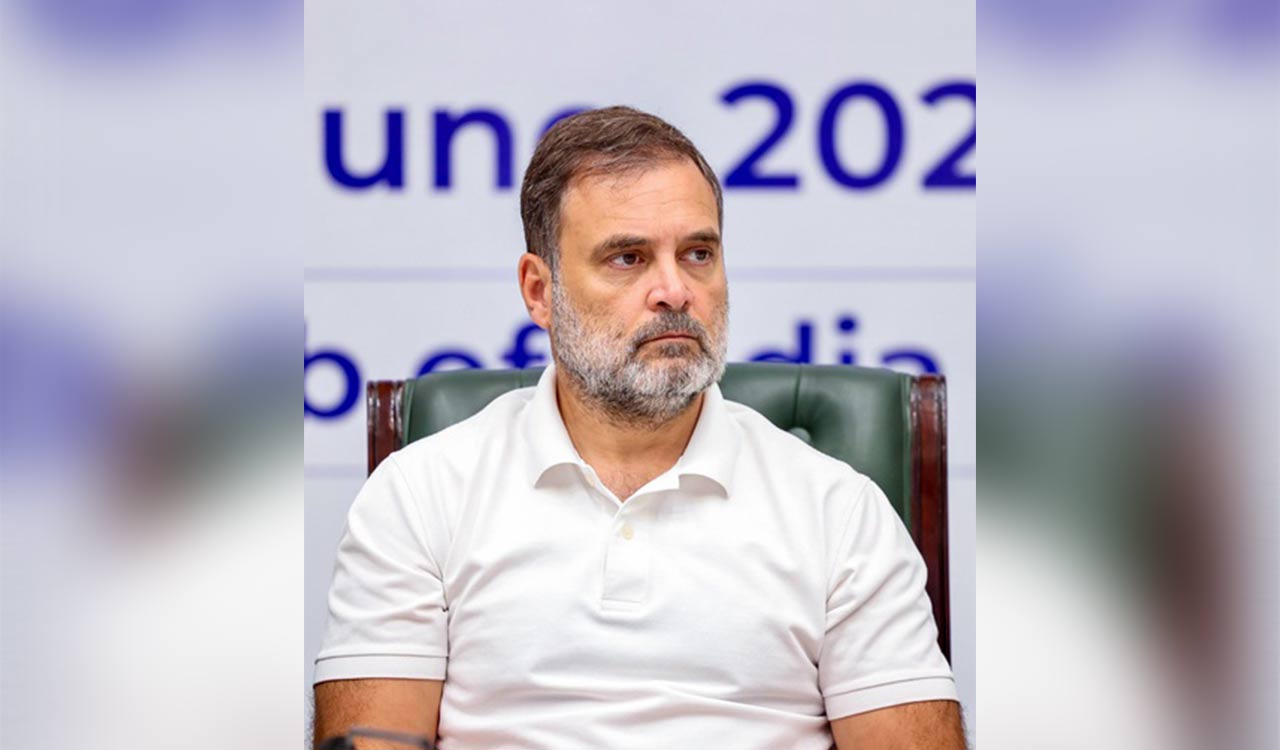
National Commission for Women chairperson Vijaya Rahatkar urged media to report crimes against women responsibly, avoid media trials, protect victim identity, ensure fact-checking, and promote gender-sensitive, accurate, and ethical journalism during a workshop in Mumbai
Published Date – 20 April 2026, 06:33 PM
Mumbai: National Commission for Women (NCW) chairperson Vijaya Rahatkar said on Monday that reportage on women-related issues must be handled with sensitivity, responsibility and accuracy, stressing that “media trials” should be avoided.
She appealed to media organisations to exercise caution while reporting crimes against women, emphasising the need to use appropriate language and ensure the dignity and anonymity of victims.
“In today’s context, media is not merely a tool for the dissemination of information but a powerful force that shapes societal thinking. Therefore, issues concerning women must be reported with utmost sensitivity, responsibility and accuracy,” she said.
Rahatkar was speaking at the inauguration of a one-day workshop titled “Women, Media and Technology”, organised jointly by the NCW and the Directorate General of Information and Public Relations (Maharashtra government) in Mumbai.
Highlighting the evolving media landscape, Rahatkar said that while the speed of news dissemination has increased in the digital era, the risk of unverified information being circulated has also grown.
“While it is important to report news quickly, its credibility is even more important. Fact-checking must be prioritised to curb fake news and misinformation,” she said. Rahatkar also urged media organisations to exercise caution while reporting crimes against women. “The identity of victims must not be disclosed under any circumstances. Protecting their dignity should be the top priority,” she said.
The NCW chairperson asserted that gender-sensitive reporting is not optional but a professional responsibility of every journalist. She also underlined the importance of awareness about laws related to women to ensure legally sound and fact-based reporting. She called upon the media to go beyond crime reporting and present women’s issues from social, economic and policy perspectives.
“Media trials must be avoided. Due respect should be given to the judicial process, and voices of marginalised and grassroots women should be brought into the mainstream,” she said. Noting some positive changes in recent years, she welcomed efforts such as protecting victim identity, providing space to women experts and sustained coverage of issues like workplace harassment and human trafficking.
She also emphasised the need to highlight success stories, struggles and achievements of women. “Such stories inspire society and create role models for the younger generation,” Rahatkar said, adding that the NCW considers media as a key partner in driving social change through dialogue and collaboration.
In his introductory remarks, DGIPR Director Govind Ahankari said the objective of the workshop was to create awareness by effectively communicating government schemes to the public.