The Delhi High Court rejected Arvind Kejriwal’s plea seeking Justice Swarana Kanta Sharma’s recusal in the excise policy case, ruling allegations of bias were unsubstantiated and warning against undermining judicial integrity through perception-based claims
Published Date – 20 April 2026, 08:18 PM
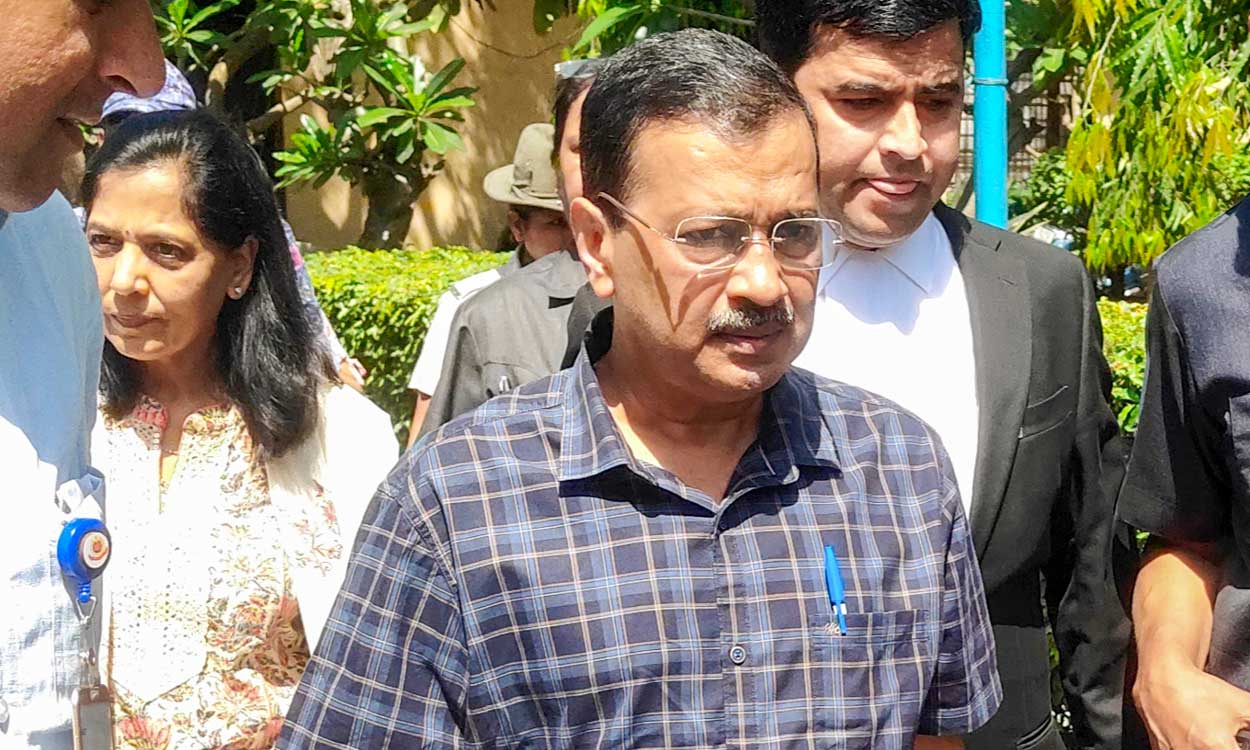
New Delhi: The Delhi High Court’s Justice Swarana Kanta Sharma on Monday rejected a plea filed by Aam Aadmi Party (AAP) national convenor Arvind Kejriwal seeking her recusal from hearing matters related to the alleged Delhi Excise Policy case.
Pronouncing the decision, Justice Sharma said that while the “easier path” would have been to recuse without hearing the application, she chose to decide the issue on the merits in the interest of institutional integrity. “While I began penning the judgment, the courtroom fell silent,” Justice Sharma observed, adding that the issue before her was not merely a legal question but one that put the judge and the institution itself “on trial”.
Reiterating that the impartiality of a judge is presumed unless rebutted by cogent material, the Delhi High Court said that recusal cannot be granted on the basis of “mere apprehension or personal perception” of a litigant. “A litigant cannot be permitted to create a situation that lowers the judicial process. A lie, even if repeated a thousand times in court or on social media, does not become the truth,” Justice Sharma held. Addressing the allegations raised by Kejriwal, the judge said there was no material to substantiate claims of bias, including those relating to her participation in events organised by the Adhivakta Parishad or the professional engagements of her family members.
“The events were not political. Merely because I was invited to deliver a lecture cannot be a basis to insinuate political bias,” Justice Sharma said, adding that no nexus had been established between her relatives empanelment as government counsel and the present case. Dealing with allegations that her previous orders were set aside by the Supreme Court, the judge clarified that no adverse findings were recorded against her decisions.
Referring to cases involving AAP leaders, including Manish Sisodia and Sanjay Singh, Justice Sharma said relief granted by the apex court did not amount to setting aside her reasoning on merits. Referring to past cases involving AAP leaders, including Kejriwal and Raghav Chadha, the Delhi High Court highlighted that interim relief had been granted in their favour at earlier stages without any allegations of bias being raised at that time. “A judicial practice accepted without objection when the order is in favour of a party cannot be objected to when it goes against them,” Justice Sharma said.
The judge cautioned that accepting such grounds for recusal would have “deeper constitutional ramifications” and could erode public confidence in the judiciary. “A courtroom cannot be a theatre of perception. If such applications are accepted, it would not be justice administered but ‘justice managed’,” she observed. Rejecting the allegations as “conjectures and insinuations”, the judge held that there was no demonstrable conflict of interest or material to justify recusal. “The file seeking recusal did not arrive with evidence; it arrived with aspersions and doubts cast on my integrity,” Justice Sharma said, adding that “a judge cannot abandon judicial responsibility in the face of unfounded allegations”.
The development comes amid ongoing proceedings in the Delhi High Court on a criminal revision petition filed by the Central Bureau of Investigation (CBI), which has challenged a trial court order discharging all 23 accused, including Kejriwal and former Deputy Chief Minister Manish Sisodia, in the corruption case linked to the now-scrapped excise policy.
On March 9, a single-judge Bench of Justice Sharma had issued notice to the accused on the CBI’s plea assailing the discharge order passed by the Rouse Avenue Court. She had also stayed the trial court’s direction ordering departmental action against a CBI officer involved in the investigation, along with adverse remarks made against the probe agency.
The Chief Justice of the Delhi High Court also turned down a representation made by Kejriwal seeking transfer of the CBI’s revision petition in the excise policy case from the bench of Justice Sharma. In a communication to Kejriwal, the Registrar General conveyed that Chief Justice Devendra Kumar Upadhyaya, as the master of the roster, found no reason to reassign the matter to another bench.
“The petition is assigned to the Hon’ble judge as per the current roster. Any call of recusal has to be taken by the Honorable Judge. I, however, do not find any reason to transfer the petition by passing an order on the administrative side,” the communication stated. In his March 11 representation, Kejriwal had expressed apprehension that if the matter remained before Justice Sharma, it “may not receive a hearing marked by impartiality and neutrality”.