
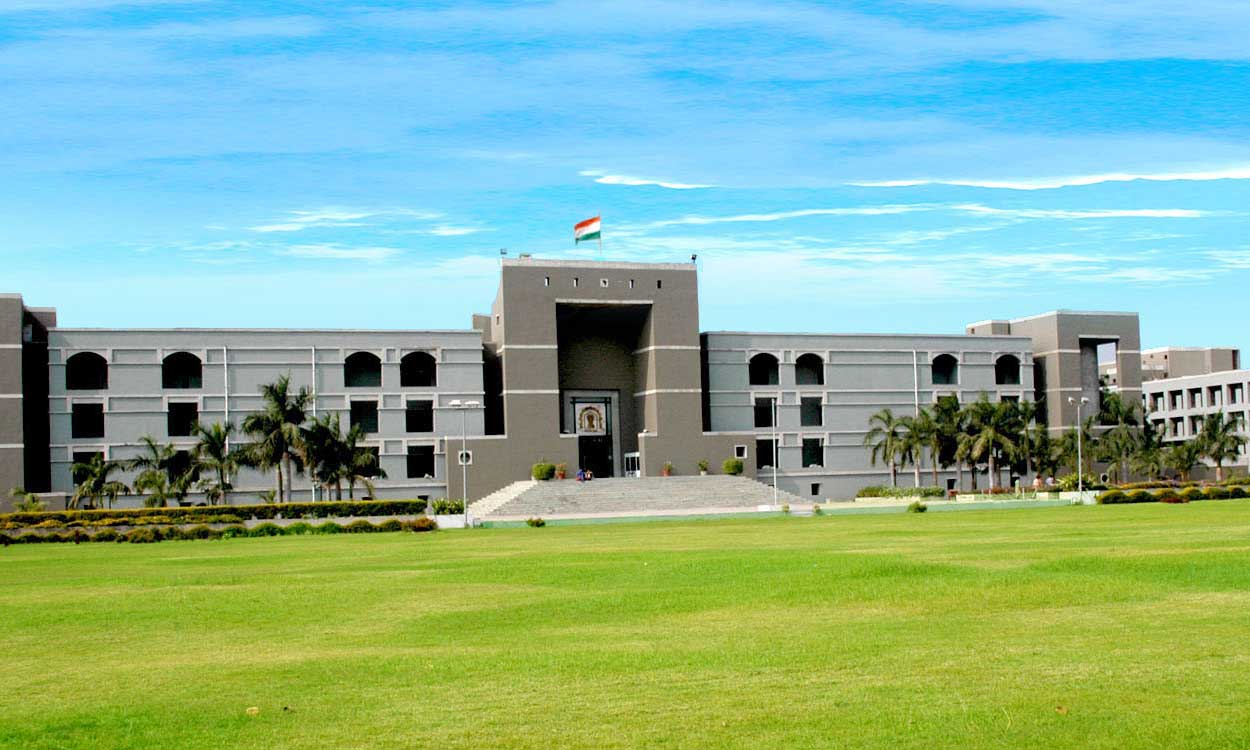
The Gujarat High Court has issued notices to major tech firms over a PIL seeking regulation of AI misuse, including deepfakes. The court stressed timely action and better coordination, while governments highlighted delays and non-compliance by some platforms
Published Date – 15 April 2026, 06:32 PM
Ahmedabad: The Gujarat High Court has issued notices to technology firms Meta India, Google, X, Reddit and Scribd over a PIL seeking formulation of a robust regulatory mechanism to curb the misuse of artificial intelligence (AI) in generating and circulating deepfake videos and photographs.
While issuing notices to them, returnable on May 8, a division bench of Chief Justice Sunita Agarwal and Justice D N Ray also directed the respondent intermediaries to ensure they are brought onboard the Sahyog portal for better coordination and time-bound action related to the takedown of unlawful content in strict compliance with the provisions of the Rules of the Information Technology Act, 2000.
“Effective and meaningful responses/actions of the respondent intermediaries will be key to the due diligence obligations enforced upon them under the statutory framework,” the court noted in an order passed recently and made available this week.
In their affidavits, the central and Gujarat governments informed the court about frequent delays, repeated procedural obligations and non-compliance by certain tech platforms with lawful notices issued to them.
In its affidavit in response to the notice issued during the previous hearing, the Centre informed the court that in October 2024 it created the Sahyog portal to facilitate immediate, coordinated and time-bound action against unlawful content by bringing all authorised law enforcement agencies and intermediaries on a single platform.
This is meant for the swift takedown of unlawful synthetically generated information and access to subscriber information, logs and judicial evidence for identification of offending users, it said.
The Union Ministry of Home Affairs (MHA) informed the court that while certain intermediaries, such as Meta and Google, have significantly improved the speed, efficiency and traceability of compliance actions, others have not yet been onboarded or fully integrated with the Sahyog portal.
It specifically mentioned non-responsiveness of X to intimations given to it regarding unlawful content, including synthetically generated information.
A total of 94 intimations were given to X between 2024 and 2026 for containing unlawful content, including synthetically generated information, but a formal response was received only against 13 intimations, the ministry told the court.
“Although partial action has been reported by respondent no.7 intermediary (X) in disabling 788 notified URLs in 2024, seventy in 2025 and six in 2026, the alarmingly low rate of formal responses results in a lack of meaningful cooperation with the lawfully issued directions,” it stated.
“Such conduct not only amounts to a breach of enhanced due diligence obligations cast upon the intermediaries under the amended IT Rules of 2026, but also severely impedes the ability of law enforcement agencies to ensure timely removal or disabling of access to unlawful content and to carry out effective investigations,” the MHA told the HC.
In the PIL, petitioner Vikas Nair has highlighted issues pertaining to the widespread creation and circulation of AI-generated videos on digital platforms, which he says pose a serious threat to public order and the functioning of a healthy democracy.
He also raised issues about the inaction of the government in framing specific laws or regulatory mechanisms against deepfake, synthetic or digitally manipulated AI-generated content.
He said the existing legal framework in India, including the Information Technology Act, 2000, and the related provisions under the Bharatiya Nyaya Sanhita, are inadequate to effectively regulate the creation, dissemination and circulation of fake and AI-generated videos on digital platforms.
The petitioner sought the high court’s direction to the respondent government to formulate a comprehensive and robust regulatory mechanism to curb the misuse of AI in generating and circulating fake videos and photographs.
The PIL contended that there is an immediate requirement to curb the creation and use of such AI deepfakes, which penetrate the social fabric and create an impact that leads to irreversible situations.
There is a need to frame laws regulating fast-paced technological advancement, it said.
The high court had on February 24 issued notices to the Gujarat government as well as the Centre (Ministry of Home Affairs and the Ministry of Electronics and Information Technology) and sought their responses on the issue.
In its affidavit, the state government said that in practice, lawful notices issued to intermediaries encounter frequent delays, repeated procedural obligations and non-compliance by certain platforms.
“In certain cases, even after issuing show-cause notices, reiterating the legal provisions and grounds for removal, the intermediaries fail to provide any substantive reply and do not remove the offending content. This results in continued public availability of unlawful material despite lawful notification,” it said.
The state suggested a robust regulatory framework mandating immediate coordination mechanisms between the investigating authority and digital service providers, such as dedicated and expedited response timelines for intermediaries, provision for real-time coordination and communication between enforcement agencies and intermediaries, internet service providers, and hosting platforms.