NCP (SP) chief Sharad Pawar urged stakeholders to protect Tata Trusts’ institutional role and charitable ownership, calling for disputes over Tata Sons leadership and governance to be resolved through dialogue, due process and adherence to the company’s Articles of Association
Updated On – 22 September 2026, 01:05 PM
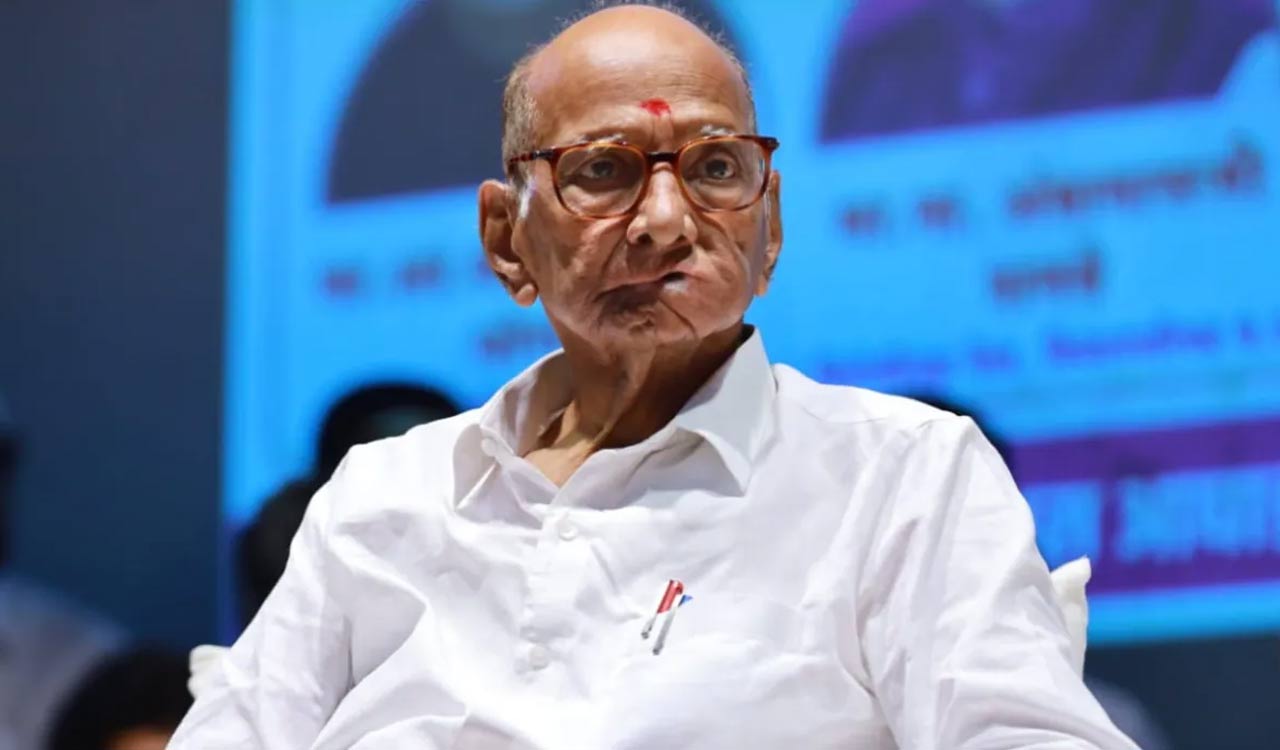
Mumbai: NCP (SP) president Sharad Pawar on Tuesday called for preserving the social commitment and institutional role of the Tata Group, citing its deep-rooted Maharashtra connection, and said its charitable ownership must be protected.
The current leadership issue should be resolved through due process, dialogue and adherence to the Articles of Association, the former Union minister said in a post on X.
Protecting the Tata Group’s trust-based legacy is the need of the hour and essential to preserving its contribution to India’s development, he stated.
The Tata Group’s legacy is rooted in the belief that business should serve society, the former Maharashtra chief minister said, adding that Tata Trusts’ institutional role and rights must be respected under the established governance framework.
On September 17, Tata Sons directors voted to reappoint N Chandrasekaran as executive chairman for a further five years – only for Tata Trusts, the conglomerate’s majority shareholder, to declare the vote void within hours. Four directors backed the resolution, while Noel Tata, chairman of Tata Trusts, voted against.
The Tata Sons board has also favoured moving ahead with a public listing following the Reserve Bank of India’s rejection of the company’s application to surrender its registration as an upper-layer non-banking financial company (NBFC).
Tata Trusts, which collectively controls about 66 per cent of Tata Sons, have opposed the listing, with Noel Tata urging the company to explore alternatives.
Pawar, in a statement posted on X, highlighted concerns surrounding the decisions taken at the Tata Sons Board meeting last week.
Noting Maharashtra’s deep-rooted connection to the group, Pawar said that key institutions established by the trusts, including Tata Memorial Hospital, Tata Institute of Fundamental Research (TIFR), Tata Institute of Social Sciences (TISS), and the National Centre for the Performing Arts (NCPA), all in Mumbai, rely heavily on the stability and governance of Tata Trusts.
“Even legally, the State is proud to host these prestigious charitable trusts. Weakening the Trusts weakens institutions the Country’s and State’s people depend on. For over a century, the Trusts have been long-term owners who put values and reputation ahead of short-term returns. That patience is why the Tata name carries public trust,” he said.
Pawar further said the Tata group is a national institution rooted in Maharashtra, and its charitable ownership must be protected.
“The Articles adopted by shareholders that give trust nominated directors an affirmative vote on key decisions, including the Chairman’s appointment, should be honoured. Leadership decisions should be settled with the consent of Tata Trusts as the majority owner, through dialogue and due process rather than disputes,” he said.
Pawar noted that the Supreme Court had earlier upheld the affirmative rights of the nominee directors representing the Trusts, to protect shareholders.
“Even from a corporate governance point of view, the Articles govern a company. The Articles of the Group give the majority owner’s nominees a decisive voice in choosing the Chairman, and that agreement should be respected, as that is the very design of the Tata Group. We must protect the Group that devoted itself to the development of India,” he added.
The public-welfare ownership structure built through Tata Trusts must be protected,” Pawar stated.
Urging strict adherence to corporate governance, Pawar called on stakeholders to resolve internal disputes through proper legal procedures and mutual dialogue, respecting the foundational principles that have guided the Tata Group for over a century.
He said that Jamsetji Tata’s vision, carried forward by Sir Dorabji and Sir Ratan Tata, was that wealth created by the enterprise returns to society. Their holdings were placed in trusts precisely so that no individual would own the group, and the majority stakeholder of the business would be by trusts that are dedicated to charitable objectives.
Therefore, the ownership structure of Tata Sons embraces philanthropy. Operating companies sit under Tata Sons, and Sir Ratan Tata Trust and Sir Dorabji Tata Trust, with allied trusts, own about 66 per cent of Tata Sons. This design is deliberate, not incidental, Pawar pointed out.
“Therefore, good business, thereby the dividends fund public good. Dividends on the Trusts’ majority stake flow directly into health, education, research and rural livelihoods,” he added.