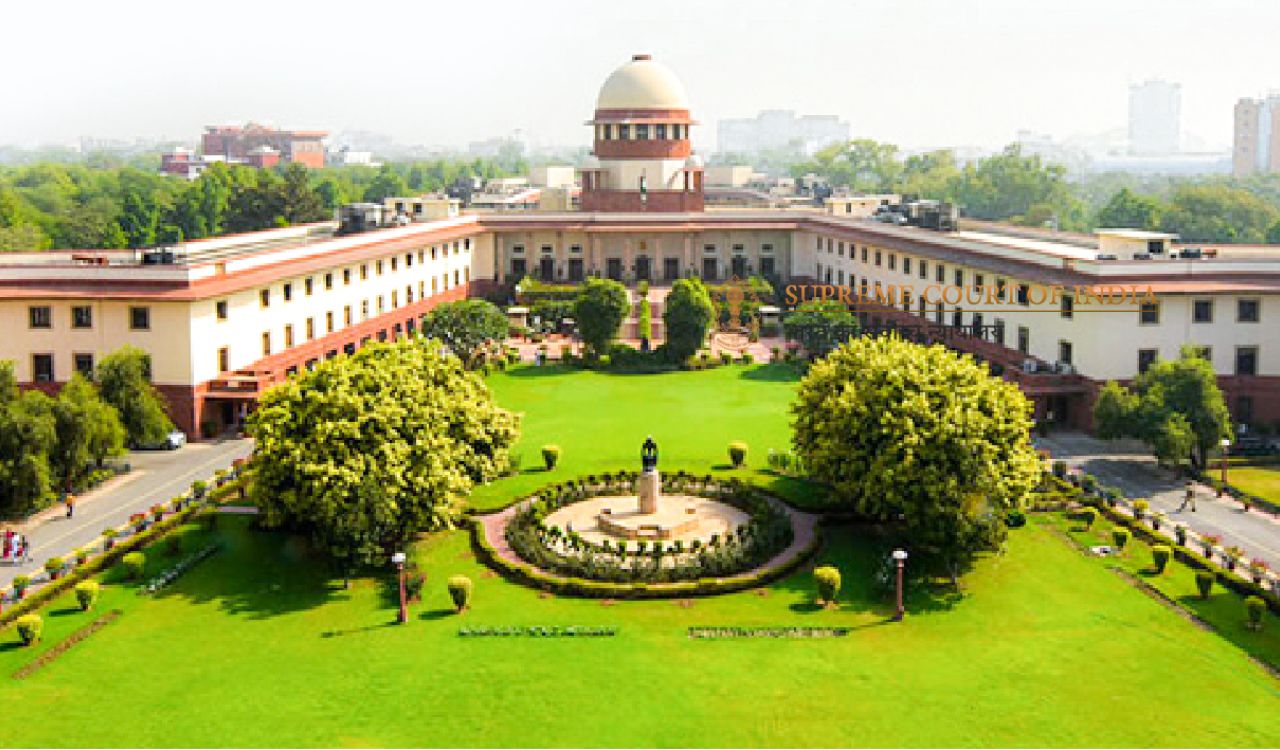
The Supreme Court has stressed the need to institutionally strengthen the National Testing Agency to prevent recurring NEET paper leaks. The bench indicated that its judges may visit the NTA’s upgraded Delhi facility to assess its systems, manpower and arrangements
Published Date – 18 September 2026, 04:55 PM
New Delhi: Highlighting the need to strengthen the National Testing Agency (NTA) institutionally to prevent recurring NEET paper leaks, the Supreme Court on Friday indicated that the judges of the bench may personally visit the agency’s upgraded facilities.
The NTA, which conducts the NEET-UG for admissions to undergraduate medical courses and has faced scrutiny over recurring paper leaks, told a bench of Justices PS Narasimha and Alok Aradhe that it had overhauled its entire mechanism, from the administrative hierarchy to infrastructure, to make the system foolproof.
Justice Narasimha told Solicitor General Tushar Mehta, appearing for the Centre, that he and Justice Aradhe would like to visit the newly upgraded NTA facility to examine the system.
“Strengthening the NTA’s system institutionally is crucial to preventing recurring paper leaks. Merely immediate or temporary measures would not suffice. You must know that permanency of the entire system is key.
“There should be a permanent setup, permanent staff, permanent verticals. Very less deputation should be there. Only then a permanent structure will come up,” the bench told Mehta.
Justice Narasimha said the judges would visit the NTA office on Minto Road in Delhi to see whether the system was actually functional and assess its manpower and other arrangements.
At the outset, the Centre told the bench that the high-powered panel led by Infosys co-founder Nandan Nilekani, constituted to suggest structural reforms in NEET, had held exhaustive consultations and was likely to submit its first interim report by the end of this month.
Mehta said all suggestions from stakeholders had been placed before the panel, which had also held consultations with members of an earlier committee led by former ISRO chairman K Radhakrishnan.
The bench asked the joint secretary in the Department of Personnel and Training (DoPT), who is assisting the Nilekani panel, to file an affidavit before the court on the steps taken so far.
It told Mehta that the most important aspect was for the government to institutionalise the entire process of conducting the National Eligibility-cum-Entrance Test (NEET).
The Education Department has said that a new, upgraded system has been created.
“Permanency of the structure has been ensured. However, human resources are partially ensured at the moment,” Mehta said.
The bench said the Radhakrishnan committee had also made recommendations on structural reforms, but the problem was implementation of those suggestions.
Mehta assured the bench that all recommendations made by the Radhakrishnan committee, as well as suggestions from petitioners and other stakeholders, were being examined by the Nilekani panel.
“It is the topmost priority of the government. All necessary assistance will be provided,” Mehta told the bench.
The bench directed that the affidavit filed by the NTA be uploaded on its website so that people could submit their suggestions. It also asked the Centre to appoint a nodal counsel to whom people could submit their suggestions.
On August 19, observing that there was a need to institutionalise reforms in the NTA, the top court had directed the Centre to inform it about the steps taken to implement the recommendations of the Radhakrishnan panel and the Nilekani committee.
The apex court was hearing a batch of petitions, including one filed by advocate Tanvi Dubey on behalf of the Federation of All India Medical Association (FAIMA).
In its earlier affidavit, the Centre said that, in respect of NEET-UG, migration from the pen-and-paper mode to a computer-based mode, whether in a single-stage or two-stage examination on the pattern of the Joint Entrance Examination (Main and Advanced), was under active consideration by all stakeholders.
It also said the government had undertaken a comprehensive overhaul of the conduct of NEET to eliminate paper leaks and systemic failures.
The affidavit was filed in response to the apex court’s May 29 direction asking the Centre to explain how future NEET examinations would be conducted and how regulatory authorities would build and retain institutional memory to improve the examination process over successive years.
The Centre had said Parliament had strengthened the legal framework against examination fraud through the Public Examinations (Prevention of Unfair Means) Amendment Act, 2026, building on the 2024 law that criminalised question paper leaks, impersonation, tampering with computer systems and other examination-related offences.
The seven-member Radhakrishnan Committee was set up by the Ministry of Education in the wake of the NEET-UG 2024 paper leak to make recommendations on reforms in the examination process, improvement of data security protocols and the structure and functioning of the NTA.
After student protests in July this year, the Union government set up a high-powered task force led by Infosys co-founder Nandan Nilekani to suggest structural reforms in competitive examinations.
The NTA cancelled the NEET-UG 2026 examination held on May 3 following allegations of paper leaks. The matter is being probed by the Central Bureau of Investigation. A re-examination was held on June 21, and the results were announced on July 16. The NTA’s official records confirm the June 21 re-examination and the security measures put in place for it.
After questions in NEET-UG were allegedly leaked in 2024, the top court had refused to cancel the examination but passed various directions aimed at tackling paper leaks and laid down criteria for cancelling public examinations.