
Wars are not measured only by the number of attacks, the missiles fired, or the areas gained on the battlefield. One of the most important criteria is the cost that war imposes on the military power, economy, and deterrence capacity of the parties; a cost that sometimes shows its effects months and even years after the end of the conflict.
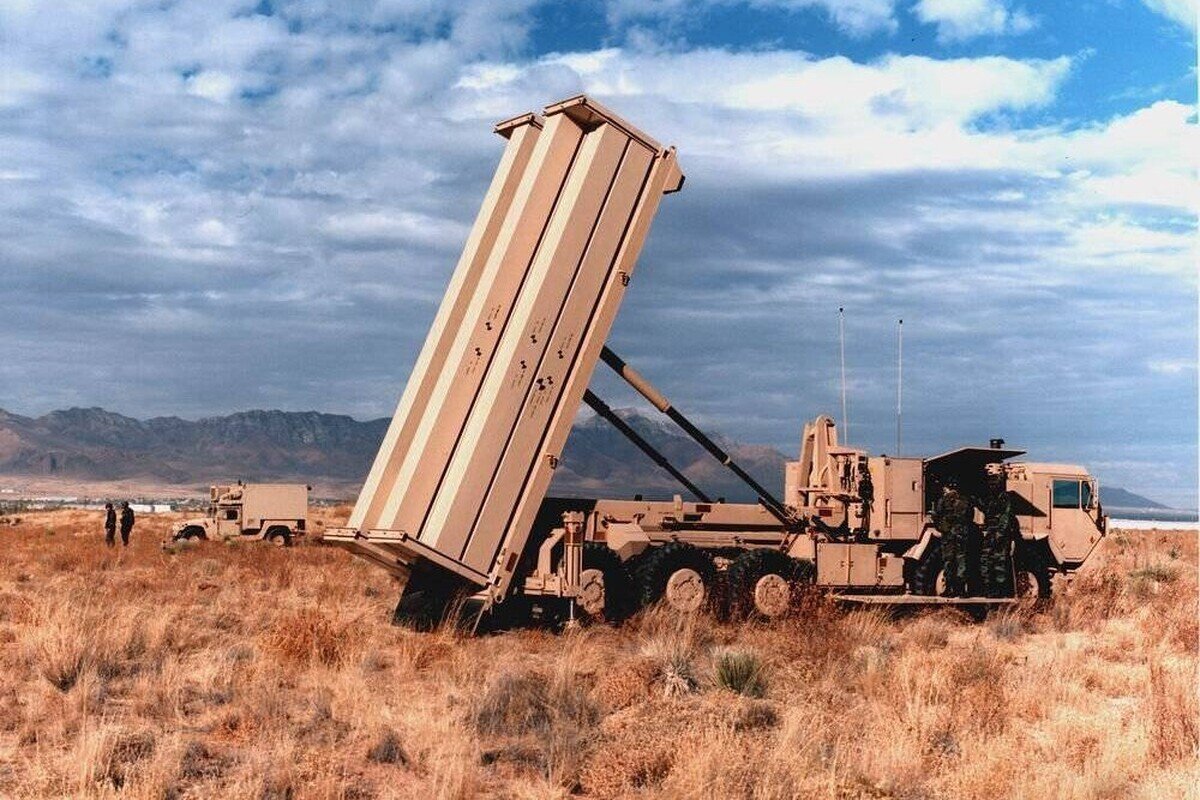
It is within this framework that the recent report by the Los Angeles Times on the state of US missile stockpiles after the war with Iran takes on particular importance. Citing published estimates about US defensive missile reserves, the report says Washington consumed a significant portion of its advanced Patriot and THAAD missiles during the war, and rebuilding these stockpiles at the current capacity of the US defense industry could take several years.
According to the report, the United States consumed about 60 percent of its advanced defensive missile stockpiles in the first five months of the war. The estimate by the Center for Strategic and International Studies also indicates that US global Patriot and THAAD reserves declined from about 2,800 missiles at the start of the war to about 1,100 by the end of July.
These numbers become even more significant when we consider that the production speed of the US defense industry falls considerably short of the rate at which these missiles are consumed in a major war. Based on the same estimates, American factories were producing about 620 Patriot missiles and 96 THAAD missiles annually before the war; a figure that is not sufficient to quickly replace what has been consumed in the war. As a result, restoring Patriot stockpiles to prewar levels will take at least several years, and rebuilding THAAD reserves will take even longer.
This issue is not just a logistical problem for the US military; it is directly tied to the question of deterrence.
Unlike many countries, the United States must simultaneously prepare for multiple security scenarios in different regions of the world. In its defense calculations, Washington considers China its most important long-term rival in the Indo-Pacific region, and in Europe, the possibility of a large-scale conflict with Russia is one of the key scenarios in military planning. Under such circumstances, every missile consumed in one war is part of a stockpile that will no longer be available for a potential crisis in East Asia or Europe.
For this reason, the issue is not simply whether the United States can produce several thousand new missiles. The issue is that the war with Iran showed that America’s production and stockpiling capacity is not as flexible as was imagined for a high-intensity, prolonged war.
This is precisely the point at which the cost of the war for America moves beyond the tactical level and becomes a strategic issue.
Over the past decades, Washington has built a large part of its military power on technological superiority, weapons precision, and missile defense systems. But new wars have shown that this superiority faces a serious challenge when one side can place the other side’s expensive defensive systems under sustained pressure through the extensive use of missiles and drones.
Under such conditions, an economic equation also takes shape: if a very expensive interceptor missile is consumed to counter a relatively cheap threat, the continuation of the war can quickly deplete the defending side’s stockpiles. Therefore, the issue is not only the number of available missiles; the ratio of attack cost to defense cost also becomes important.
From this perspective, the war with Iran has imposed yet another cost on America: the erosion of part of the military capacity that Washington had stockpiled for its larger and longer-term rivalries.
This has occurred at a time when the United States is also facing other problems; from the financial costs of the war to pressure on the defense industry’s supply chain, the need to increase weapons production, and the necessity of maintaining the readiness of American forces elsewhere in the world.
In other words, the end of a war does not necessarily mean the end of its costs. The conflict may stop, but rebuilding stockpiles, repairing equipment, replacing weapons, and restoring the military’s operational capacity can continue for years.
From this very angle, it can be said that one of the most important consequences of the war with Iran for the United States is the cost that remains on the balance sheet of the country’s military power. Washington must now strike a balance between rebuilding consumed stockpiles, increasing production capacity, and maintaining readiness for other potential crises.
This situation becomes more significant when placed alongside the political and military outcome of the war. If the United States, despite possessing one of the largest and most advanced militaries in the world, has not been able to achieve its expected objectives in a costly war, then the massive consumption of stockpiles and the multi-year need to rebuild them is not merely a financial or logistical cost; it could mean a reduction in part of Washington’s strategic freedom of action.
In fact, the bill of war for America is not just the money spent or the missiles fired. Part of this bill is the depletion of stockpiles, the erosion of defensive capacity, the pressure on the military industry, and most importantly, the reduction of part of America’s ability to enter another major crisis simultaneously.
And perhaps the most important consequence is this: a war that was supposed to showcase American military power may, in the end, confront Washington with a difficult question; if the next major crisis occurs in East Asia or Europe, how quickly can America bring its consumed capacity back to the field?
MNA